Visko's Orbis AI enables real-time video
Visko Platform Inc. has opened public access to Orbis, a real-time streaming AI video model designed for long-duration, interactive generation.

Visko Platform Inc. has launched Orbis, a new class of AI model for generating continuous, interactive video streams. The Sunnyvale, California-based startup also closed a $10 million pre-seed funding round led by Llama Ventures.
Founded in 2025 by CEO Qing (Will) Yin, a Stanford Ph.D. in computational mathematics and mechanics and former Apple researcher, Visko aims to move beyond static AI video clips. The company's 16-person team includes alumni from Apple, Google DeepMind, Meta, Amazon, and Tesla. It is currently working with Google.
Orbis enables real-time, steerable video
Visko calls its creation a "Live Model." Unlike conventional AI video generation, which produces a finished clip that cannot be altered, Orbis streams video in real time. It allows users to change the prompt at any moment and see the update instantly without stopping the stream.
"Every real-time system before this faced the same wall: The longer a world runs, the more it falls apart," stated Yin. "We built Orbis to hold together, physically, visually, and narratively, for as long as you want to stay inside it."
According to the company's technical report, Orbis generates 4K video at 24 frames per second. It can sustain generation for hours without quality or color drift. The model uses a latent world model to steer output toward physically plausible motion.
Model designed for robotic training
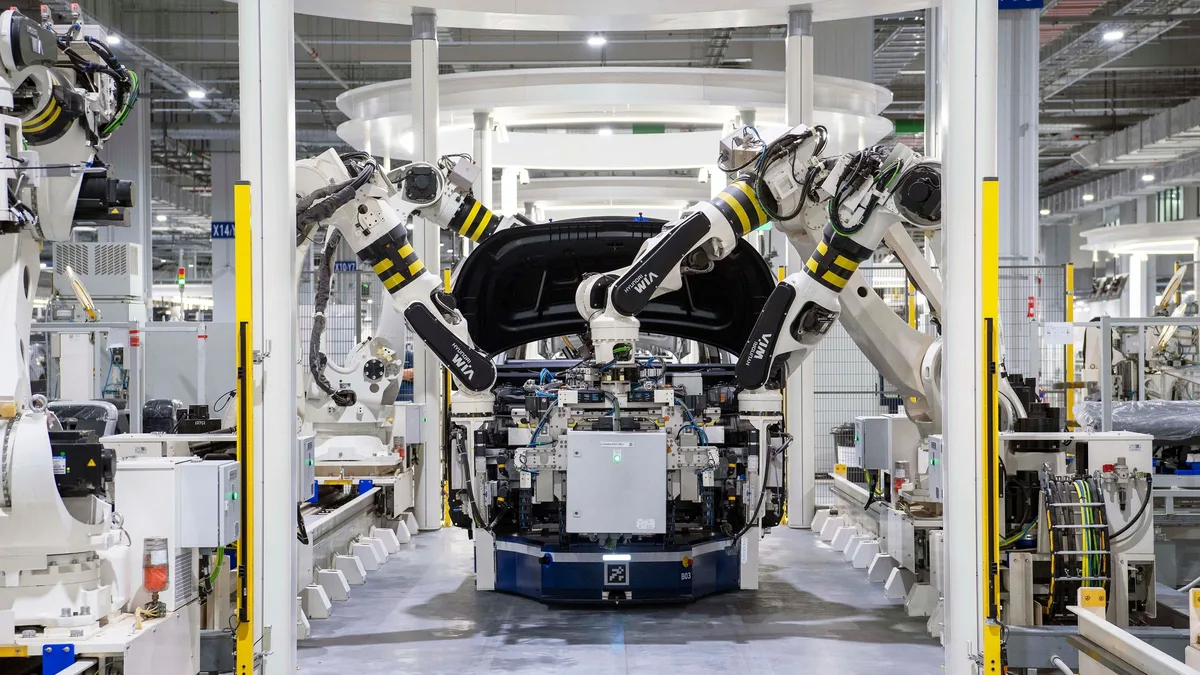
The persistent and interactive nature of the video stream opens specific applications in manufacturing and robotics. Yin told The Robot Report the technology is usable for simulation and for creating training footage that would be unsafe or expensive to stage in the real world.
"In short, we are the world’s first real-time 4K steerable video generation model, enabling use cases in interactive robotic training," said Yin. He suggested the model could help provide environments for testing corner cases for safer autonomous vehicles and humanoid robots.
The company's technical evaluations show Orbis leading compared systems on several quality metrics. Visko said it recorded the highest overall-preference and temporal-stability ratings in a long-form human preference study across eight different systems.
Technical challenges and next steps
Yin acknowledged that more work is needed. The technical report disclosed dimensions where Orbis trails other systems. On the research front, Yin said the memory structure requires better design to improve consistency across long generations.
He also highlighted a need for more detailed action descriptions in training data. "Right now, I can ask a robotic arm to do something, but I don’t have a very detailed description," Yin added. Incorporating precise instructions, like raising an arm 45 degrees, is a goal.
Engineering challenges remain. "We have to scale up the model in terms of the model and the data size," Yin said. The team is focused on audio and video data but is exploring injecting other sensor data, like tactile information. Visko is seeking partners focused on robotic sensors and applications and is talking to some hardware companies.
Advisors see broad commercial potential
Michael I. Jordan of UC Berkeley, chairman of Visko’s advisory board, endorsed the technology's direction. "Visko is pursuing one of the most ambitious directions in video AI: live, stateful models that continuously perceive, predict, and interact with the world in real time while maintaining physical consistency," he said.
Jordan claimed the core capability could support a broad range of commercial opportunities beyond robotics. These include physical simulation, gaming, live commerce, education, and real-time creative media. Distribution for Orbis is handled through Visko's partner, Reactor.
Yin expressed a pragmatic view on commercialization timelines for general-purpose robots, suggesting widespread home use could take time. "My goal is to find commercialization opportunities on the way," he noted.
Editor’s note: Physical AI and enabling technologies will be among the session track topics discussed at RoboBusiness 2026, which will be on Oct. 20 and 21 in Santa Clara, Calif. Register now to attend.