Arduino Launches VENTUNO Q Robotics Control Board
Arduino has opened pre-orders for its VENTUNO Q edge AI platform, designed to simplify robotics development. The board, powered by a Qualcomm processor, targets commercial deployments in manufacturing and industrial settings.
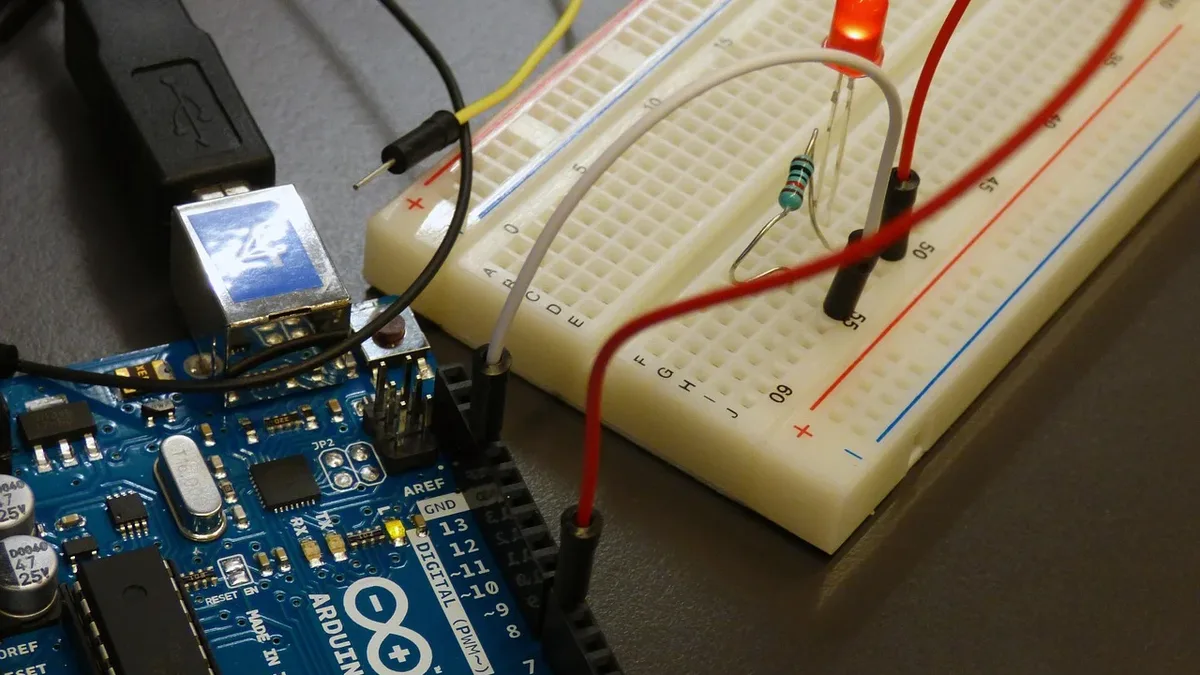
Arduino S.r.l., a subsidiary of Qualcomm, has opened pre-orders for its new VENTUNO Q board. The company calls this its first intentional step into creating a single-point control platform for modern robotics.
Marcello Majonchi, Arduino's chief product officer at Qualcomm, said the company has over 20 years of indirect experience in the field. He noted that thousands of community-built robots have been powered by Arduino products over the past two decades.
Qualcomm Acquisition Fuels Development
Arduino's acquisition by Qualcomm last year provided the Italian company with greater resources and a new customer base. Majonchi stated that this, combined with advances in generative AI and processor miniaturization, made the VENTUNO Q a natural evolution. The goal is to bridge hardware and software gaps so that building an autonomous mobile robot does not require multiple advanced degrees.
Technical Specifications and Design Philosophy
The VENTUNO Q features a dual-brain architecture. It pairs a Qualcomm Dragonwing IQ-8275 processor with a dedicated STM32H5 real-time microcontroller. Arduino claims this enables systems that interpret sensor data and respond to it physically and immediately without a cloud connection.
The board ships with a pre-loaded Ubuntu operating system. Developers can use the Arduino App Lab, VS Code, native Linux tools, or their existing workflows. For real-time control of motors and interfaces, the platform uses the Arduino Core on the Zephyr RTOS.
Arduino designed the board to be familiar to its existing user base. The company wanted to ensure compatibility with the large ecosystem of accessories built for standard Arduino boards. Majonchi said the aim is accessibility, lowering barriers to technology on both the software and hardware sides.
Edge Computing for Real-World Factories
A key selling point is the board's edge computing capability. Majonchi identified cloud-dependent AI models as a past blocker for the robotics industry. Real-world deployments in places like offshore manufacturing sites require real-time response and often lack reliable internet.
He argued that edge computing is the only way to meet the constraints of these environments. Advances in technology now make this level of on-device computation possible, creating a strong starting point for Arduino's platform.
App Lab and the Path to Production
Through the Arduino App Lab, developers can access a curated library of optimized AI models right away. The library includes models for large language tasks, vision, speech recognition, and object detection. Developers can also import their own models from platforms like Hugging Face or train custom models using integrated tools.
Majonchi compared using App Lab to building with Lego bricks. He said it simplifies connecting code dramatically compared to standard platforms.
Once a design is prototyped, the same Qualcomm processor will be available in production-grade system-on-module (SOM) form factors from partners. This preserves the software and logic built during development. The "Works with Arduino" program, involving partners like SECO and Toradex, is intended to provide a reliable path from prototyping to scaled production.
Majonchi explained that production setups have different requirements, such as component longevity and optimization. The program aims to give OEMs the freedom of prototyping with a certified path to industrial solutions. The platform is validated for commercial use in robotics, industrial edge AI, smart cities, and education.
Looking ahead, Arduino plans to continue growing within the robotics industry with Qualcomm's support. Majonchi said the partnership combines Arduino's expertise in creating accessible abstraction layers with Qualcomm's new technology. In a related move, Qualcomm also announced the acquisition of PickNik Inc., aiming to integrate its MoveIt framework with the VENTUNO Q platform to further streamline development from AI models to robotic control.