Intrinsic open sources core robotics
Google's Intrinsic has released Intrinsic Core, an open-source software platform designed to accelerate the development of robotic applications for
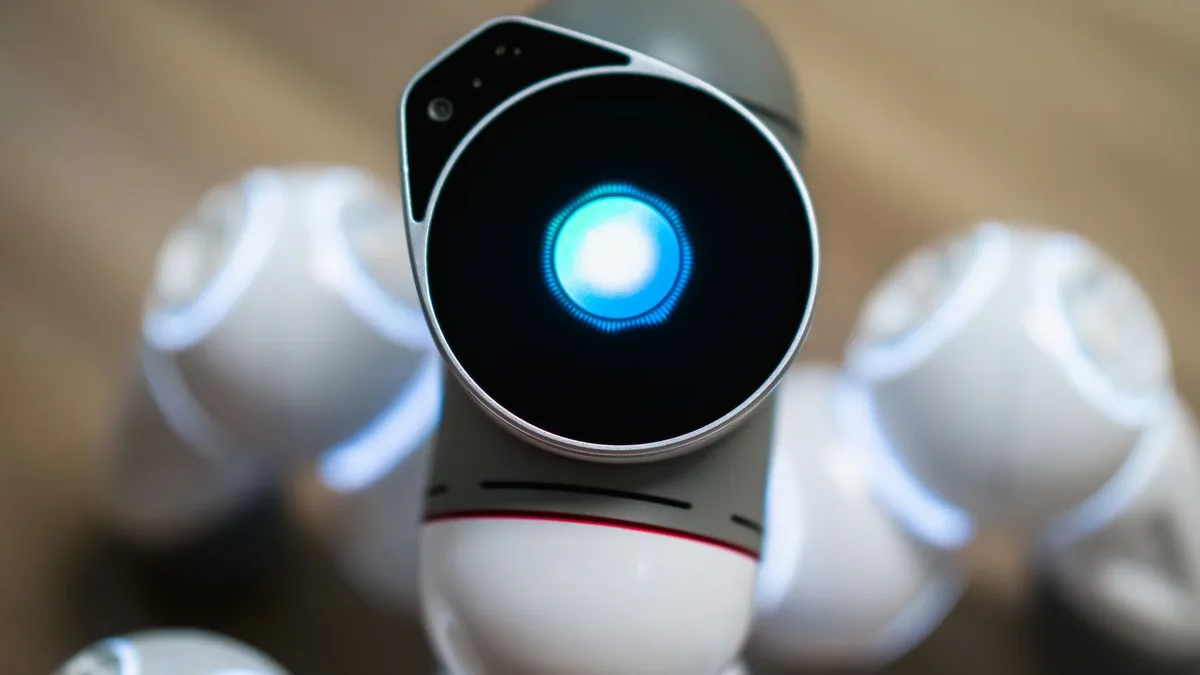
Google's AI robotics group, Intrinsic, has made a core part of its software stack open source. The release, called Intrinsic Core, is a set of Robot Operating System (ROS)-compatible capabilities aimed at simplifying robotic application development for manufacturing. The company announced the move at ROSCon 2026 in Toronto, and the software is now available on GitHub under an Apache 2.0 license.
Brian Gerkey, Intrinsic's Chief Technology Officer, told The Robot Report this represents a durable commitment to the developer community. He stated the release contains the core of Intrinsic's own software stack, which the company itself depends on for real manufacturing deployments. The goal is to address a common industry pain point: robotics teams currently spend hundreds of hours coding foundational capabilities from scratch.
Core capabilities for adaptive robotics
Intrinsic Core packages several key software components into a pre-configured environment that runs on local hardware. At its center is Intrinsic Control, a hardware-agnostic, real-time control framework. This allows robots to adapt their behavior mid-movement based on sensor feedback, and it lets users swap different robot arms and grippers without rewriting drivers.
The platform includes several other building blocks designed to streamline development.
| Capability | Key Function |
|---|---|
| Pose estimation | Uses NVIDIA's FoundationPose for 6D object detection, removing need for rigid fixtures. |
| Motion planning | Auto-generates efficient, collision-free paths, replacing manual joint-by-joint programming. |
| Grasp planning | Enables grippers to dynamically adapt to part location for higher success rates. |
| Simulation services | Powered by Gazebo for testing, debugging, and validating application logic. |
| Camera calibration | Automates the calibration and alignment of a robot's vision system. |
| ROS drivers | Pre-configured drivers for supported robots, grippers, and 3D cameras. |
Geoffrey Biggs, CTO of the Open Source Robotics Foundation, told The Robot Report the release is a demonstration of where robotics development is headed. He predicted platforms like Intrinsic Core will make producing robots significantly easier.
Aiming for faster, more reliable development
Intrinsic claims its platform addresses two major challenges: development speed and system reliability. Geoffrey Biggs pointed to the historical acceleration of research and product development following the release of ROS as a precedent. Brian Gerkey emphasized that reliability must be baked into the process from the start, not added later.
Gerkey explained that while some companies have built reliable systems on ROS, they had to construct the necessary infrastructure themselves. Intrinsic Core aims to provide that foundation by integrating standard Linux containerization and Kubernetes to fit naturally with ROS workflows. Biggs added that the platform is a step toward having robust, production-ready foundations for robotics, similar to established platforms in other software domains.
A reference solution for machine tending
To provide a concrete starting point, Intrinsic is also releasing the Open Machine Tending Solution (OMTS). This is a ready-made reference design for a real-world machine shop application, built to run on both Intrinsic Core and the ROS Suite. Gerkey described it as a "well-lit path" to prove the platform's completeness and give developers confidence.
The open design allows for customization with assets from manufacturers like FANUC and Universal Robots. For fabricators and machine shops, such adaptive systems could assist operators, improve machine utilization, and automate lower-value tasks.
Targeting commercial robotic arms
The initial focus for Intrinsic Core is on developers already familiar with ROS who are working on manipulation tasks with robotic arms. The platform is specifically aimed at commercial deployments and does not currently support mobile robots or humanoids. Gerkey drew a parallel to the early days of ROS, which started with a narrow focus on researchers before expanding into many other domains. He expressed hope that as Intrinsic gains trust with users in manufacturing, the platform's scope could similarly broaden over time.