Warp Sciences Launches AI and Robotics Chemistry CRO
Warp Sciences emerged from stealth with $215 million in Series A funding to create a U.S.-based chemistry CRO that integrates robotics and AI for faster drug discovery.
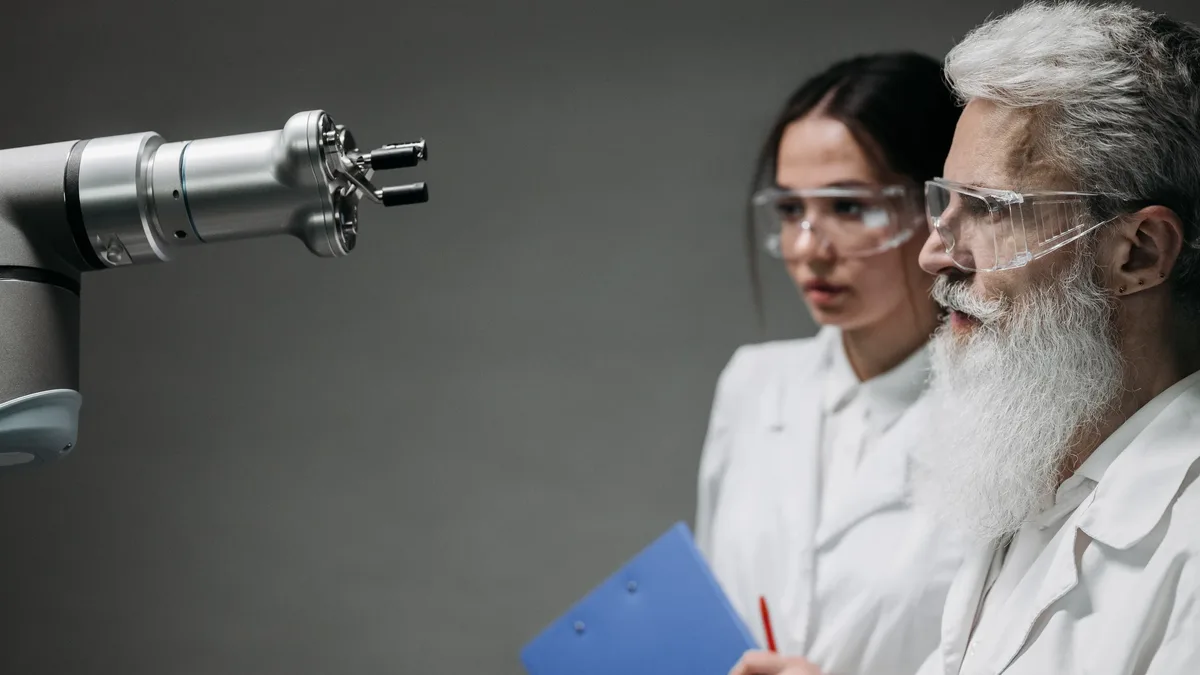
Warp Sciences, a U.S.-based AI chemistry CRO, launched on October 22 with $215 million in Series A funding. The company will automate lead optimization analog synthesis using AI, robotics, and human chemists for biotech and pharma customers.
The funding round was led by Lightspeed Venture Partners and gave the company an $865 million post-money valuation. Twenty-two other venture capital firms and angel investors participated. Warp Sciences has no proprietary drug pipeline itself, instead building infrastructure for customers who retain full control of their drug programs. The company is currently working with a small number of biotech and pharma design partners and plans to open capacity to more customers as its labs scale.
Kevin Weil, co-founder and CEO of Warp Sciences, was previously chief product officer and vice president of science at OpenAI. He stated a core challenge the new venture aims to solve. "AI has dramatically accelerated software engineering and mathematics, but it has yet to make the same impact in the physical sciences," Weil said.
Founding Team Blends Tech and Science
The founding team combines expertise from AI, data infrastructure, healthcare, and drug discovery. Chief Scientific Officer Solomon "Sol" Reisberg held medicinal chemistry leadership roles at Terremoto Biosciences. Chief Technology Officer Manohar "ManoPaluri was a vice president at Meta Superintelligence Labs.If we want to build more capable AI for science, we need to generate real-world data at scale."
Warp's real competitive set includes incumbent chemistry CROs such as WuXi AppTec and Pharmaron, but automated with robotics and operated within U.S. borders. A 2024 Biotechnology Innovation Organization survey found that 74% of U.S. biotechs reported contracts with Chinese companies for preclinical and clinical services. The company's success depends on execution-synthesizing a customer's chosen molecule fastest and most reliably-not on proprietary molecule-design models.
Warp plans to build laboratory capacity in the United States. It has not published measured turnaround improvements or evidence of a fully autonomous laboratory. Its broader ambition is to develop scientific AI that helps scientists reason about the physical world and design informative experiments. The $215 million in funding will support building physical capacity and software for scalable laboratory operations.
Warp is currently working with a small number of design partners for weekly collaboration to refine its service and systems. It plans to open up capacity to more customers as its labs scale, focusing on preclinical small-molecule programs at milligram to multi-gram scale.