AWS Launches Open-Source Physical AI Toolchain for Industrial Robotics
AWS has launched an open-source Physical AI Toolchain to unify its cloud services with NVIDIA's physical AI stack, aiming to accelerate industrial robotics development by simplifying the end-to-end workflow from data to deployment.
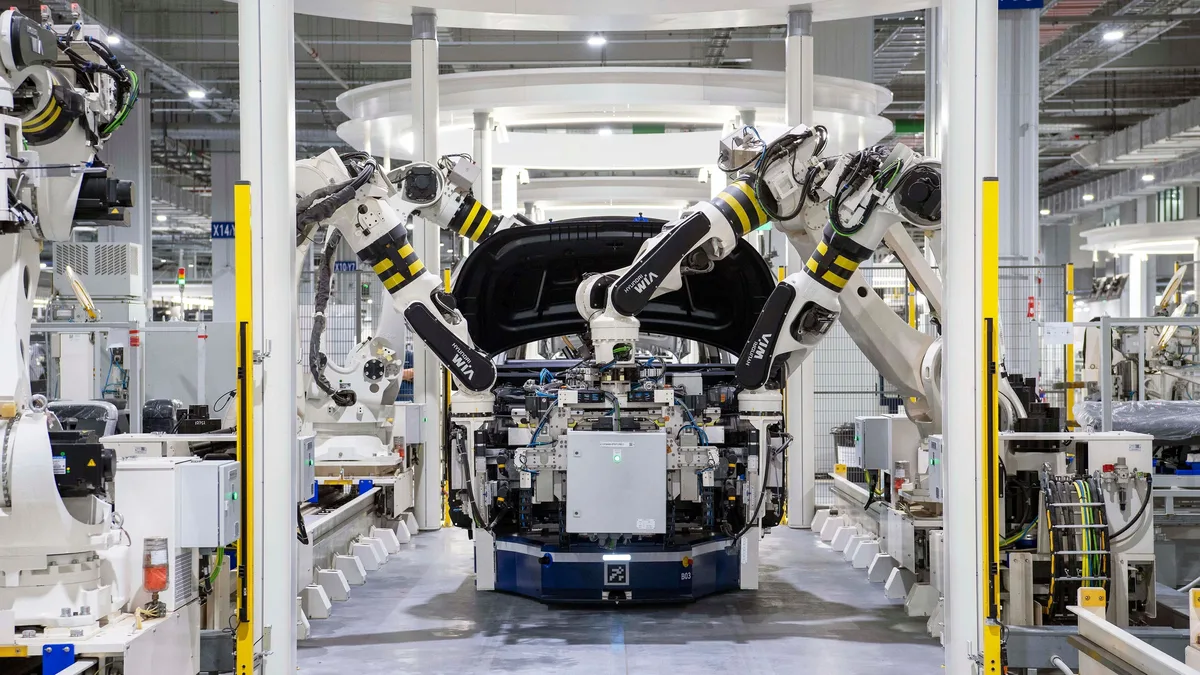
AWS has launched an open-source Physical AI Toolchain designed to accelerate industrial robotics development. The platform unifies AWS cloud services with NVIDIA's physical AI software stack to create a single development workflow, addressing the urgent need for manufacturers to reduce integration complexity and engineering overhead.
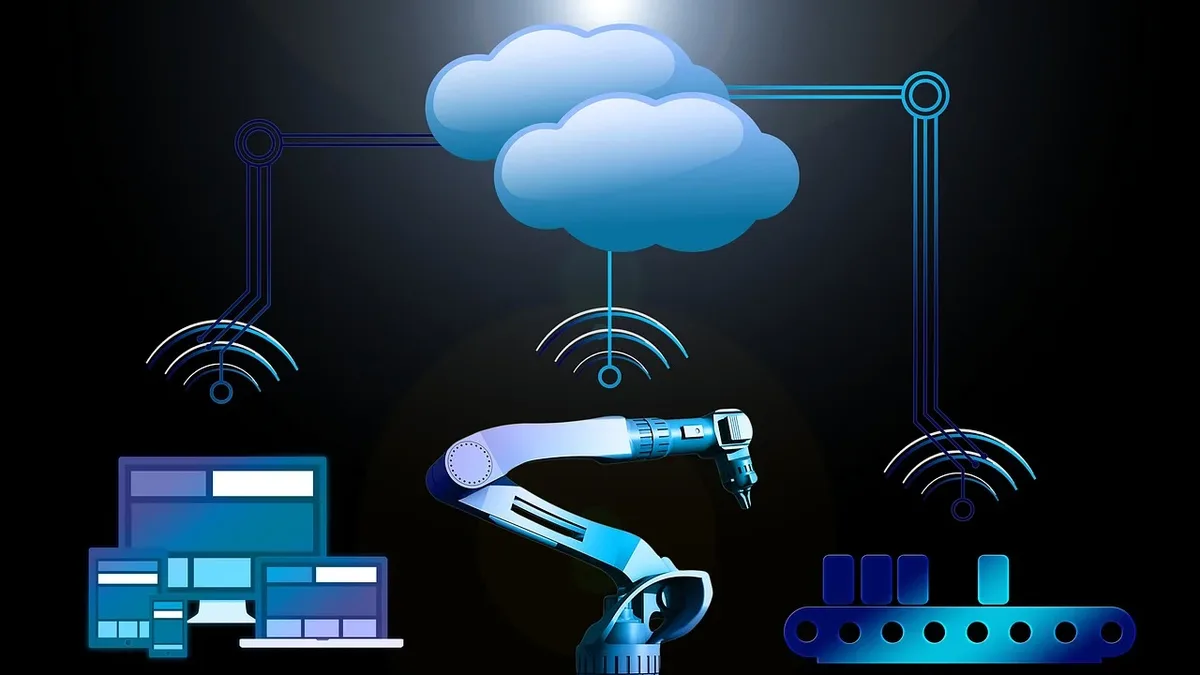
The toolchain is built on AWS infrastructure and integrates Amazon SageMaker for model training, Amazon EC2 GPU instances for simulation, AWS IoT Greengrass for edge deployment, and Amazon Bedrock AgentCore for orchestration. It is open-source and hardware-neutral, allowing developers to use the complete workflow or select individual components. The launch represents Amazon's extension of its logistics AI expertise, drawn from deploying over one million robots in its fulfillment network, into the broader manufacturing sector.
Key Development Stages
The toolchain supports five sequential development stages. It begins with synthetic data generation, which creates AI-generated environments for training without physical data collection. Next, model training uses human demonstrations and simulated practice to develop machine behavior.
Simulation and validation allow systems to be tested in virtual environments before any hardware is deployed. Edge deployment then moves optimized models onto machines for real-time decisions without constant cloud connectivity. The final stage is continuous improvement, where operational data from deployed machines is sent back into the training process, creating a feedback loop to enhance fleet performance over time.
Strategic Partnerships and Adoption
Major robotics developers and manufacturers are already adopting the toolchain for industrial applications. Early adopters include automotive manufacturers, electronics companies, and pharmaceutical producers. The platform is used by companies in AWS’s Physical AI Fellowship with MassRobotics and NVIDIA.
Key partners are developing advanced systems. NEURA Robotics is building cognitive humanoid robots capable of learning from experience. RLWRLD is developing an 8.1-billion-parameter foundation model for robotic manipulation tasks like grasping and handling. Config has assembled a pipeline with more than 200,000 hours of robot-action data and uses generative AI for training scenarios. Telexistence, a Japanese robotics company, has deployed more than 300 humanoid robots in convenience stores.
According to a Global Startup Trends Report cited by AWS, one in seven startups is now building physical AI, with 72% of those builders considering cloud computing essential. The toolchain is designed for applications ranging from industrial automation and autonomous mobility to collaborative robots and humanoid systems.
Technical Advantages and Differentiation
The platform reduces engineering effort through hardware neutrality, open-source access, and integrated deployment automation. AWS built the toolchain because customers said too much engineering work was spent on building underlying infrastructure instead of innovation. It is not a direct replacement for the discontinued AWS RoboMaker service.
The integrated stack provides architecture guidance, deployment automation, and ready-to-use code. NVIDIA technologies within the stack include Isaac Sim and Isaac Lab for simulation, Isaac GR00T for humanoid training, and Cosmos for synthetic-world generation. The toolchain allows developers to incorporate specialized sensing, such as the tactile sensing capabilities for humanoid hands that AWS worked with RLWRLD to develop.
Fleet-management capabilities can provision, secure, and update thousands of machines over the air. By reducing the foundational work, the tools can help manufacturers launch physical AI systems in weeks rather than years. The toolchain enables a feedback loop where field-collected robot data is returned to the cloud for continual model iteration, which is critical for scaling robotic deployments. Uwem Ukpong, vice president of AWS Industries, stated that physical AI will impact every industry that moves, builds, or makes things.
Manufacturers can use physical AI to increase throughput, reduce downtime, and improve quality. The toolchain enables manufacturers to launch these systems in weeks rather than years through its integrated development workflows.