45X Phase Down Schedule
| Process type | Factory production process |
|---|---|
| Original use | Manufacturing of 45X-series components |
| First created | Mid-2020s |
| Primary input | Pre-assembled 45X modules |
| Primary output | Finished 45X units |
| Phase down trigger | Introduction of successor product line |
| End state | Process fully retired and equipment repurposed or removed |
Origin and history
The 45X Phase Down Schedule originates from United States federal legislation. It was created as part of the Inflation Reduction Act of 2022. This landmark legislation was signed into law in the third decade of the 21st century. The provision is formally known as the Advanced Manufacturing Production Credit under Section 45X of the Internal Revenue Code. Its design and implementation followed extensive congressional debate on domestic energy security and industrial policy. The schedule's parameters were established to provide long-term, predictable guidance for manufacturing investment decisions.
What it is for
The 45X Phase Down Schedule is a mechanism to gradually reduce a federal production tax credit for eligible clean energy components. Its primary purpose is to stimulate and scale up domestic manufacturing of solar, wind, battery, and critical mineral products. The schedule provides a clear, multi-year timeline for the credit's value reduction, allowing businesses to plan for decreasing government support. It is intended to create a competitive U.S. manufacturing base while ensuring taxpayer subsidies are not permanent. The phased reduction incentivizes rapid scale-up and cost reduction within the industry. Ultimately, it aims to establish a self-sustaining clean energy manufacturing sector without perpetual reliance on federal credits.
Overview
The 45X Phase Down Schedule outlines specific annual reductions to the credit amount provided per unit of manufactured component. The credit values differ for various product categories, such as solar modules, battery cells, and wind turbine parts. The phase-down begins for a given facility in the year after its domestic production volume exceeds certain thresholds defined by the law. For some components, the credit begins to reduce in 2030, regardless of production volume, with a complete phase-out by 2032. The schedule is not a single date but a complex set of triggers and annual reduction percentages tied to production milestones. This structure links the support duration directly to the success and scaling of the manufacturing operation.
What to know
A critical point is that the phase-down is tied to the individual manufacturing facility, not the entire company or industry-wide production. The credit amount itself is calculated based on the specific component's capacity or sales price, as detailed in the statute. Understanding the applicable "beginning of construction" rules for a facility is essential, as they lock in eligibility. The schedule interacts with other Inflation Reduction Act incentives, such as the investment tax credit, influencing overall project economics. Compliance requires meticulous tracking of production volumes and component types to accurately apply the correct credit value each year. The Internal Revenue Service releases guidance and regulations that provide essential details for interpreting and implementing the schedule.
Common questions
A common question is whether the phase-down can be accelerated if industry growth exceeds expectations, but the schedule is fixed by statute and cannot change without new legislation. Many ask if a facility can requalify for the full credit by expanding, but the phase-down triggers are based on the original facility's production. There is frequent confusion about which components qualify for which credit values, requiring careful review of the statutory definitions and subsequent IRS guidance. Companies often inquire about the treatment of production for both domestic use and export, which is generally eligible. A recurring question involves the impact of the phase-down on long-term supply contracts and how credit reduction clauses are structured. Finally, there is significant discussion about how the phase-down schedule influences decisions regarding factory automation and process innovation to lower costs ahead of reduced subsidies.
Pros and cons
A significant pro is the schedule's predictability, which provides a clear financial runway for capital-intensive factory investments. It successfully incentivizes rapid scale-up to maximize the credit window, leading to faster deployment of manufacturing capacity. A major con is the complexity of tracking production volumes and applying the correct phased credit value, which creates administrative overhead and compliance risk. Companies that are slow to scale or experience production delays deeply regret their timing, as they may hit phase-down triggers before achieving profitability. The common mistake is underestimating the capital and operational intensity required to reach volume thresholds before the credit diminishes, leading to strained finances. The structure can also inadvertently penalize facilities producing a wide variety of specialized, lower-volume components that may not benefit from the same economies of scale as mass-produced items.
Who it suits
This schedule suits large, well-capitalized manufacturing firms with experience in high-volume, precision industrial production. It is ideal for companies that can move quickly from construction to full-scale operation to capture the maximum credit value. Investors and developers with a high tolerance for regulatory complexity and a strong legal and accounting team are best positioned to navigate its requirements. The schedule is less suited to small or medium-sized enterprises without access to significant upfront capital, as the race to scale is financially demanding. It also suits regions with established industrial supply chains, skilled labor pools, and supportive infrastructure for energy-intensive manufacturing. Ultimately, it is a tool designed for entities committed to the long-term U.S. clean energy manufacturing sector, with strategies to reduce production costs ahead of the subsidy's expiration.
Latest 45X Phase Down Schedule news
Latest reporting

CMMC Phase 2 Delay Announced by DOD
The Department of Defense has paused Phase 2 of its Cybersecurity Maturity Model Certification program, but experts advise defense contractors to...

Nvidia CEO Jensen Huang Declares Physical AI
Nvidia CEO Jensen Huang has identified physical AI as the next critical phase of artificial intelligence, with advanced manufacturing as its primary
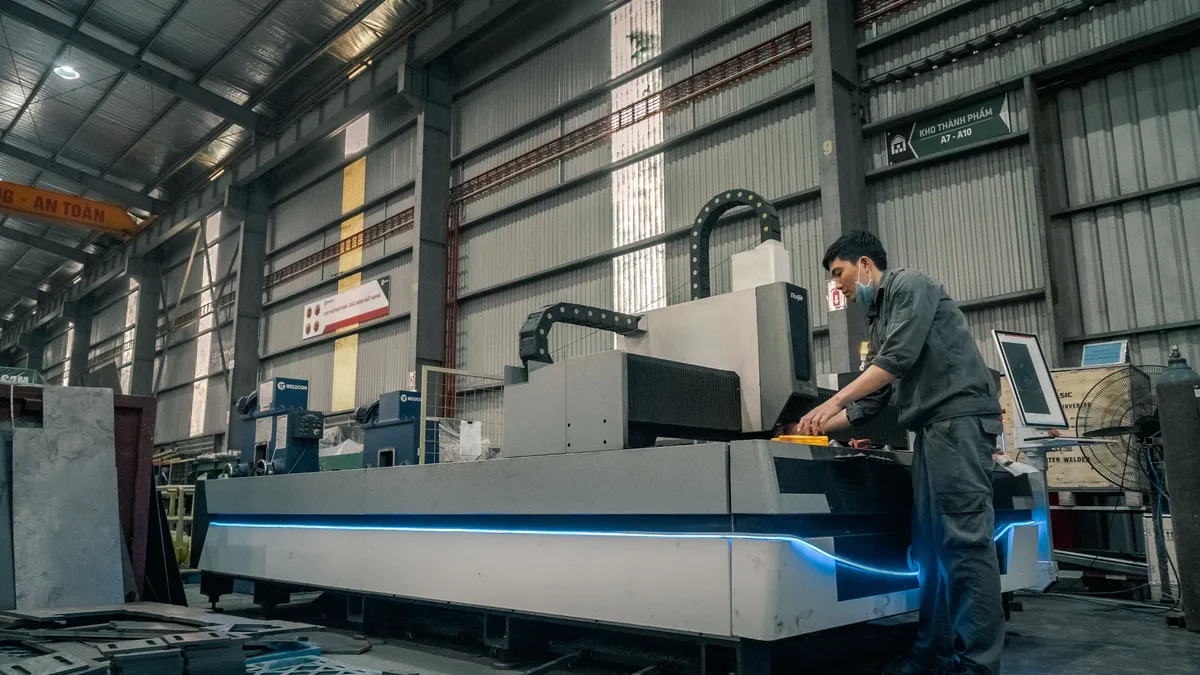
Ford to Shift Lincoln Production to U.S., Phase Out China Imports by 2030
Ford Motor Co. plans to increase domestic production of its Lincoln luxury vehicles starting in 2030, ending imports from China due to high tariffs...