Agvs And Warehouse Automation
| Primary Function | Transporting materials within a warehouse or factory |
|---|---|
| Typical Load Capacity | Ranges from light (sub-100 kg) to heavy (multi-ton) |
| Typical Navigation Method | Laser guidance, magnetic tape, vision, or natural feature |
| Common Power Source | Electric batteries |
| Integration Level | Standalone fleet or integrated with Warehouse Management System |
| Original Use | Automating internal material movement and logistics |
| Typical Operating Environment | Indoor, structured warehouse or factory floors |
Origin and history
The conceptual foundation for automated warehouse systems originates in the mid-20th century, with early developments primarily in the United States and Europe. The first automated guided vehicles (AGVs) were introduced in the 1950s, utilizing wire-guided paths for material handling in factory settings. These early systems were simple tow carts, a far cry from today's sophisticated robots. The true integration of AGVs into comprehensive warehouse automation began in the late 20th century with the rise of computer control and logistics software. The development of e-commerce and its demand for rapid order fulfillment acted as a major catalyst for innovation in this field from the 1990s onward. Modern AGVs and automated storage and retrieval systems (AS/RS) represent the convergence of robotics, sensor technology, and complex warehouse management software.
What it is for
AGVs and warehouse automation are implemented to move materials and inventory throughout a facility with minimal human intervention. Their primary purpose is to increase the speed, accuracy, and efficiency of internal logistics operations. They are designed to handle repetitive transport tasks, such as moving pallets from receiving docks to storage racks. A core function is to support order picking processes by delivering inventory directly to human pickers or automated stations. These systems also optimize storage density through automated high-rise racking and retrieval systems. Furthermore, they provide real-time inventory tracking by integrating movement data with warehouse management systems.
Overview
A modern automated warehouse integrates several key technologies working in concert. Automated Guided Vehicles (AGVs) are mobile robots that navigate defined paths using lasers, magnets, or vision systems to transport loads. Autonomous Mobile Robots (AMRs) are a more advanced category that can navigate dynamically using onboard sensors and maps. Complementary systems include automated storage and retrieval systems (AS/RS), which are high-density racking served by robotic cranes. Conveyor systems and sortation robots are also integral components for moving and diverting packages. The entire operation is orchestrated by a Warehouse Management System (WMS) and a Warehouse Control System (WCS), which coordinate the robots and manage inventory data. This creates a continuous flow of goods from receiving, through storage, to picking, packing, and shipping.
What to know
Implementing warehouse automation is a significant capital investment with a long-term horizon for return. The physical infrastructure often requires a reinforced floor, specific lighting conditions, and potentially a building designed or retrofitted for automation. System integration is a complex challenge, requiring seamless communication between the WMS, WCS, and the various robotic fleets. Maintenance demands shift from manual labor to technical support, requiring staff trained in mechatronics and software troubleshooting. Data accuracy is paramount, as the entire system relies on precise digital inventory records; garbage data in will cause physical dysfunction out. Scalability should be considered from the outset, as expanding an automated system can be more complex than scaling a manual one.
Common questions
A common question is whether AGVs will replace all human workers in a warehouse; the reality is they typically change the nature of jobs, shifting labor from manual transport to system oversight, maintenance, and exception handling. People often ask about navigation methods, with modern systems favoring laser guidance or natural feature navigation over older, inflexible magnetic tape or wire. Many inquire about what happens during a power or network failure; robust systems include contingency plans, such as limited manual operation or backup power for critical control servers. A frequent concern is the flexibility of the system to handle peak seasons or unexpected product mixes; well-designed software can re-route robots and re-allocate tasks dynamically. Questions about safety are paramount, and modern AGVs/AMRs are equipped with LiDAR, cameras, and bump sensors to detect and avoid obstacles, including people. Organizations also commonly ask about the implementation timeline, which can span many months or even years for a full-scale deployment.
Pros and cons
A major pro is the dramatic increase in throughput and order accuracy, leading to higher customer satisfaction and the ability to handle greater sales volume. These systems also reduce physical strain on workers and can operate continuously, enabling 24/7 logistics. A significant con is the extraordinarily high upfront capital cost, which can be prohibitive for small to mid-sized businesses. The system's complexity means that failures can be catastrophic, halting all operations until specialized technicians resolve the issue, whereas a manual warehouse can often work around problems. A common regret stems from underestimating the need for perfect data and process discipline; even minor discrepancies in inventory records can cause the automated system to fail. Companies sometimes mistakenly automate an inefficient process, thereby simply making bad operations faster rather than redesigning the workflow for optimal automation.
Who it suits
This technology suits large-scale distribution centers, e-commerce fulfillment hubs, and manufacturing facilities with high-volume, repetitive material movement. It is ideal for operations where order accuracy and speed are critical competitive advantages and where the financial scale justifies the investment. Companies with stable, predictable product lines and consistent order profiles benefit more than those with highly variable, custom, or oversized items. Organizations facing chronic labor shortages in their geographic area or seeking to mitigate risks associated with manual material handling injuries may find automation a viable solution. It also suits businesses with the internal technical capability or the budget to hire external support for ongoing system maintenance and software management. This approach is generally not suited for small warehouses, operations with frequent major changes to inventory or layout, or companies without the capital for a long-term investment.
Latest Agvs And Warehouse Automation news
Latest reporting
Schneider Electric executive warns humanoids
Andre Marino, Schneider Electric's senior vice president of industrial automation for North America, says humanoid robots are receiving too much...
Winton Machine CEO on Starting a Manufacturing Business
Lisa Winton, CEO of factory automation firm Winton Machine, advises aspiring manufacturers to seize opportunities and use available resources, citing...
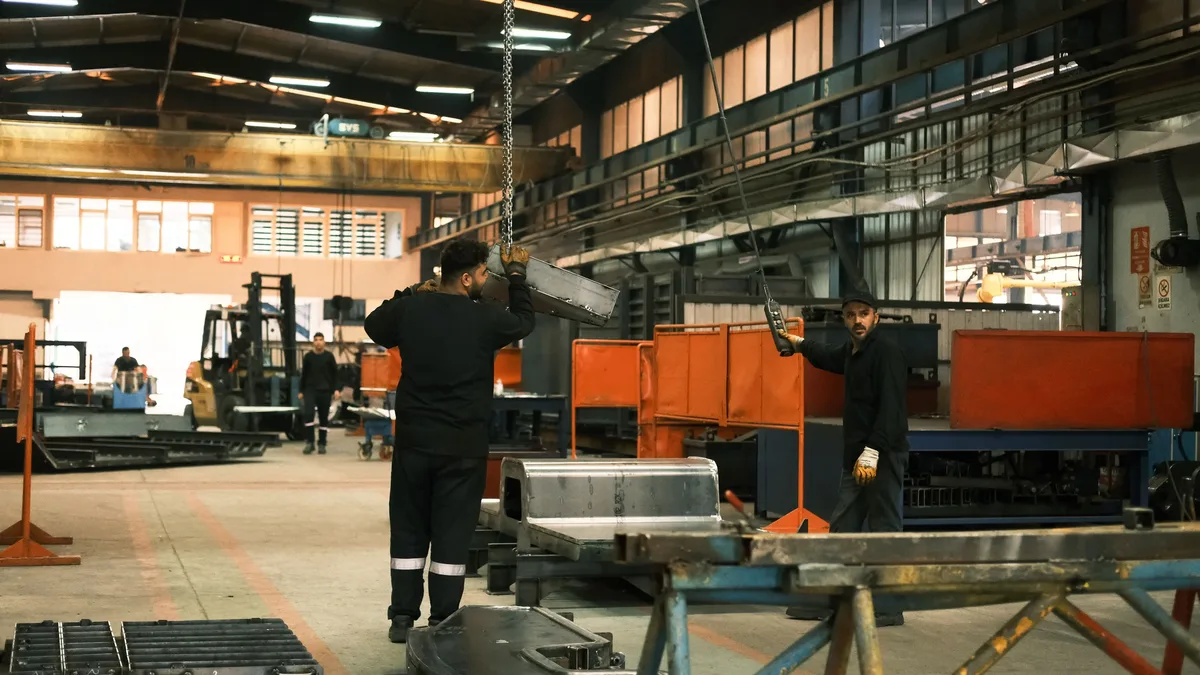
IMTS 2026 Exhibitors Unveil Factory Floor
New automation, tooling, and machining technologies will be showcased by multiple manufacturers at the IMTS 2026 trade show, per event previews.