Global Industrial Robot Installations Growth 2025 Led
The worldwide stock of operational industrial robots reached a record five million units in 2025, a 9% annual increase.
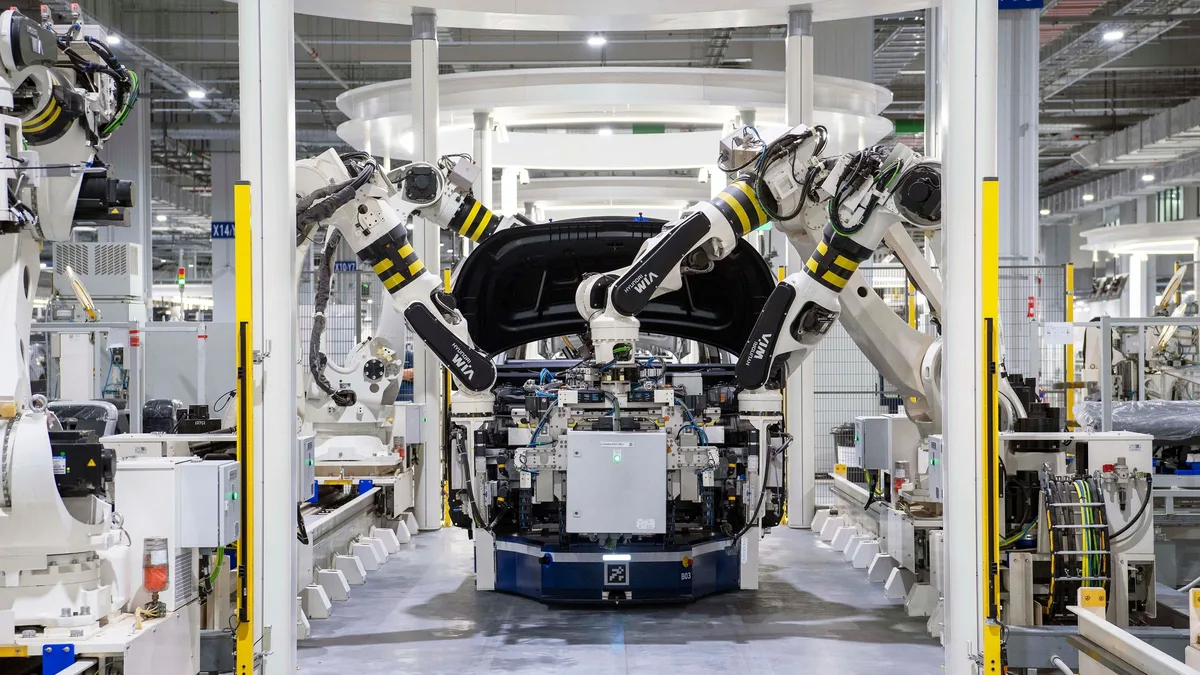
The worldwide operational stock of industrial robots reached a record five million units in 2025. This marked a 9% increase from the previous year and more than doubled the total over the past seven years.
Industrial robot installations increased by 11% in 2025 to 603,000 units. Growth was strongest in Asia, followed by the Americas, while Europe recorded slower expansion.
Asia leads growth as installations rise globally
"The strongest growth is taking place in Asia," said Jane Heffner, president of the International Federation of Robotics (IFR). Markets in the Americas and Europe followed. The global operational stock increased 9% during the year.
China and U.S. Shift in global rankings
China remained the largest market, with 354,000 industrial robots installed in 2025. This accounted for 59% of global deployments. The United States overtook Japan to become the second-largest market globally, with U.S. Installations increasing 12% to almost 38,500 units.
Japan, South Korea, and Germany followed the U.S. In robot installations in 2025. Together, China, the U.S., Japan, South Korea, and Germany comprised 80% of the global robotics market.
Adoption expands beyond traditional sectors
Globally, automotive and electronics manufacturing have been the driving forces behind robot installations. Demand has increased in other industries in recent years. Sectors such as metal and machinery, plastics and chemicals, and food saw robotics demand quintuple from 2015 to 2025.
India is the sixth-largest robotics adopter globally and has seen robotics demand triple over the past five years. In the U.S., automotive drove the majority of robot installations in 2025. Metal and machinery, food, electronics, and plastics and chemicals followed. The food sector saw the highest growth in U.S. Installations at 30% over the previous year.
Outlook points to continued expansion
The IFR projects a 9% increase in installations for 2026, reaching 655,000 unit deployments. The organization said there is no indication that the long-term growth trend in industrial robotics is coming to an end from a global perspective. "Industrial automation is progressing at high speed," Heffner noted.
Demand is being supported by manufacturing relocation, supply-chain resilience requirements, labour shortages, and technological advances. Advances in artificial intelligence, machine vision, and sensing are enhancing robot capabilities. Easier programming and system integration are reducing deployment costs and lowering barriers to entry. The IFR expects global industrial robot installations to reach 806,000 units in 2029.