Nvidia CEO Jensen Huang Declares Physical AI
Nvidia CEO Jensen Huang has identified physical AI as the next critical phase of artificial intelligence, with advanced manufacturing as its primary
Nvidia founder and CEO Jensen Huang declared the arrival of the physical AI revolution during his keynote at the Consumer Electronics Show in Las Vegas last year. Huang's company, valued at $4.72 trillion, is a foundational provider of the computing power required for artificial intelligence systems.
According to an industry commentator writing for Production Machining, Huang outlined AI's evolution from perception and generative capabilities to what he termed "agentic AI." This phase leads directly to physical AI, where intelligent systems are manifested in physical assets. The commentator argues that advanced manufacturing will be the central arena for this transformation.
The Factory of the Future
Rockwell Automation Chairman and CEO Blake Moret recently detailed his company's vision during a podcast interview. Rockwell Automation, an $8 billion firm, is investing over $2 billion in its U.S. manufacturing operations. Half of this investment is allocated to a new plant in New Berlin, Wisconsin.
Moret described factories populated by autonomous mobile robots that deliver materials, with their movements optimized by Manufacturing Execution System (MES) software. He emphasized that product flow and manufacturing instructions will be augmented and perfected by artificial intelligence. The core message for manufacturers, according to Moret, is to begin the AI transformation at the molecular level of production technology.
A Glimpse from China
The commentator reported witnessing the state of physical AI during a visit to China in August 2025. Over six days, visits to 26 technology companies in four cities revealed extensive deployments. Observations included hundreds of delivery drones in Shenzhen, eight companies manufacturing humanoid robots, and manufacturing lines saturated with smart sensors feeding data to servers.
Automated storage systems monitored inventory in real time, feeding data into advanced supervisory control and data acquisition (SCADA) and enterprise resource planning (ERP) platforms. One appliance plant featured a massive, multi-story control room where engineers monitored real-time throughput, cycle time, yield, and order fulfillment on large video screens.
Implementation at the Line
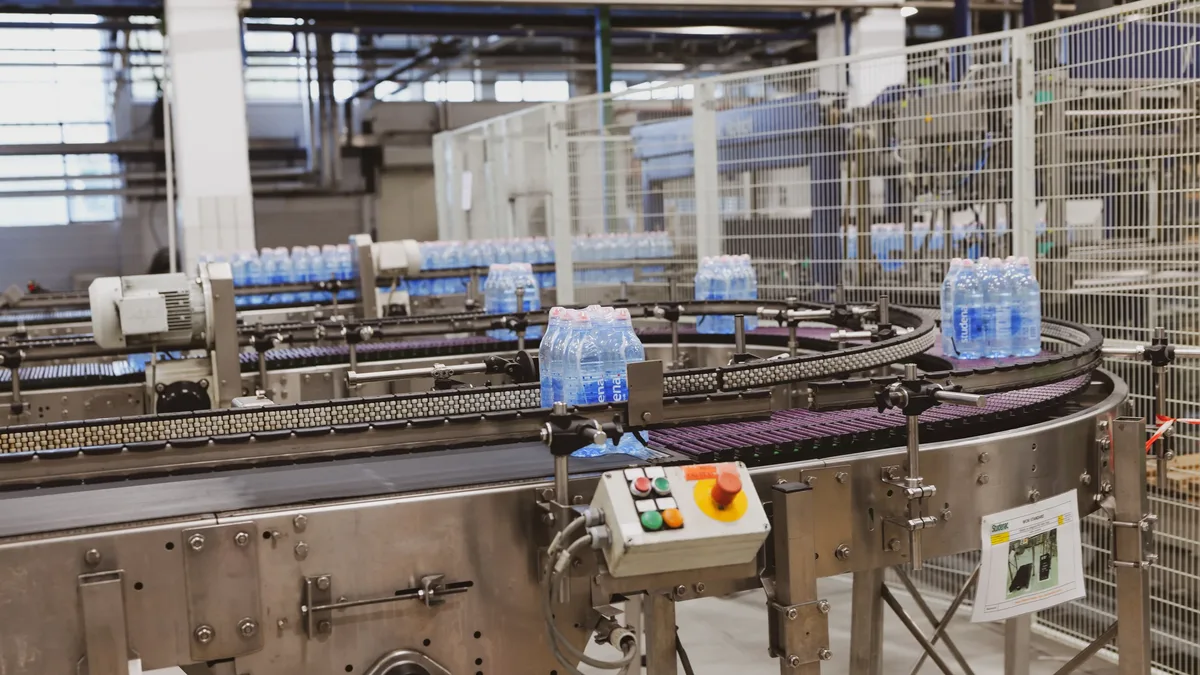
The physical AI transformation fundamentally starts on the factory floor. Smart sensors with embedded intelligence will monitor and adjust every process variable. AI-driven industrial robots with integrated vision systems will handle parts in lot sizes as small as one. Autonomous mobile robots will manage the delivery of raw materials and the transport of finished goods.
The commentator warns manufacturers against feeling overwhelmed or delaying action. They argue that AI can act as a great equalizer for companies of all sizes and budgets. Those who begin implementing these technologies now are positioned to succeed in the emerging industrial landscape. The future of AI is physical, and its foundation is being built in manufacturing plants today.