U.S.-China Trade Truce Extended to Jan 10, Pausing Port Fees
The U.S. And China extended their trade truce by two months to January 10, delaying U.S. Port fees on Chinese ships and China's ban on rare earth exports.
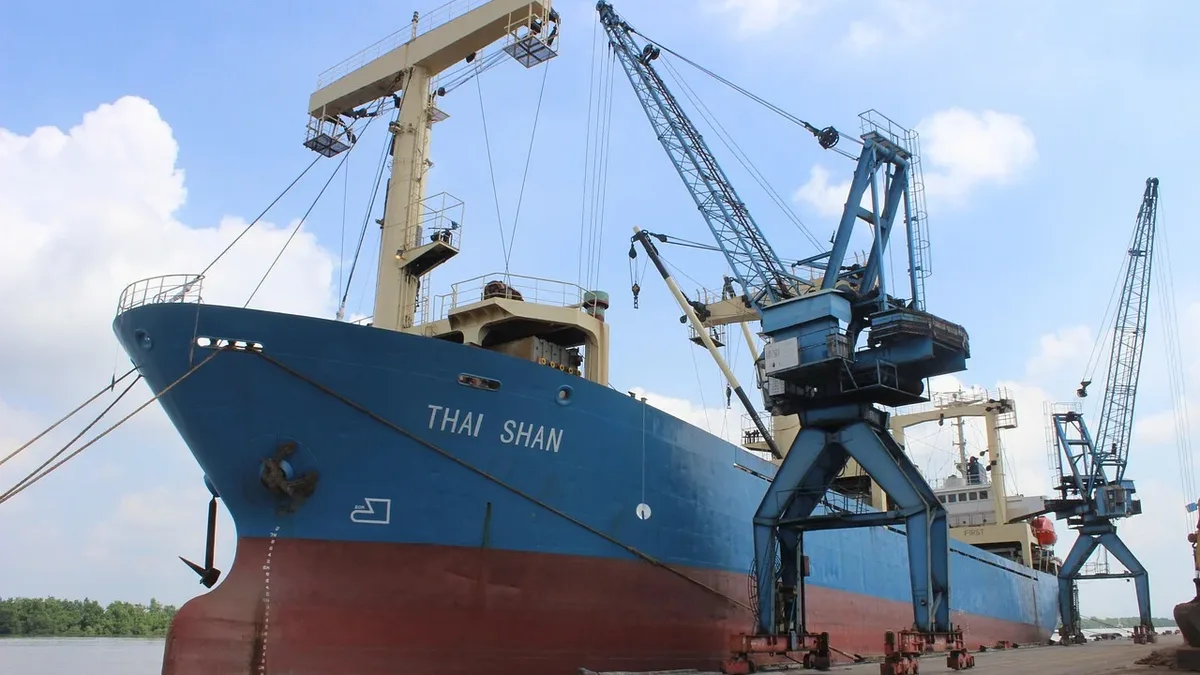
The U.S. And China agreed to a two-month extension of their trade truce, setting a new expiration date of January 10. The move pauses the implementation of U.S. Port fees on Chinese-produced ships and a related export rule, while China will grant licenses for exports of its rare earth elements. The extension came as Chinese President Xi Jinping visited Washington this week.
Under the truce, the U.S. Has paused implementation of port fees on Chinese-produced ships under Section 301. It has also paused the so-called BIS affiliates rule. In return, China has agreed to grant licenses for exports of Chinese rare earth elements. The extension delays China's planned ban on rare earth exports until the new January deadline.
NAM Warns Port Fees Would Raise Manufacturing Costs and Strain Logistics
The National Association of Manufacturers and its industry partners have reinforced their opposition to the proposed port fees. They warn the charges would add significant costs and logistical burdens for U.S. Manufacturers. The NAM had urged the U.S. Trade Representative last year not to impose the fees, arguing for a focus on strengthening domestic shipping and shipbuilding instead.
Due to a dearth of U.S.-built ships, the NAM states the USTR's approach would effectively impose the minimum fee on nearly all cargo vessels calling at U.S. Ports. The association estimates the port fees would add between $600 and $800 for each 20-foot equivalent container unit. Shippers would likely pass this entire cost through to their business customers. This would in many cases further raise the cost of manufacturing in the United States.
The NAM also warns ocean carriers would limit the number of ports they serve, particularly smaller ones. This would reduce manufacturers' shipping options and increase congestion at major ports. The NAM and its partners told the USTR this week that the fees would not help rebuild the U.S. Shipbuilding industry. They would instead add costs and logistical burdens to the transportation system.
Broader Tensions Persist Over Tech, Rare Earths, and Taiwan Despite Truce
Analysts describe the two-month extension as fragile, with major unresolved issues threatening renewed conflict. The meeting occurred amid ongoing strategic rivalry over artificial intelligence, rare-earth metals, Taiwan, and other flashpoints. A senior fellow at the Center for International Governance Innovation called the extension a temporary sandbag holding back a structural flood. He described the truce as transactional theatre aimed at good optics.
A professor at ESSEC Business School said the shortening extensions indicate no common ground on many issues. He called the two-month extension a terrible outcome for the U.S., with unresolved issues and Damocles' swords still hanging. A fellow from Tsinghua University's Center for International Security and Strategy called it a useful interim step showing both sides want to preserve eased tensions. He said a sustainable agreement requires reciprocal benefits and greater policy predictability. Additional soybean purchases cannot indefinitely compensate for uncertainty over tariffs, tech restrictions, and market access.
A July 2026 Congressional Research Service report noted Chinese goods exported to the U.S. Face 36.5% tariffs, while U.S. Goods entering China face 31% tariffs. The Tsinghua fellow warned higher tariffs would raise import and manufacturing costs in the U.S., squeeze margins, increase consumer prices, and hurt farmers and industrial exporters.
Technological decoupling remains a key pressure point. A senior fellow at the Carnegie Endowment for International Peace said a partial decoupling of U.S. And Chinese tech ecosystems is underway, with U.S. Policymakers aiming to reduce dependence. The Center for International Governance Innovation senior fellow warned an AI valuation collapse could trigger a financial tsunami worse than 2008, making technological decoupling meaningless.
Rare earths are a critical leverage point. China holds 60% of the world's known rare-earth deposits and processes 90% of them. It began restricting exports of five of the twelve rare-earth metals it mines in April 2026. By October 2026, it had prepared to restrict seven more until the trade truce happened. The ESSEC professor said these export restrictions are not shelved, merely on hold, and China will not give up this leverage. The Center fellow noted Washington is hostile but hooked, needing China's rare earths to fuel its military-industrial base.
For a durable deal, the Tsinghua fellow said more predictable licensing, actual deliveries of rare earths and critical minerals, restraint in expanding tech restrictions, and improved market access are needed. He also called for regular consultations and a complaint-resolution process. However, the ESSEC professor said durable is a word that can hardly be associated with the current U.S. Administration.
The truce risks breaking down from new unilateral tariffs, broader tech or mineral restrictions, or disputes over commitment fulfillment. Analysts also noted tensions over Taiwan could trigger a breakdown, citing the U.S.'s $11.1 billion arms sale to Taiwan in December 2025. The extension delays China's ban on rare-earth exports until January 10, preserving temporary access to critical minerals for U.S. Manufacturers.