Arm Launches Physical AI Ecosystem with 80+ Partners
Arm Holdings has launched its Arm Total Design for Physical AI program, uniting over 80 companies to improve interoperability in robotics and AI system
Arm Holdings PLC has launched the Arm Total Design for Physical AI program, bringing together more than 80 companies across the technology stack. The company also introduced a Robotics Capability Framework intended to create a common language for defining robotic systems.
Dermot O'Driscoll, Arm's vice president of go-to-market and customer solutions for physical AI, explained the goal to The Robot Report. The goal with Arm Total Design for Physical AI is to bring together those companies that are participating in the physical AI space, but are maybe looking at ways to work better together, he said. The program's founding members include AWS, ECARX, Hugging Face, Liquid AI, NXP, PlusAI, Psyonic, QNX, Qwen, Siemens, and Unitree Robotics.
O'Driscoll noted the model was adapted from a similar community Arm built for the cloud ecosystem. He identified a parallel gap in the physical AI sector after moving to the role in March. "There was no place where companies could come together and either share technology and ideas, or collaborate," he recalled.
Arm Total Design aims to increase interoperability
The robotics industry is highly fragmented, combining expertise from numerous disciplines. A single system often integrates hardware and software from many different suppliers. Arm, based in Cambridge, U.K., says it aims to ease the integration challenges it has observed.
O'Driscoll stated that many developers wanted to build on Arm's architecture but struggled to form partnerships or ensure compatibility. "So, it was worth us putting together an ecosystem whereby we could seed in our IP, our technology, and other partners could bring their technologies," he explained. The program consolidates expertise in software stacks, AI models, sensors, compute hardware, virtual platforms, and digital twins to allow earlier development and validation of interoperable systems.
We think that the ecosystem could really use a point of coherence where companies can come together, O'Driscoll said. The network spans from silicon and cloud companies to firms in actuation, sensing, software frameworks, security, safety, robotics, and end-customers.
Robotics Capability Framework to encourage collaboration
Alongside the partner program, Arm released its Robotics Capability Framework. This framework defines six levels of increasing sophistication for robotic systems. O'Driscoll claims it will help both industry insiders and the broader public better understand robotic capabilities.
Robots are being used, he said. They're being propagated, but it's a bit fragmented in how we talk about them, and how we define them. The six levels range from basic reactive machines to advanced systems with evolving, self-optimizing behavior.
| Level | Capability Description |
|---|---|
| 0 | Robots react to stimuli and execute commands but must adhere to fixed rules. |
| 5 | Robots exhibit evolving behavior that learns and self-optimizes. |
Arm presented these initial levels as a starting point based on currently deployed robots. The company is inviting industry feedback and is open to adjustments. We're inviting people to come and work with us on this, O'Driscoll stated. We think that this is something that's better done as an ecosystem, as a community.
Robotics has more to learn from the automotive industry
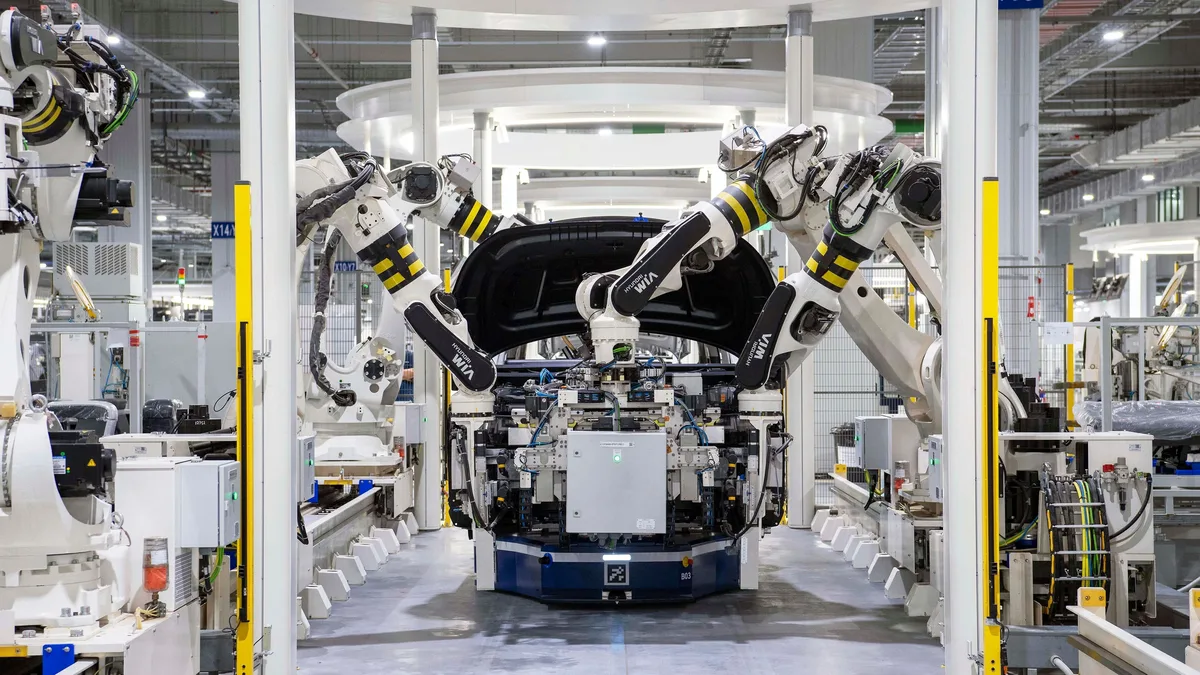
Arm's extensive history in automotive computing informed its approach. O'Driscoll noted that every modern vehicle does some computing on an Arm chip. The company observed that robotics and automotive manufacturing share requirements for safety-critical systems, real-time computing, and computer vision.
This overlap led Arm to draw inspiration from SAE International's levels of autonomous driving for its own framework. Robotics is more complex and, therefore, it's more of a multi-dimensional framework, O'Driscoll said. That's what made us think there's an opportunity to bring a little more organization to it.
He added that automotive companies themselves are recognizing the technological convergence and are showing interest in the robotics sector. Many are exploring how their automotive-developed technologies could be applied to robotics, allowing Arm to quickly connect with existing partners.
Arm aims to ease robot development and deployment
O'Driscoll described Arm Total Design and the Robotics Capability Framework as complementary initiatives. The partner program aims to simplify the building of robotics applications, while the framework aims to streamline technology deployment. That common language will fast-track deployments as people start to figure out where robots can be used, he said.
The next phase involves organizing collaborative sessions for member companies, with plans to begin these meetings in the coming months. O'Driscoll emphasized the importance of delivering tangible benefits to members quickly, citing both technical and commercial advantages from participating in an ecosystem that helps shape and guarantee solution interoperability within a robot. Companies interested in joining Arm Total Design can submit a request.