Monumental's robots tackle construction
Monumental is deploying a fleet of three robots to automate bricklaying, targeting a severe labor shortage in Western Europe and the U.S.
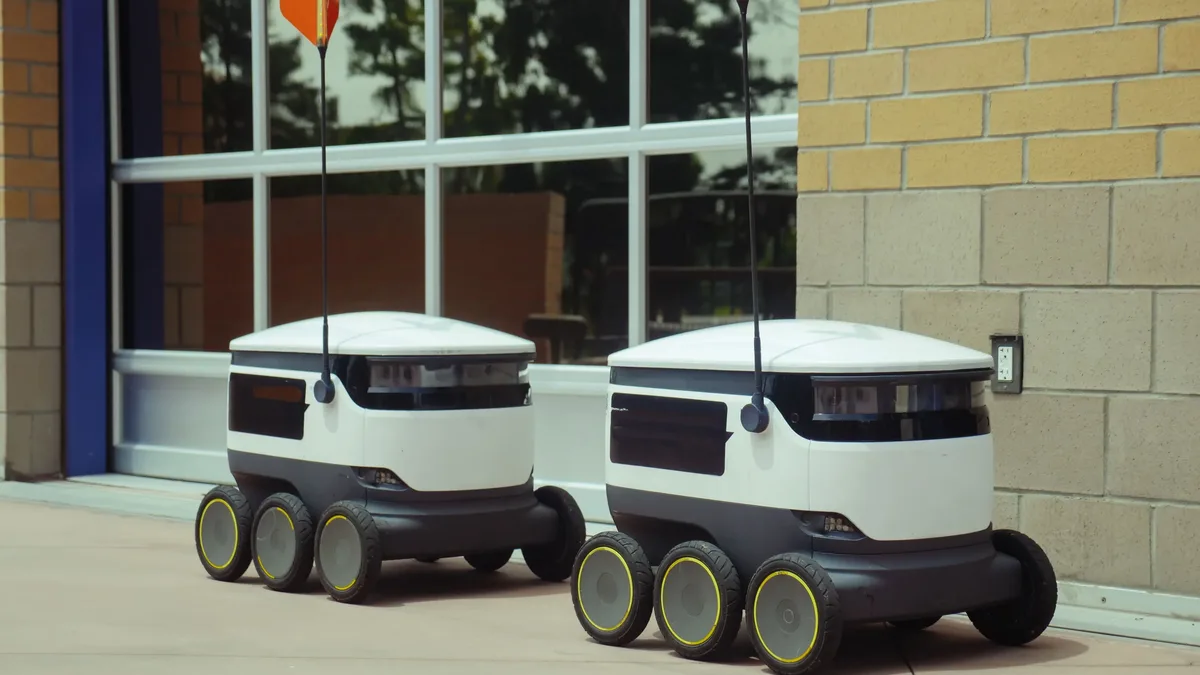
Monumental is betting robots can help solve a critical labor shortage in construction. According to the Association of General Contractors, 92% of contractors have difficulty filling roles, while the U.S. Faces a shortfall of 4.5 million homes.
Founder and CEO Salar al Khafaji told The Robot Report that construction presents a unique opportunity for robotics. He argues the narrative is not about replacing labor to cut costs, but addressing a desperate need for workers as more people retire and fewer young people enter the industry.
"It's literally there's not enough people to do the work. We desperately need this technology," al Khafaji said.
The company chose to start with bricklaying for two reasons. First, it is difficult work, and automating it would pave the way for other tasks. Second, bricklayers are the top job-shortage category in multiple Western European countries like the U.K., the Netherlands, and Germany.
The three stages of robotic construction
Al Khafaji breaks home construction into three major stages. The first is ground preparation, using excavators and ground movers. This stage has seen the most robotic momentum so far, with companies developing autonomous heavy machinery.
Monumental operates in the second phase: building the shell. The company focuses on brickwork and block work. Al Khafaji sees little competition in this area currently.
The third, finishing phase-involving drywall, flooring, and interior work-has attracted even less robotic interest. Canvas Robotics, which made drywall finishing robots, had its core technology acquired by Oshkosh earlier this year.
Several companies in the ground preparation stage have secured significant funding recently.
| Company | Recent Funding Round |
|---|---|
| Gravis Robotics | $200 million |
| TerraFirma | $115 million |
| Bedrock Robotics | $270 million |
Monumental's three-robot bricklaying system
Monumental has built three robots to handle bricklaying on construction sites. The primary robot is named Pisa. It is a non-humanoid pick-and-place bricklaying robot with two arms, functioning like tiny tower cranes. One arm places bricks while the other extrudes mortar.
The other two robots ensure Pisa has a continuous supply of materials. Petra brings bricks, and Panama supplies mortar.
"A lot of things in construction actually are about material handling," al Khafaji said. He observed that construction workers frequently move materials with wheelbarrows, making solving material handling key.
All three robots are built on the same platform, allowing for future fleet expansion. Al Khafaji estimated only 10% of the company's technology is strictly for bricklaying; the other 90% relates to general robot operation on a construction site. The team uses a mushroom-shaped communication device called Pathion at worksites to provide 4G, 5G, Starlink, and Wi-Fi connectivity.
Handle a fragmented industry
The construction industry is highly fragmented, with numerous subcontractors on any given site. Monumental handle this by acting as another subcontractor, arriving with a team of robots instead of people.
Al Khafaji said this fragmentation is an advantage. Subcontractors are accustomed to being hired for specific tasks without needing to integrate deeply into a client's existing infrastructure. "No one expects that subcontractor to follow their playbook," he said.
However, this model presents challenges related to site dependencies. A robot team's effectiveness can be halted by issues like undelivered bricks. Some companies, like Reframe Systems, are taking a different approach by using robotic microfactories to build entire homes.
Learning through real-world deployments
Monumental prioritized field deployments in its first year to avoid becoming a detached "robotics lab." These deployments have provided critical, unpredictable lessons.
Before an early deployment, the team discovered the bricks to be used were pitch black, a color its computer vision models, trained on typical red and lighter bricks, could not recognize. The team had to retrain the model using new data from the site.
"This is actually why it's great to do these deployments. You get real-world data," al Khafaji said.
He described the current state of robotic construction as a "small pilots stage," which is fundamentally a learning stage. Scaling requires a rich dataset built from diverse examples of brick colors, weather conditions, construction sizes, regions, and regulations. Al Khafaji believes it is only a matter of time and work before robots become a common sight on construction sites.