Fanuc America
| Founded | 1977 |
|---|---|
| Headquarters | Hoffman Estates, Illinois |
| Parent company | Fanuc Corporation |
| Primary industry | Industrial automation |
| Key products | CNC systems, robots, ROBOMACHINE |
| Service focus | Manufacturing sector |
| Application areas | Machining, assembly, welding, dispensing |
Overview
Fanuc America Corporation is the North American subsidiary of the Japanese robotics and factory automation multinational FANUC Corporation. It is responsible for sales, engineering, systems integration, and customer support for the parent company's products across the United States, Canada, and Mexico. The company's core offerings include industrial robots, computer numerical control (CNC) systems, laser products, and factory automation solutions known as the Factory Automation (FA) series. These integrated systems are designed to automate discrete manufacturing processes such as machining, welding, assembly, painting, and material handling. Fanuc America operates extensive technical and training facilities to support the implementation and maintenance of its equipment in customer plants. Its products are foundational components in modern manufacturing floors, aiming to improve precision, repeatability, and throughput while reducing direct labor requirements.
History
Fanuc America was established in the 1970s as the North American operations of FANUC LTD, which itself was founded in Japan in the 1950s as a spin-off from Fujitsu. The parent company's early focus was on developing numerical control (NC) and servo systems for machine tools, which later evolved into computer numerical control (CNC). The creation of Fanuc America coincided with the rapid growth of industrial robot adoption in automotive and electronics manufacturing during that decade. Its founding was a strategic move to provide localized support and engineering to major manufacturing industries in the United States, particularly the automotive sector in the Midwest. Over subsequent decades, the subsidiary expanded its portfolio from CNCs and robots to include integrated vision systems, motion control, and software for entire production lines. This historical trajectory mirrors the broader shift in global manufacturing towards automated, flexible production systems.
How it works today
On the factory floor, a Fanuc system typically integrates multiple components into a cohesive cell or line. The process begins with a Fanuc CNC system precisely controlling the movements of a machine tool, such as a lathe or machining center, to cut raw material into a finished part. A Fanuc industrial robot, often equipped with specialized end-of-arm tooling, then handles the part transfer, moving it from the machine to a vision inspection station or to a subsequent assembly stage. These robots are programmed using the proprietary Teach Pendant or offline simulation software to follow exact paths for tasks like welding, dispensing, or palletizing. The entire cell is frequently managed by a Fanuc PMC (Programmable Machine Controller) or integrated into a broader network via the FANUC FIELD system, which collects performance data for monitoring and analysis. This integration allows for lights-out manufacturing cycles where raw materials enter and finished components exit with minimal human intervention.
Why it matters
Fanuc's automation systems are critical for manufacturers seeking to compete in global markets where consistency, quality, and cost control are paramount. The reliability and repeatability of Fanuc CNCs and robots enable high-volume production of complex components with minimal variance, which is essential in industries like aerospace and medical devices. Investment in such automation is often announced by companies as a strategic move to reshore production, increase capacity without proportionally increasing labor, or retool for new product lines. The deep installed base of Fanuc equipment means a vast ecosystem of trained technicians, available spare parts, and institutional knowledge, reducing long-term operational risk for factories. Furthermore, the company's focus on system integration supports the trend towards smart factories and Industry 4.0, where machine data is used for predictive maintenance and process optimization. For many manufacturers, choosing a Fanuc system represents a conservative, proven investment in foundational manufacturing technology.
Common misconceptions
A common misconception is that Fanuc automation is only suitable for large, high-volume automotive manufacturers, whereas its product range includes many robots and CNCs designed for small to medium-sized enterprises and lower-volume, high-mix production. Another is that Fanuc systems are entirely closed and proprietary, while in reality they offer various standard communication protocols like Ethernet/IP and Profinet to connect with other equipment, though deep-level programming often requires specialized knowledge. Some believe that implementing Fanuc robots guarantees immediate productivity gains, but without proper system integration, workforce training, and process redesign, the equipment can become an underutilized capital expense. There is also a mistaken view that the company's robots are primarily for heavy lifting, ignoring their extensive use in precise, delicate operations like small-part assembly and cleanroom applications. Finally, the perception that Fanuc America merely sells imported products overlooks the significant local engineering, custom cell building, and application support performed at its U.S. facilities.
Latest Fanuc America news
Latest reporting

Eric Cantor Appointed President and CEO of PhRMA
Eric Cantor, former House Majority Leader, will lead the Pharmaceutical Research and Manufacturers of America starting November 9, 2026, succeeding...
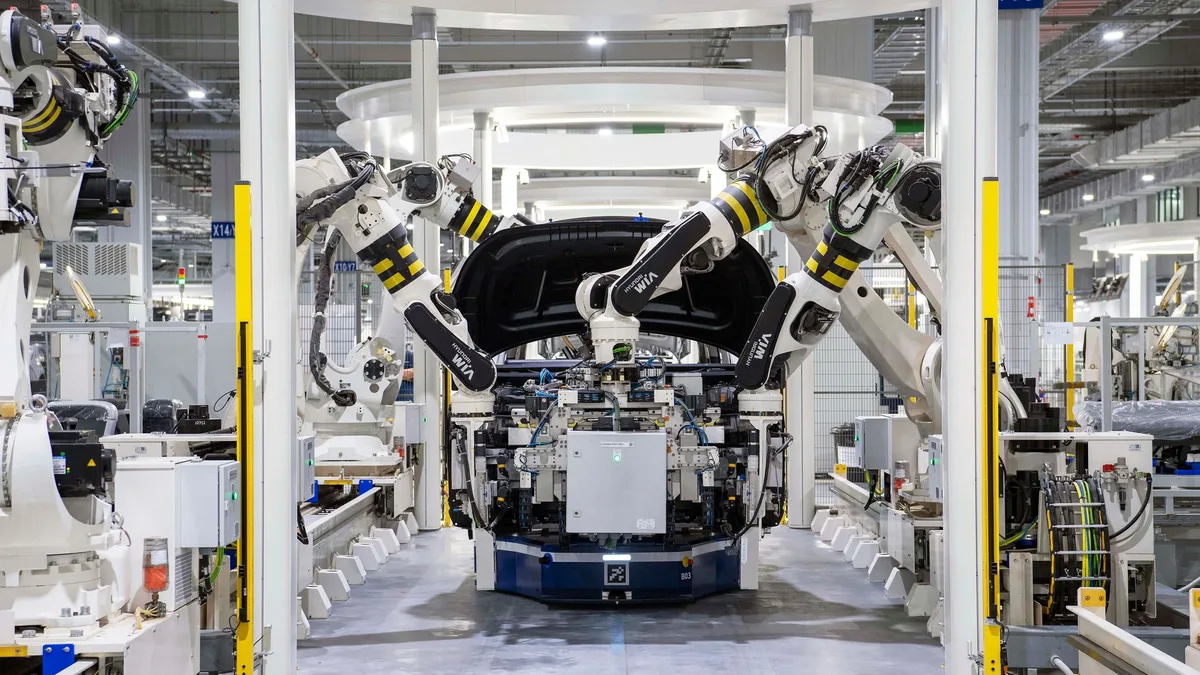
Schneider Electric executive warns humanoids
Andre Marino, Schneider Electric's senior vice president of industrial automation for North America, says humanoid robots are receiving too much...

Hyundai targets 80% local parts sourcing in North America
Hyundai Motor Co. Plans to source 80% of parts for North American vehicles from local suppliers by 2030, up from 60% today.
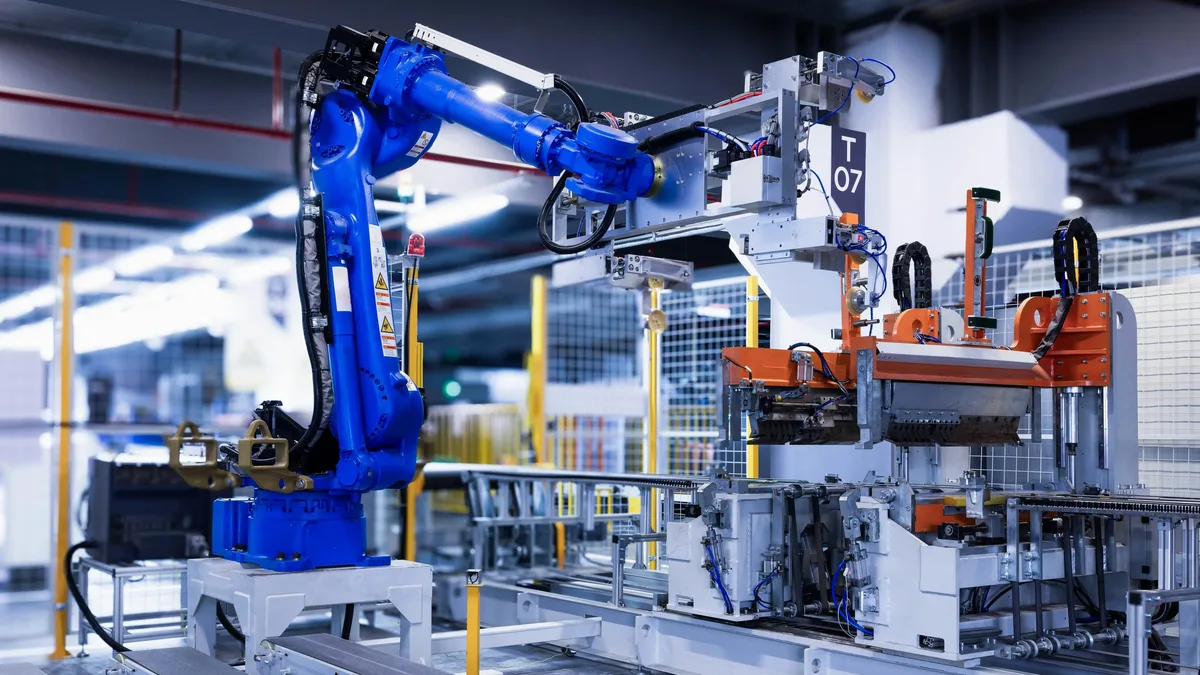
Reframe Systems raises $40M for robotic
Robotics construction firm Reframe Systems has secured $40 million in funding to scale its network of automated microfactories across North America...
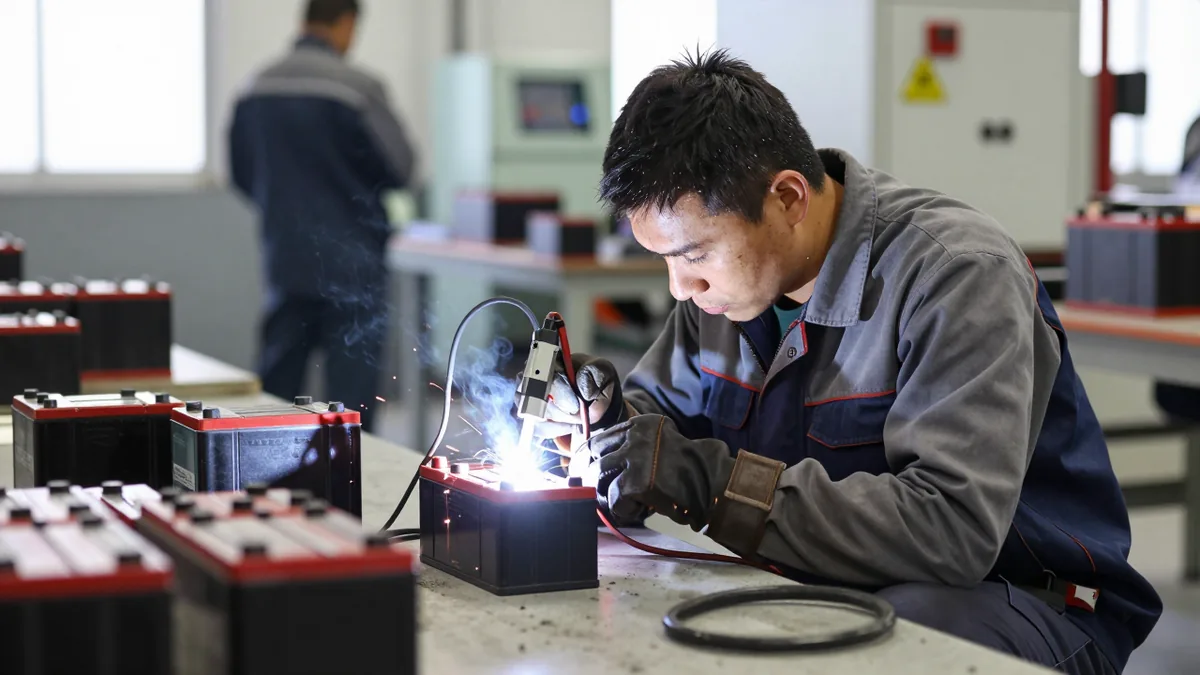
Samsung SDI Takes Full Control of Indiana EV Battery Plant After GM Exit
Samsung SDI has bought General Motors' 49.99% stake in the SynergyCells joint venture, turning the New Carlisle, Indiana facility into its first...