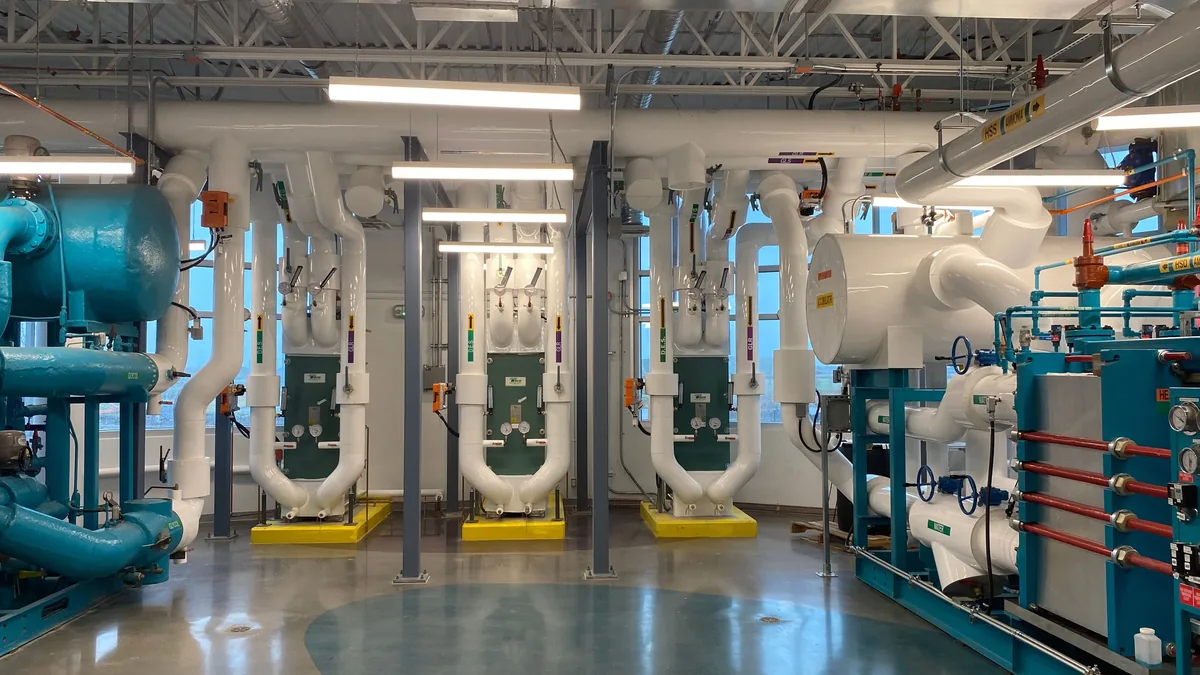
Mes And Shop Floor Software
| Primary purpose | Orchestrating and tracking manufacturing operations |
|---|---|
| Scope | Entire production facility or specific production line |
| Core function | Real-time data collection and production monitoring |
| Integration | With Enterprise Resource Planning (ERP) systems |
| Deployment model | Typically licensed software, often cloud-based |
| Original use | Replacing paper-based tracking and manual data entry on factory floors |
| First documented | Late 1980s to early 1990s |
Origin and history
Manufacturing Execution Systems (MES) and shop floor software have their conceptual origins in the manufacturing planning and control systems developed in the United States during the late 20th century. The specific term "Manufacturing Execution System" was formally defined and promoted by industry research groups like AMR Research in the early 1990s. These systems evolved from earlier, more isolated shop floor data collection and process monitoring applications. Their development was driven by the need to bridge the gap between enterprise resource planning (ERP) systems and the real-time physical processes on the factory floor. The proliferation of programmable logic controllers (PLCs) and affordable computing power in the 1980s provided the necessary technological foundation. The philosophy of integrating shop floor data for better decision-making aligns closely with broader manufacturing methodologies like Lean, which gained significant traction in the same period.
What it is for
MES and shop floor software is for tracking, controlling, documenting, and optimizing the transformation of raw materials into finished goods on the production floor. Its primary purpose is to provide real-time visibility into production activities, enabling immediate intervention when deviations occur. The software is designed to manage work orders, dispatch production instructions to operators and machines, and collect detailed performance data. It serves to enforce standard operating procedures and ensure product quality by managing specifications and capturing quality data at the source. A core function is detailed production tracking, providing traceability from components through to the final assembled product. Ultimately, it exists to convert real-time operational data into actionable information for supervisors and plant managers, closing the loop between planning and execution.
Overview
MES and shop floor software functions as a centralized layer of control and information hub for the manufacturing environment. It typically interfaces with business-level ERP systems above it and with automation equipment, sensors, and human-machine interfaces (HMIs) below it on the shop floor. Core modules often include production scheduling, labor and machine tracking, material and lot genealogy, quality management, and performance analysis. The system collects data automatically from machines and manually from operator inputs, creating a comprehensive as-built record for every unit produced. This record is crucial for compliance in regulated industries like pharmaceuticals, aerospace, and medical devices. Implementation ranges from comprehensive, integrated MES suites to more focused, point solutions addressing specific shop floor functions like machine monitoring or electronic work instructions.
What to know
A critical thing to know is that MES is not an off-the-shelf product that works identically in every factory; it requires significant configuration and often customization to map to specific production processes and workflows. Successful implementation is dependent on clean, reliable data from the shop floor, which often necessitates upgrading or integrating legacy equipment and establishing strict data discipline. The software's value is directly tied to user adoption, meaning it must provide clear, immediate utility to floor operators and supervisors, not just to management. It is important to understand that MES projects are as much about business process re-engineering as they are about technology installation. The system creates a digital thread of information, but this requires standardized part numbers, consistent work center definitions, and disciplined scan or entry points. Finally, the boundary between MES and adjacent systems like ERP, PLM, and SCADA is not universally defined, so scope clarity is essential to avoid overlaps or gaps in functionality.
Common questions
A common question is how MES differs from an ERP system, with the key distinction being that ERP plans *what* should be made and manages business resources, while MES executes and tracks *how* it is made on the floor in real time. Many ask about the return on investment, which is typically realized through reduced waste, lower inventory, improved quality yields, and increased equipment effectiveness, but requires rigorous measurement of baseline performance. Organizations frequently inquire about implementation timelines, which can vary from several months for a focused application to multiple years for a full-scale, plant-wide rollout depending on complexity. People want to know if they can start with a modular approach, and vendors often support phasing in functionality like electronic work instructions or downtime tracking before a full suite deployment. A recurring question concerns integration challenges, particularly with older machinery that may lack digital communication ports, requiring middleware or manual data entry solutions. Finally, users often ask about mobility, with modern systems providing tablet and smartphone interfaces for operators and supervisors to interact with the system directly on the line.
Pros and cons
The software enforces process discipline and standardization, reducing variability and improving consistent output quality. Detailed traceability and electronic batch records drastically reduce the time and cost associated with compliance audits and product recalls. A major con is the high initial cost and complexity of implementation, which can strain IT resources and require extensive consulting services. A common mistake is treating the implementation as a purely IT project without deep involvement from production engineering and floor management, leading to a system that does not reflect real workflow needs. Many organizations regret their choice when they select an overly rigid system that cannot adapt to process changes or unique requirements without expensive custom code, creating a long-term maintenance burden. The software can also introduce new points of failure; if the network or servers go down, critical production instructions and data capture may halt.
Who it suits
This software suits discrete and batch process manufacturers in highly regulated industries like medical devices, aerospace, and automotive, where traceability and process validation are non-negotiable. It is appropriate for medium to large manufacturing operations with sufficient complexity, volume, and data density to justify the investment and operational overhead. Companies pursuing operational excellence initiatives like Lean or Six Sigma benefit greatly, as the system provides the granular data needed for continuous improvement projects. It suits organizations with existing ERP systems that are struggling with a lack of visibility into the "black box" of the shop floor and experiencing gaps between planned and actual production. Manufacturers with frequent changeovers, complex bill of materials, or stringent quality requirements will find the control and documentation capabilities particularly valuable. Conversely, it is generally less suited to very small, simple, or low-mix/high-volume process operations where the cost and complexity outweigh the potential benefits of detailed tracking and control.
Latest Mes And Shop Floor Software news
Latest reporting

Qualcomm Acquires PickNik to Integrate MoveIt Pro
Qualcomm Technologies has acquired robotics software firm PickNik Inc., aiming to integrate the open-source MoveIt framework with its Dragonwing...

Intrinsic open sources core robotics
Google's Intrinsic has released Intrinsic Core, an open-source software platform designed to accelerate the development of robotic applications for

Ford invests $1 billion in Kentucky Truck Plant paint shop
Ford Motor Co. Is investing $1 billion in its Kentucky Truck Plant in Louisville to add a state-of-the-art paint shop, aiming to improve quality and
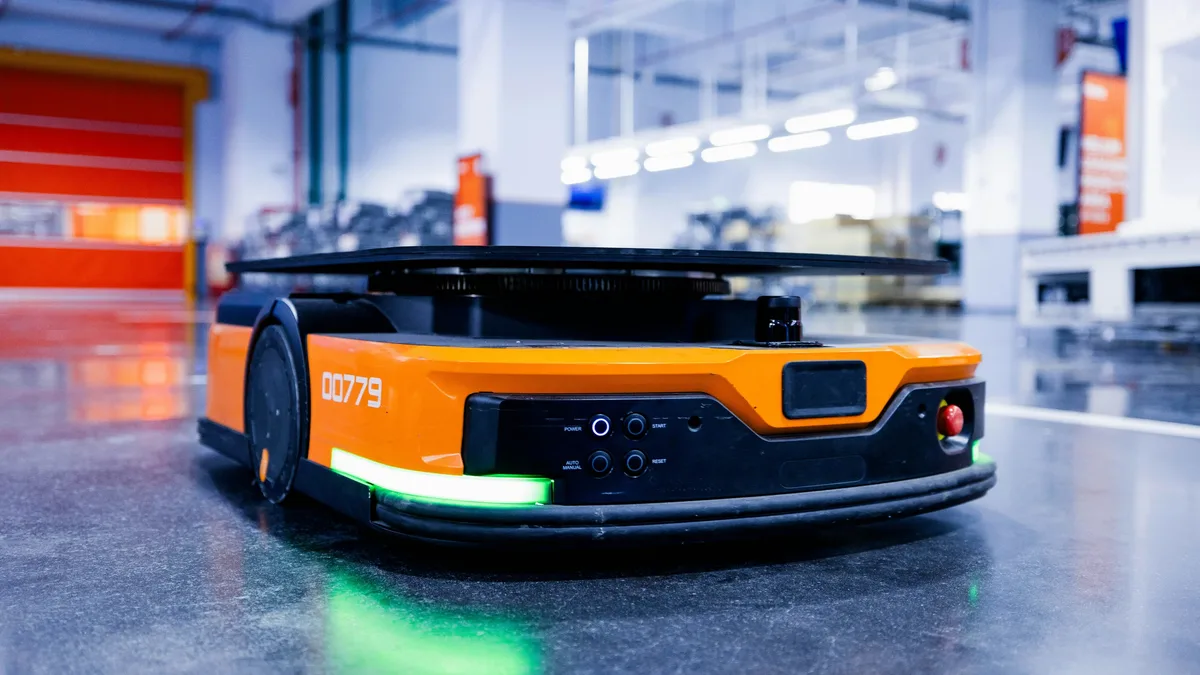
Lyte raises $165M to scale robot perception
Lyte AI has secured $165 million in Series C funding to scale production of its integrated sensing hardware and software for industrial robots.

PlusAI to go public via $800M SPAC deal for autonomous
Autonomous truck software developer PlusAI is merging with a SPAC, valuing it at $800 million. The company is already generating revenue from its...
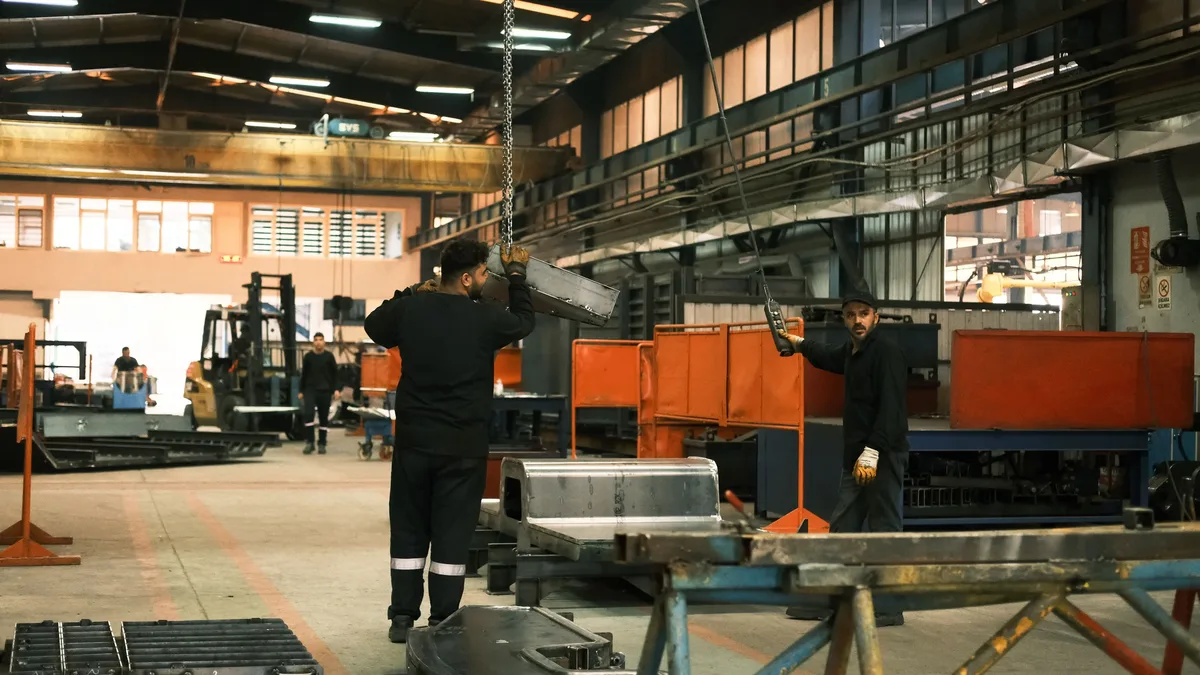
IMTS 2026 Exhibitors Unveil Factory Floor
New automation, tooling, and machining technologies will be showcased by multiple manufacturers at the IMTS 2026 trade show, per event previews.