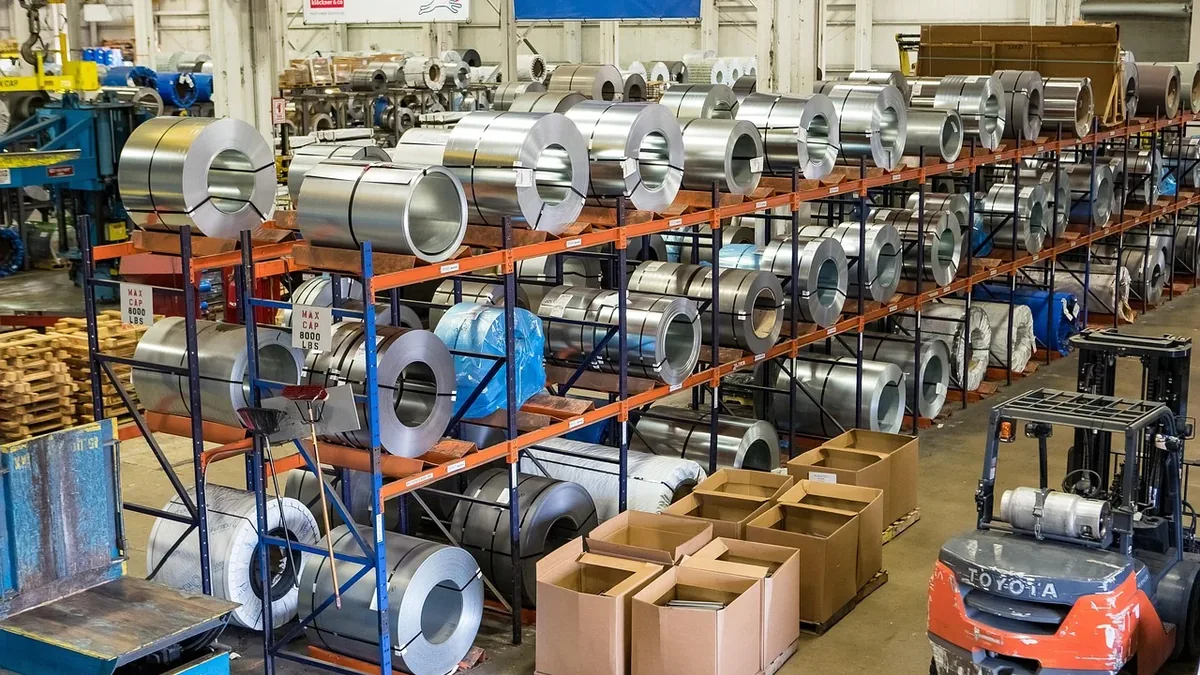
Inventory Strategy And Buffer Stock
| Original use | To manage material flow and protect production from supply or demand variability |
|---|---|
| Primary goal | To ensure production continuity while minimizing capital tied up in inventory |
| Key metric | Service level (percentage of demand fulfilled without delay) |
| Core principle | Decoupling points (strategic inventory locations that separate process stages) |
| Common types | Cycle stock, safety stock, seasonal stock, speculative stock |
| Typical inputs | Demand forecast, lead time, lead time variability, desired service level |
| Calculation basis | Statistical models (e.g., based on normal or Poisson distributions) |
Origin and history
The formalized concepts of Inventory Strategy and Buffer Stock emerged from industrialized Western nations, particularly the United States and the United Kingdom, during the early to mid-20th century. Their development was driven by the need to manage increasingly complex manufacturing and supply chains following the Second Industrial Revolution. The rise of mass production techniques, such as those pioneered by Henry Ford, created a pressing need to coordinate material flows and prevent costly production stoppages. Operational research conducted during World War II significantly advanced the mathematical modeling of inventory problems, seeking optimal levels of military supplies. In the post-war manufacturing boom, these principles were refined and systematized within business management curricula and industrial engineering practices. The widespread adoption of computerized systems in the latter decades of the 20th century allowed for the sophisticated application of these strategies on a previously impossible scale.
What it is for
Inventory Strategy and Buffer Stock exist to balance competing financial and operational pressures within a manufacturing or distribution environment. The primary purpose is to ensure production continuity by preventing stockouts of raw materials or components that would idle workers and machinery. A secondary purpose is to decouple different stages of a production process, allowing one workstation to continue operating independently if a preceding stage experiences a delay. This approach also provides a cushion against variability in supplier lead times, transportation delays, and unexpected spikes in customer demand. Strategically, it allows a factory to maintain a reliable service level and fulfill customer orders without excessive delay. Ultimately, it is a calculated investment in holding costs to avoid the far greater costs of lost production, expedited shipping, and damaged customer relationships.
Overview
An inventory strategy is a comprehensive plan that dictates how much inventory to hold, where to hold it, and when to reorder. Buffer stock, also known as safety stock, is a specific tactical element within that broader strategy, representing the extra inventory held beyond anticipated demand. The strategy involves determining inventory policies for different classes of items, often using categorization methods like ABC analysis, which prioritizes high-value items. It encompasses the selection of inventory models, such as continuous review or periodic review systems, which trigger replenishment orders. Calculating buffer stock levels typically involves statistical analysis of historical demand variability and supply lead time uncertainty. The entire system is designed as a dynamic framework that must be regularly reviewed and adjusted in response to changes in production schedules, supplier performance, and market conditions.
What to know
A fundamental principle is that buffer stock is not waste; it is a deliberate financial expenditure for operational insurance, and its level is a direct reflection of perceived risk. The calculation of safety stock is probabilistic, aiming to achieve a specific service level, such as meeting 95% of demand from stock, not to eliminate stockouts entirely. Inventory carrying costs are substantial, typically estimated to be 20-30% of the inventory's value per year, encompassing capital, storage, insurance, and obsolescence. Effective strategy requires clear visibility into both upstream supplier lead times and downstream production or sales demand, often necessitating data integration. A common pitfall is setting buffer levels based on intuition or past practice rather than quantitative analysis of variability data. The strategy must be aligned with the overall business strategy, whether it prioritizes cost leadership, high service, or responsiveness.
Common questions
How is buffer stock quantity actually calculated? It is often derived from a formula incorporating the standard deviation of demand, lead time variability, and the desired service level factor. What is the difference between buffer stock and cycle stock? Cycle stock is inventory expected to be used during the normal replenishment cycle, while buffer stock is the extra held to cover uncertainty. Does more buffer stock always mean better service? Yes, but with severely diminishing returns and exponentially higher holding costs, making extreme service levels financially unsustainable. How often should inventory policies be reviewed? Key parameters should be reviewed at least quarterly, or immediately following major supply chain disruptions or product changes. Can a perfect strategy eliminate stockouts? No, due to the inherent unpredictability of real-world events; the goal is cost-effective risk reduction, not absolute elimination. Does this apply to finished goods as well as raw materials? Yes, the same principles govern finished goods warehouses to protect against demand spikes, though the cost of a stockout differs.
Pros and cons
The primary advantage is operational stability, shielding the production floor from disruptive shocks and enabling reliable output schedules and on-time deliveries. It can also reduce purchasing and transportation costs by allowing for larger, less frequent orders. A significant con is the capital tie-up; money spent on sitting inventory cannot be used for other investments like new equipment or research. Buffer stock can also mask underlying process problems, such as chronic supplier unreliability or poor production quality, allowing inefficiencies to persist. Companies often regret implementing rigid, overly generous buffer policies when they lead to high obsolescence costs for non-moving items or parts for discontinued products. A common mistake is applying a uniform buffer percentage across all SKUs, rather than aligning the investment with the criticality and volatility of each specific item.
Who it suits
This approach best suits businesses with unpredictable supply or demand patterns, where the cost of a production stoppage is exceptionally high relative to inventory holding costs. It is critical for manufacturers with complex, interdependent production lines where a single missing component can halt an entire assembly process. Companies relying on global supply chains with long and variable lead times are almost forced to employ substantial buffer stock strategies. It is less suited to businesses dealing with highly perishable goods or extremely rapid technological obsolescence, where holding inventory is inherently risky. Make-to-order or highly customized manufacturing operations may require minimal finished goods buffer but still need it for common raw materials. Ultimately, it suits organizations that have the data discipline to regularly analyze variability and the management willingness to treat inventory as a strategic lever rather than a simple asset.
Latest Inventory Strategy And Buffer Stock news
Latest reporting
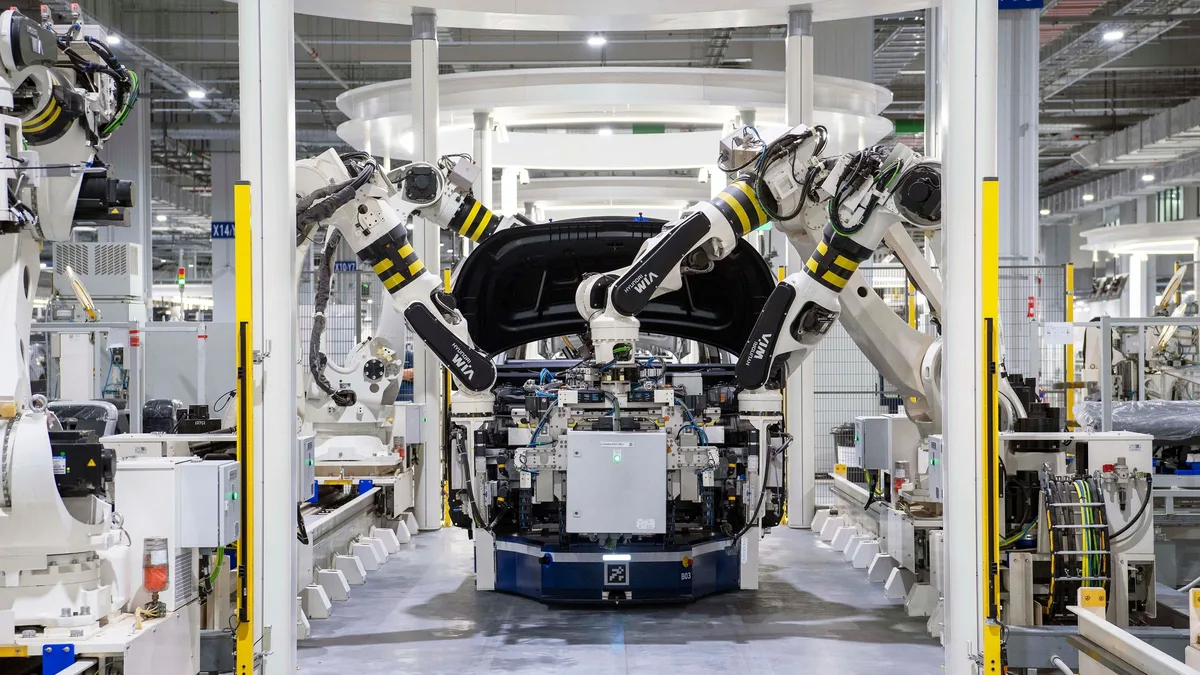
Global Industrial Robot Installations Growth 2025 Led
The worldwide stock of operational industrial robots reached a record five million units in 2025, a 9% annual increase.
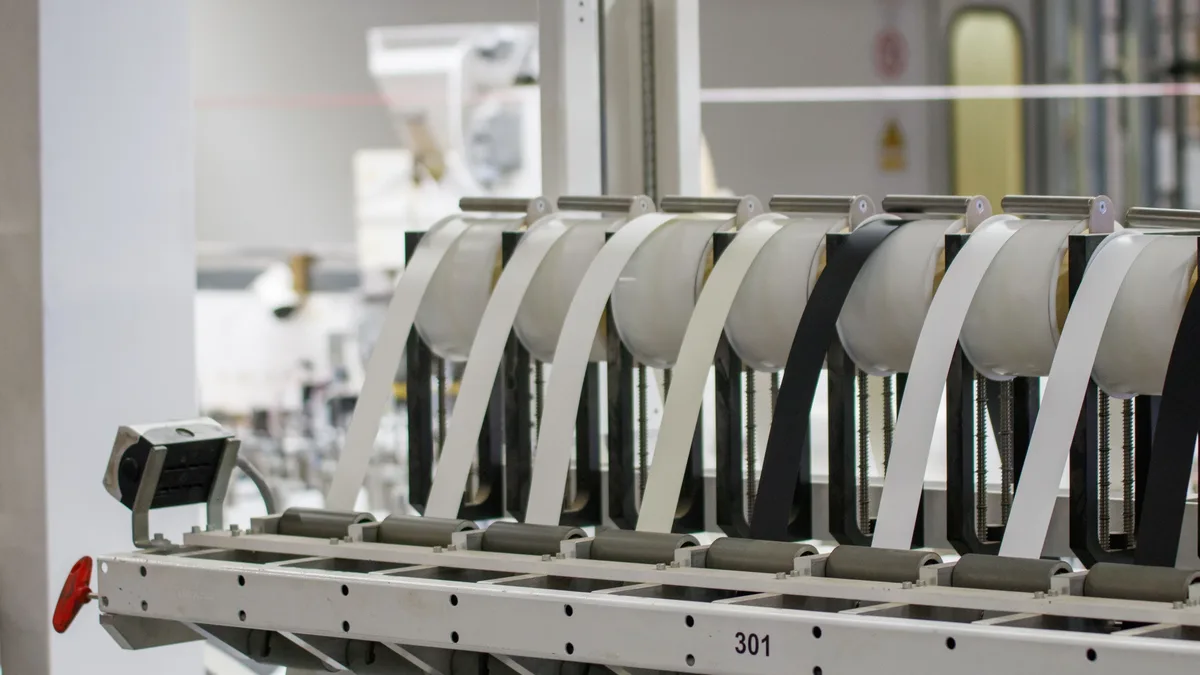
Intel report finds robotics strategy gap
An Intel survey shows manufacturers expect to adopt robotics but many lack formal strategies for managing a mixed human-robot workforce.

Amazon to Invest in New Distribution Center in Connecticut
Amazon is planning a 1 million-square-foot retail distribution facility in Norwich, Connecticut, as part of its network growth strategy

US Commerce Department Faces Criticism for Revamping Chips Investment Strategy
The US Commerce Department has been accused of failing to implement key requirements for promoting chip and microelectronics manufacturing, according...