Cnc Turning
| Process type | Subtractive machining |
|---|---|
| Primary operation | Rotating workpiece, stationary cutting tool |
| Typical workpiece shape | Cylindrical or disk-shaped |
| Typical tolerances | ±0.005 inches to ±0.0005 inches |
| Common materials | Metals, plastics, some woods |
| Original use | Producing precise cylindrical parts |
| Machine tool | Lathe |
| Control method | Computer Numerical Control (CNC) |
Origin and history
Computer Numerical Control (CNC) turning has its origins in the development of numerical control (NC) technology in the United States during the mid-20th century. The foundational concepts were pioneered in the 1940s and 1950s, often linked to early collaborations between the U.S. Air Force and researchers at the Massachusetts Institute of Technology. These early systems used punched tape to direct machine movements, replacing manual control of lathes. The transition from NC to CNC, where a dedicated computer manages the program, began in the 1960s and 1970s as microprocessor technology advanced. The integration of computers allowed for more complex part geometries and easier program editing. The technology became a standard industrial process in manufacturing nations globally from the 1980s onward, evolving with increased automation and precision.
What it is for
CNC turning is a subtractive manufacturing process designed to produce cylindrical or rotationally symmetric parts. Its primary function is to remove material from a rotating workpiece using a non-rotating cutting tool to achieve precise dimensions and surface finishes. The process is used for creating parts such as shafts, bolts, pulleys, bushings, and rollers across numerous industries. It is essential for producing components with tight tolerances and concentric features that are difficult to achieve with other methods like milling. CNC turning centers are employed for both high-volume production runs and low-volume, high-complexity prototype work. The process is fundamental in industries including automotive, aerospace, medical device manufacturing, and general machinery.
Pros and cons
A primary advantage of CNC turning is its high repeatability and consistency, capable of producing thousands of identical parts with minimal variance. It offers excellent geometric accuracy for round parts and can achieve very fine surface finishes, often eliminating secondary operations. The process is highly efficient for large batch production, with modern machines allowing for unattended operation through bar feeders and part catchers. A significant disadvantage is the high initial capital investment for the CNC lathe, tooling, and associated software, which can be prohibitive for small workshops. The process is inherently limited to parts with rotational symmetry, making it unsuitable for complex prismatic geometries that require multi-axis milling. Common mistakes include improper tool selection leading to premature wear, incorrect speeds and feeds causing poor surface finish or tool breakage, and inadequate workpiece support resulting in deflection and inaccuracy. Operations often regret the choice when facing low-volume, highly complex parts that require extensive custom programming and setup time, negating the efficiency benefits.
Who it suits
CNC turning suits manufacturers who require high-volume production of rotationally symmetric metal or plastic components with consistent quality. It is well-matched for established machine shops and contract manufacturers serving the automotive, aerospace, and fluid power industries, where such parts are commonplace. The process is appropriate for businesses with the capital to invest in machinery and the technical expertise to program, set up, and maintain the equipment. It is less suited to hobbyists or very small job shops without the volume to justify the overhead, unless they subcontract the work. Companies with a focus on prototyping may utilize smaller CNC turning centers but often find the cost per part high for single-unit production. Ultimately, it is a core process for any industrial facility whose product line relies on precision cylindrical components.
Latest Cnc Turning news
Latest reporting
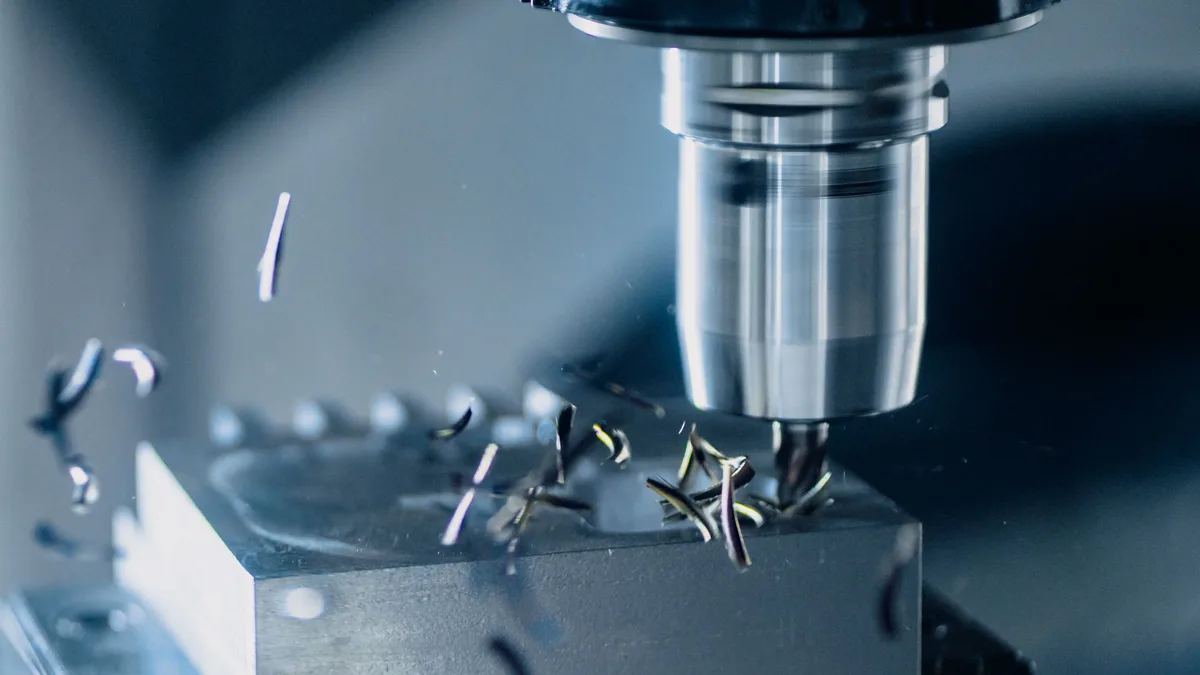
Koma Precision Explains U-Axis Heads for Milling Machines
Koma Precision details how U-axis heads enable CNC milling machines to perform turning and boring, allowing shops to complete parts in a single setup...
Agtonomy Enhances Autonomous Farm Equipment with Multi-Point Turning
Agtonomy has released new autonomous multi-point turning features for farm equipment, enabling complex maneuvers in tight spaces without human...
Samsung SDI Takes Full Control of Indiana EV Battery Plant After GM Exit
Samsung SDI has bought General Motors' 49.99% stake in the SynergyCells joint venture, turning the New Carlisle, Indiana facility into its first...