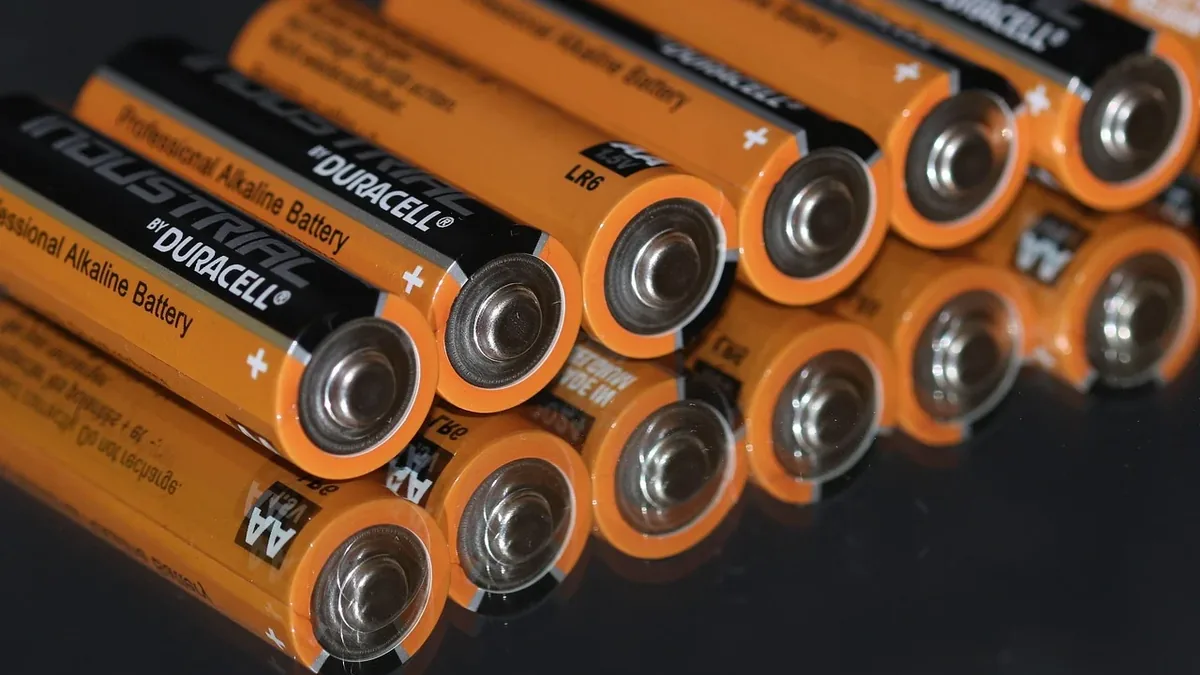
Batteries
| Process type | Electrochemical manufacturing |
|---|---|
| Scale | Industrial plant |
| Core input materials | Lithium, cobalt, nickel, graphite, electrolytes |
| Core output | Lithium-ion battery cells |
| Typical plant capacity | GWh per year range |
| Capital investment | Multi-billion USD range |
| Key process stages | Electrode mixing, coating, calendering, cell assembly, formation, aging |
Origin and history
The modern electrical battery is an Italian invention from the late eighteenth century. Alessandro Volta created the first working battery, known as the Voltaic Pile, in 1800, building on earlier discoveries regarding electricity by Luigi Galvani. This early device used alternating discs of zinc and copper separated by brine-soaked cloth to produce a continuous electrical current. The term "battery" itself was coined by Benjamin Franklin to describe a series of linked capacitors, but was later applied to Volta's invention. Throughout the nineteenth century, scientists like John Frederic Daniell and Gaston Planté developed improved cells, leading to more stable and rechargeable designs. These foundational developments established the core electrochemical principles that all subsequent battery technologies rely upon.
What it is for
Batteries are primarily for storing chemical energy and converting it into electrical energy on demand, providing a portable and independent power source. They enable the operation of devices that are not connected to a continuous central power grid, such as remote controls, flashlights, and wristwatches. In larger applications, batteries provide critical backup power for telecommunications infrastructure, computer data centers, and emergency lighting systems. The rise of portable consumer electronics, like laptops and smartphones, is fundamentally dependent on advanced battery technology. Furthermore, batteries are essential components in electric vehicles, storing the energy needed for propulsion. They also play a growing role in grid energy storage, capturing excess electricity from intermittent renewable sources like solar and wind for later use.
Overview
A battery is an electrochemical device consisting of one or more cells, each containing three primary components: an anode (negative electrode), a cathode (positive electrode), and an electrolyte. During discharge, a chemical oxidation-reduction reaction occurs, producing a flow of electrons from the anode to the cathode through an external circuit, which powers the connected device. The materials used for these electrodes and the electrolyte define the battery's chemistry, characteristics, and performance. Common consumer chemistries include alkaline, lithium-ion, nickel-metal hydride, and lead-acid. The manufacturing process involves precise assembly of these components, often in highly controlled, dry-room environments for sensitive chemistries, followed by sealing, formation charging, and testing. Factory investment typically focuses on scaling up electrode coating, cell assembly, and formation cycling to increase production volume and reduce unit cost.
What to know
Battery performance is described by key parameters: voltage (electrical potential), capacity (total energy stored, often in amp-hours), energy density (energy per unit volume or weight), and cycle life (number of charge/discharge cycles before significant degradation). Different chemistries offer trade-offs between these factors; for example, lithium-ion offers high energy density, while lead-acid offers high surge currents at lower cost. All batteries have a finite lifespan and will gradually lose their ability to hold a charge due to irreversible internal chemical changes, a process accelerated by extreme temperatures, deep discharges, and fast charging. Proper disposal is critical as batteries contain toxic heavy metals and reactive materials, requiring recycling or designated hazardous waste handling. Manufacturing is capital-intensive, requiring substantial investment in cleanrooms, precision coating machinery, and extensive quality control and testing systems to ensure safety and performance consistency.
Common questions
What is the difference between a battery and a cell? A cell is a single electrochemical unit, while a battery is a collection of cells connected together, though the term is often used interchangeably for single-cell units. Why do batteries eventually stop holding a charge? This results from parasitic side reactions that consume active materials, build up internal resistance, or cause physical degradation of the electrodes over many cycles. Can batteries be fully recycled? Yes, the core materials like lead, lithium, cobalt, and nickel can be recovered, but recycling rates and processes vary significantly by chemistry and regional infrastructure. What does "memory effect" refer to? It is a capacity loss from repeated partial discharging, primarily associated with older nickel-cadmium chemistries, and is not a concern for modern lithium-ion or alkaline batteries. Is it harmful to leave a device plugged in after it is fully charged? For modern devices with battery management systems, the risk is minimal, but sustained periods at 100% charge can slightly accelerate long-term degradation for some lithium-based batteries.
Pros and cons
The primary advantage of batteries is their ability to provide portable, decentralized power, enabling mobile electronics and renewable energy integration. They offer silent operation with no moving parts and can deliver power almost instantaneously. The main drawbacks include limited energy density compared to fossil fuels, leading to weight and range constraints in applications like electric vehicles. All batteries degrade irreversibly over time and with use, leading to eventual replacement costs and waste. A common mistake is selecting a battery based solely on initial purchase price without considering total lifecycle cost, including replacement frequency and efficiency losses. Users often regret choosing generic, low-cost batteries for high-drain devices, where they may fail prematurely or leak and cause damage. Manufacturing involves complex supply chains for raw materials like lithium and cobalt, which pose ethical sourcing and environmental challenges.
Who it suits
Battery technology suits applications where portability, independence from the grid, or emergency backup is a non-negotiable requirement. It is essential for the designers of portable consumer electronics, medical devices like pacemakers, and cordless power tools. Electric vehicle manufacturers are wholly dependent on advanced, high-energy-density battery packs. Utilities and renewable energy project developers suit large-scale battery installations for grid stabilization and load shifting. Industrial operations requiring uninterrupted power supplies for critical systems are also key users. The technology does not suit applications requiring extremely high, continuous power output for long durations, such as primary power for large factories or transcontinental aviation, where the weight and volume of batteries remain prohibitive compared to fuel-based systems.
Latest Batteries news
Latest reporting

House passes critical minerals bills to boost domestic
The U.S. House of Representatives has passed three bills aimed at recovering critical minerals from waste streams, including used batteries and

Agility Robotics Unveils Digit 5 Humanoid for Factory Floors
Agility Robotics has launched Digit 5, a new humanoid robot designed for manufacturing and logistics. The robot features upgraded legs, batteries...