Agility Robotics Unveils Digit 5 Humanoid for Factory Floors
Agility Robotics has launched Digit 5, a new humanoid robot designed for manufacturing and logistics. The robot features upgraded legs, batteries, and safety systems to work alongside people without barriers, with commercial deployment expected by late 2027.
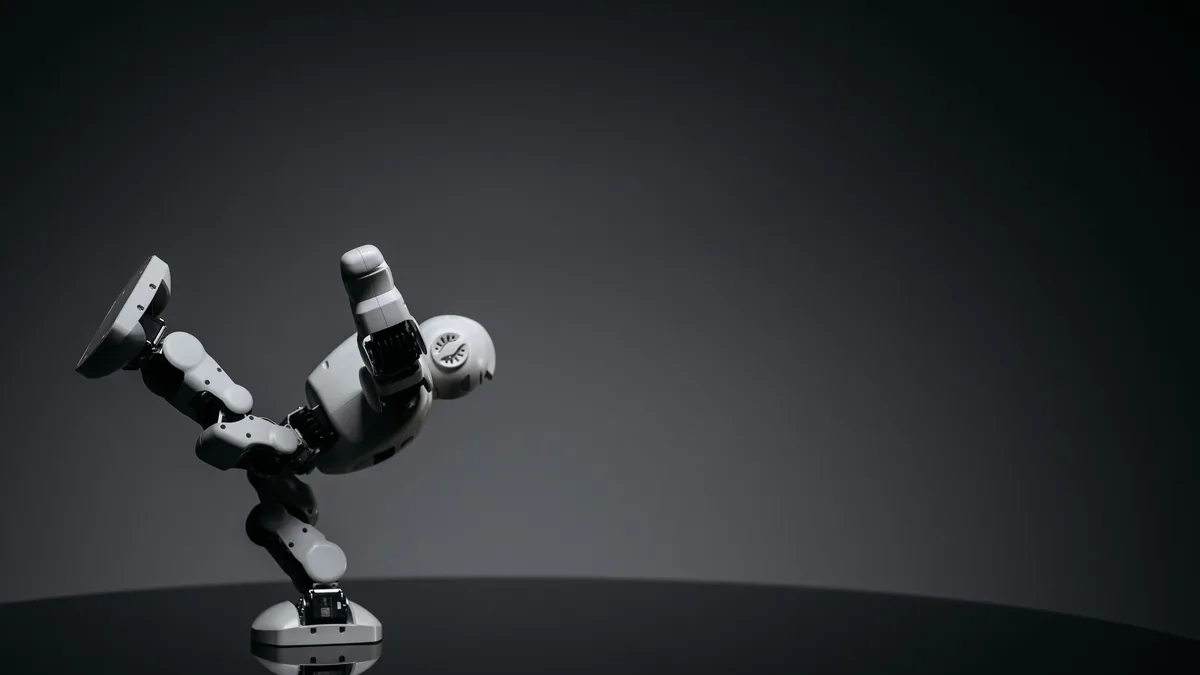
Agility Robotics has introduced Digit 5, the latest iteration of its humanoid robot designed for industrial work. The company, which is preparing to go public via a SPAC merger valued at $2.5 billion, stated the new model can operate in close proximity to human workers without requiring physical safety barriers.
CEO Peggy Johnson told The Robot Report that the design is based on three years of customer feedback from Digit 4 deployments. "We built it to the exact requirements our customers gave us," Johnson said. The market response includes over $300 million in multi-year orders. Agility expects to begin early access to Digit 5 in the first half of 2027, with general availability for manufacturing, warehouse, and distribution operators by the end of that year. The company also plans its first commercial deployments outside North America, starting in the European Union and U.K., and expects the robot to carry necessary regulatory marks like the CE mark.
Learning from Real-World Deployments
Agility's co-founder and chief robot officer, Jonathan Hurst, explained that earlier versions were part of a proof-of-concept phase. The shift to commercial scaling revealed a host of practical challenges beyond simple task completion. Hurst cited requirements like FCC certifications, UL standards, and ISO certifications as initial blockers. The logistics of facility integration-such as aisle widths, charger placement, and workflow design-became critical. These customer-specific constraints have now translated into hundreds of engineering requirements that form the foundation of Digit 5's design.
Some of the most significant hardware improvements are in power management. Digit 5 features a faster autonomous charger, enabling a 90-minute runtime with a full recharge in just nine minutes. This creates a 10:1 run-to-charge ratio, a major increase from Digit 4's 2:1 ratio, allowing the robot to work more than 20 hours in a day. While Digit 4 focused on tote-based material handling, Agility says Digit 5 will expand its manipulation skills to cover a facility's full workflow.
New Legs for Heavy Lifting and Safety
One of the most visible changes in Digit 5 is its leg design. The robot has abandoned its previous ostrich-like, backward-bending knees for a more traditional, human-like configuration. Hurst stated the old legs were optimized for walking and running, while the new design prioritizes lifting heavy loads and frequently getting up and down from the ground.
The legs use proprietary cycloidal actuators, enabling Digit to repeatedly lift loads up to 50 lb. (22.7 kg). This capacity is intended to cover single-person lift tasks in facilities regulated by OSHA. The robot is also taller and heavier than its predecessor.
| Specification | Digit 5 | Digit 4 (for comparison) |
|---|---|---|
| Weight | 284 lb. (129 kg) | Not specified in source |
| Height | 5 ft., 11 in. (1.81 m) | Not specified in source |
| Maximum Reach Height | 7.2 ft. (2.2 m) | 5.5 ft. |
Padding on the knees aids in kneeling, and the new leg design allows the robot to squat into a stable, seated position. This ability to sit down and turn off its motors when a person approaches is a core component of Agility's safety strategy. "The robot needs to be in a statically stable post and be able to turn off its motors before a person can touch it," Hurst explained.
A Practical Approach to Manipulation
Agility is taking a pragmatic approach to robot hands. Hurst noted that general-purpose, human-like hands do not yet exist on the market in a capable form. Instead, the company currently uses a two-fingered, parallel-jaw gripper, inspired by winning designs from the Cybathlon event for prosthetic users. This gripper can handle 25-kg (55.1-lb.) bins.
Digit 5 features a swappable gripper design with ISO-standard mounting flanges, allowing tools to be changed for different jobs. While Agility is investing in building its own end effectors, Hurst said the company is open to using better tools developed externally. If somebody else creates a hand that is better than what we have in-house for our use case, we will absolutely buy that, stick it on the robot, and use it, he said.
Building a Holistic Safety Architecture
Hurst identified safety as the biggest barrier to deploying humanoids in industrial settings, noting that current tests often keep robots roped off from people. He asserted that safety cannot be an add-on. It is not possible to take an existing robot, add a safety hat on it, and then have it operate safely, he said. It is completely holistic.
To enable close-proximity work, Digit 5 uses proprietary AI algorithms and multiple sensors to continuously monitor for people within a 360-degree radius. The robot can autonomously avoid, slow, stop, or assume a seated position based on dynamic risk assessment, rather than relying on predefined zones. It also uses visual and auditory cues to communicate its intent to nearby workers. According to recent SEC filings, Agility Robotics generated $1.8 million in net sales in 2025.