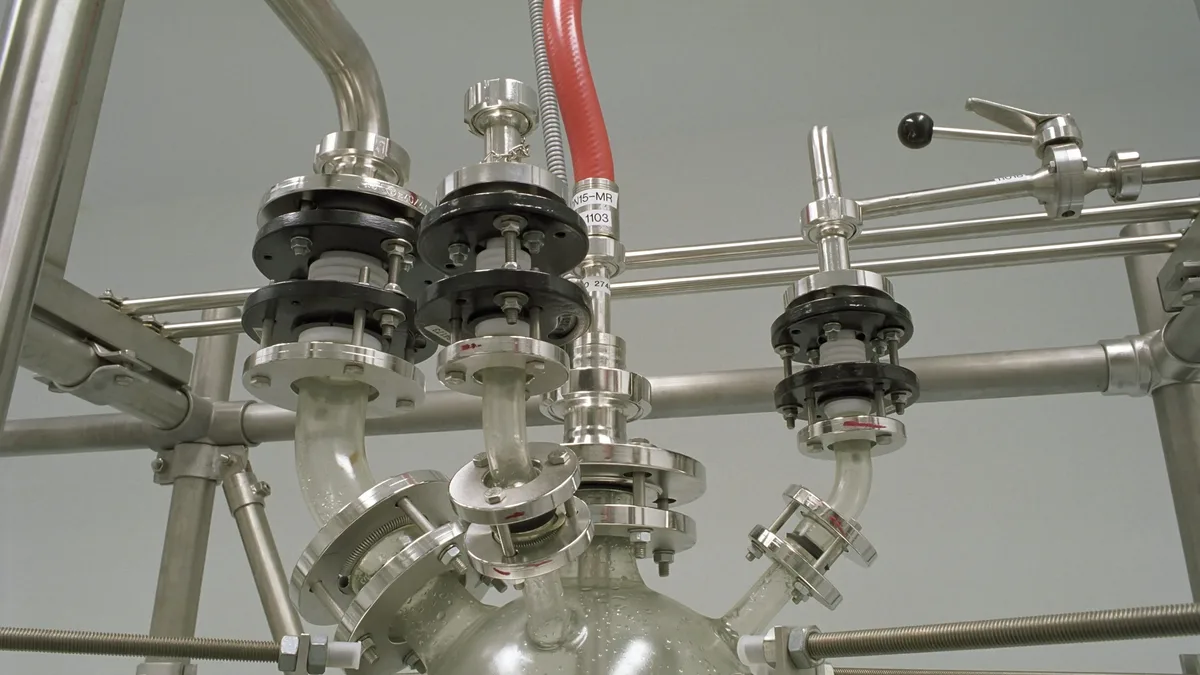
Stainless 316
| Common name | Stainless Steel 316 |
|---|---|
| Material type | Austenitic stainless steel |
| Key alloy addition | Molybdenum (2-3%) |
| Corrosion resistance | Excellent, especially against chlorides |
| Typical industrial applications | Chemical processing, marine environments, pharmaceutical equipment |
| Weldability | Good |
| Magnetic response | Generally non-magnetic (annealed condition) |
Origin and history
Stainless 316 is an austenitic stainless steel alloy that originated from developments in the early 20th century metallurgical industry, primarily in the United States. Its development was a direct progression from the earlier Type 304 stainless steel, driven by the need for improved corrosion resistance in more aggressive environments. The key innovation was the deliberate addition of molybdenum to the alloy's composition, a modification that was systematically researched and commercialized in the mid-20th century. This period saw significant advancements in alloy design to meet the demands of emerging chemical processing and marine applications. The "316" designation is part of a standardized numbering system developed by organizations like the American Iron and Steel Institute (AISI) to categorize stainless steels. Its establishment as a widely available industrial material was solidified by the 1950s and 1960s, becoming a staple in engineering specifications for corrosive service.
What it is for
Stainless 316 is primarily engineered for use in environments where standard stainless steels like 304 would suffer from corrosive attack. Its fundamental purpose is to withstand exposure to chlorides and acidic compounds, making it the standard material for process equipment in chemical and pharmaceutical manufacturing plants. On the factory floor, it is specified for piping systems, valves, reaction vessels, and storage tanks that handle corrosive chemicals, salts, or acidic products. It is also the preferred material for components in marine and coastal applications, such as boat fittings and offshore platform structures, due to its resistance to saltwater pitting and crevice corrosion. Within food processing, it is used for equipment where stronger cleaning agents are employed, or where product chlorides are present. Furthermore, it serves in architectural applications in highly polluted or coastal atmospheres where its enhanced durability justifies the higher material cost over more basic grades.
Pros and cons
The primary advantage of Stainless 316 is its superior corrosion resistance, particularly against chlorides, sulfuric acid, and phosphoric acid, due to its molybdenum content. It retains good mechanical properties and toughness across a wide temperature range and is generally non-magnetic in the annealed condition. A significant pro is its excellent fabrication ability, allowing it to be welded and formed using standard shop practices for austenitic stainless steels. The major con is its substantially higher cost compared to Type 304, driven by the price of nickel and molybdenum, which can make it an inefficient choice for applications where its enhanced properties are not required. A common mistake is specifying it for all "corrosive" environments without understanding that it is still susceptible to stress corrosion cracking in warm chloride solutions above approximately 60°C. Users often regret the choice when they deploy it in reducing acids like hydrochloric, where it performs poorly, or when they fail to properly passivate the material after fabrication, leaving it vulnerable to surface corrosion. Its lower hardness and wear resistance compared to martensitic steels also make it unsuitable for high-abrasion applications.
Who it suits
This material suits industries and applications where the operating environment justifies its premium cost, specifically where chloride-induced pitting or general corrosion is a documented failure mode for standard stainless steels. It is well-suited for chemical process plants, pharmaceutical manufacturers, and pulp and paper mills that handle aggressive chemical streams. Marine engineering firms and boat builders specify it for critical seawater-exposed components, though with careful design to avoid stagnant conditions. Architectural firms designing permanent structures in coastal or de-icing salt environments find it a necessary specification for long-term facade integrity. It also suits fabricators and engineers who have the expertise to handle its fabrication correctly, including using low-carbon 316L variants to prevent weld decay and ensuring proper post-fabrication cleaning. It does not suit budget-conscious projects in benign indoor or dry atmospheric conditions, where Type 304 is fully adequate, nor does it suit applications involving constant exposure to strong reducing acids or high-temperature chloride solutions without extensive engineering review.