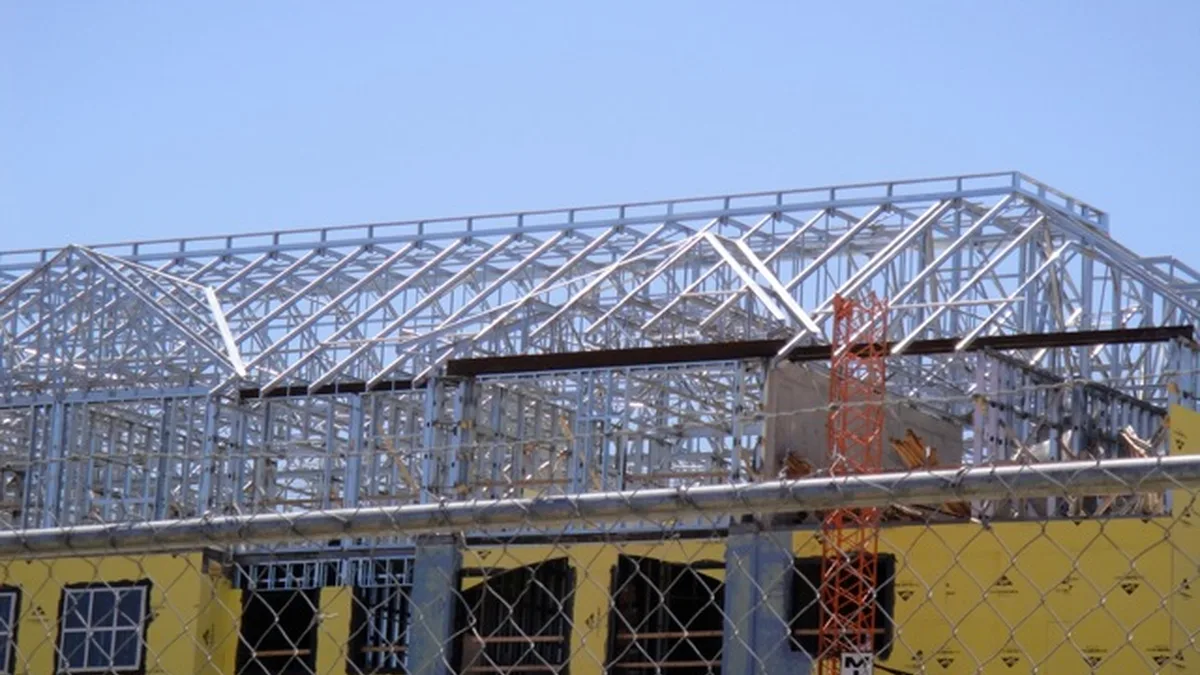
Cold Rolled Steel
Origin and history
Cold rolled steel is a manufacturing process that evolved from the broader industrial practice of cold working metals. Its development is intrinsically linked to the advancement of rolling mill technology during the Industrial Revolution in Europe, particularly in Great Britain. The fundamental technique of passing metal through rollers at room temperature to achieve precise dimensions and improved surface finish was established by the late 19th century. The process became more refined and widespread in the early 20th century with the increased demand for consistent, high-quality sheet metal for emerging industries. It is not an invention with a single inventor or exact year, but a gradual industrial refinement of ancient metalworking principles. The proliferation of the automobile industry in the early 1900s provided a major impetus for the standardization and scaling of cold rolling for body panels and components.
What it is for
Cold rolled steel is primarily used in applications where precise dimensions, a smooth surface finish, and enhanced mechanical properties are required without the heat scale produced by hot rolling. It is the standard material for many exposed automotive body panels, appliances like washing machine cabinets and refrigerator doors, and metal furniture. The process is essential for producing thinner gauges of steel sheet with tight tolerances, which are then often formed through stamping or deep drawing. In industrial settings, cold rolled steel is commonly specified for the fabrication of enclosures, brackets, and structural components where a clean, paintable surface is needed. It serves as the base material for subsequent finishing processes such as galvanizing, where it becomes galvanneal, or for pre-painted coil. On a factory floor, an investment in modern cold rolling capability signals an intent to supply higher-value-added products to manufacturing sectors demanding consistency and quality.
Pros and cons
A primary advantage of cold rolled steel is its superior surface finish and dimensional accuracy compared to hot-rolled steel, making it ideal for visible parts and precision fabrication. It also gains increased strength and hardness through the work-hardening that occurs during the rolling process. However, this same work-hardening is a significant con, as it reduces the material's ductility and can make it brittle, often necessitating an annealing heat treatment to restore formability for complex shapes. A common mistake is specifying cold rolled steel for applications requiring heavy forming without proper annealing, leading to cracking during production. Manufacturers sometimes regret choosing cold rolled for very thick sections, as the process involves high roll pressures and is less economical than hot rolling for such profiles. The material is also susceptible to corrosion if not properly coated or stored, and its cleaner appearance can lead to complacency about necessary surface preparation before painting.
Who it suits
Cold rolled steel suits manufacturers whose products require excellent surface quality, tight dimensional tolerances, and consistent mechanical properties straight from the coil or sheet. It is particularly suited to automotive OEMs and their tier suppliers for both exterior and interior panels, as well as to the domestic appliance industry for cabinetry. Fabrication shops that produce electrical enclosures, office furniture, and display units benefit from its ready-to-paint surface and ease of welding and machining. The material is less suitable for primary structural members in construction, where the higher ductility and cost-effectiveness of hot-rolled sections are preferred. It is a logical investment for a factory aiming to move up the value chain from commodity steel to engineered components, as it commands a higher price per ton. Companies with in-house stamping or forming presses are ideal users, as they can directly leverage the material's enhanced formability after annealing.
Latest Cold Rolled Steel news
Latest reporting
Boeing, Deere, Steel Firms in Union Talks
Boeing, Deere, U.S. Steel, and Cleveland-Cliffs are in labor talks with unions. Some offers have been rejected and strike authorizations are filed.
Hubbard-Hall's AquaEase Infinity Cuts Waste
Hubbard-Hall Inc. unveiled the AquaEase Infinity, a sintered stainless-steel membrane filtration system that cuts cleaner usage by 40-60 % and...
Canada imposes 50% tariffs on US steel
Canada announced 50% tariffs on U.S. steel and aluminum products effective Sept. 8, matching U.S. Section 338 and 232 measures and covering $27.6...
US Steel Explosion Investigation Reveals Poor Safety Practices
A recent investigation by the U.S. Chemical Safety and Hazard Investigation Board found that an explosion at U.S. Steel's Clairton, Pennsylvania...
Reality Show Cast in Steel Aims to Attract Next Generation of Metal Casters
A Department of Defense contract has brought a metal casting competition to the worldwide stage, aiming to spread awareness of the skill trade and...