Honeywell
| Facility type | Advanced manufacturing |
|---|---|
| Location | Charlotte, North Carolina, USA |
| Primary process | Semiconductor manufacturing |
| Product focus | Silicon carbide (SiC) substrates |
| Expected outcome | Increased production capacity |
| Parent entity | Honeywell |
Overview
Honeywell is a multinational corporation that operates in the fields of aerospace, building technologies, performance materials, and safety and productivity solutions. Its products and services are integral to industrial automation, control systems, and the optimization of facility operations across numerous sectors. The company provides the hardware, software, and analytics that form the backbone of modern industrial process control and building management systems. Its technologies are deployed to monitor, automate, and improve efficiency, safety, and sustainability in manufacturing plants, commercial buildings, and aviation. Honeywell's offerings range from individual sensors and switches to complex integrated systems that manage entire production lines or facility infrastructures. The corporation is known for its extensive portfolio of industrial control products, including distributed control systems (DCS) and programmable logic controllers (PLC), which are foundational to factory automation.
History
Honeywell's origins trace back to the late nineteenth century in the United States, specifically with the invention of a furnace regulator and alarm by an inventor in the 1880s. The company that would become Honeywell was formally incorporated in the early decades of the twentieth century, initially focusing on temperature controls for residential heating. Through a series of significant mergers and acquisitions over the following decades, the company expanded its scope from a controls manufacturer into a broad-based industrial conglomerate. A pivotal merger in the mid-twentieth century with another major controls company solidified its position as a leader in automation and instrumentation. The late twentieth and early twenty-first centuries saw Honeywell strategically divest some legacy businesses while aggressively acquiring companies to strengthen its positions in aerospace, automation, and advanced materials. This long evolution has transformed the company from a thermostat producer into a global technology and manufacturing leader serving industrial, commercial, and consumer markets.
How it works today
Today, Honeywell's industrial offerings function by integrating physical hardware with sophisticated software to create closed-loop control systems for process and discrete manufacturing. Sensors placed throughout a factory floor collect real-time data on variables like temperature, pressure, flow, and vibration, transmitting this information to controllers. These controllers, such as a Honeywell Experion DCS or a MasterLogic PLC, execute pre-programmed logic to maintain processes within specified parameters, often adjusting actuators like valves or motors automatically. The systems provide a unified operator interface, typically through workstations, where personnel can monitor the entire process, acknowledge alarms, and make manual overrides if necessary. Advanced software layers, including Honeywell's Forge platform, apply analytics and machine learning to this operational data to predict equipment failures, optimize energy use, and improve overall production yield. This ecosystem enables continuous, data-driven operation and decision-making, linking the physical production floor to enterprise-level business systems.
Why it matters
Honeywell's technologies matter because they are critical enablers of industrial productivity, safety, and energy efficiency on a global scale. In process industries like oil refining, chemicals, and pharmaceuticals, their control systems are essential for running complex, often hazardous, operations safely and consistently. For facility managers, Honeywell's building automation systems are key to reducing operational costs and carbon footprints through intelligent control of HVAC, lighting, and security. In aerospace, their avionics and propulsion components contribute directly to the safety, reliability, and fuel efficiency of commercial and military aircraft. The company's focus on industrial software and the Industrial Internet of Things (IIoT) drives the digital transformation of older facilities, helping them remain competitive. Furthermore, Honeywell's research and development in areas like quantum computing, sustainable aviation fuel, and advanced materials has the potential to influence future technological paradigms beyond its current core markets.
Common misconceptions
A common misconception is that Honeywell is solely a consumer brand known for thermostats and home air purifiers, when in fact the vast majority of its revenue comes from large-scale industrial and commercial B2B operations. Another is that implementing a Honeywell automation system guarantees immediate and dramatic efficiency gains without significant upfront investment in integration, training, and change management. Some believe Honeywell systems are entirely proprietary and closed, though the company has increasingly moved toward more open architectures and interoperability with third-party equipment in response to market demands. It is also incorrect to assume all Honeywell-branded products are manufactured directly by the corporation, as it utilizes a global supply chain and may private-label certain items. Finally, there is a mistaken view that Honeywell is a single, monolithic entity, when it operates as a collection of largely independent business units with distinct product lines and market strategies.
Latest Honeywell news
Latest reporting
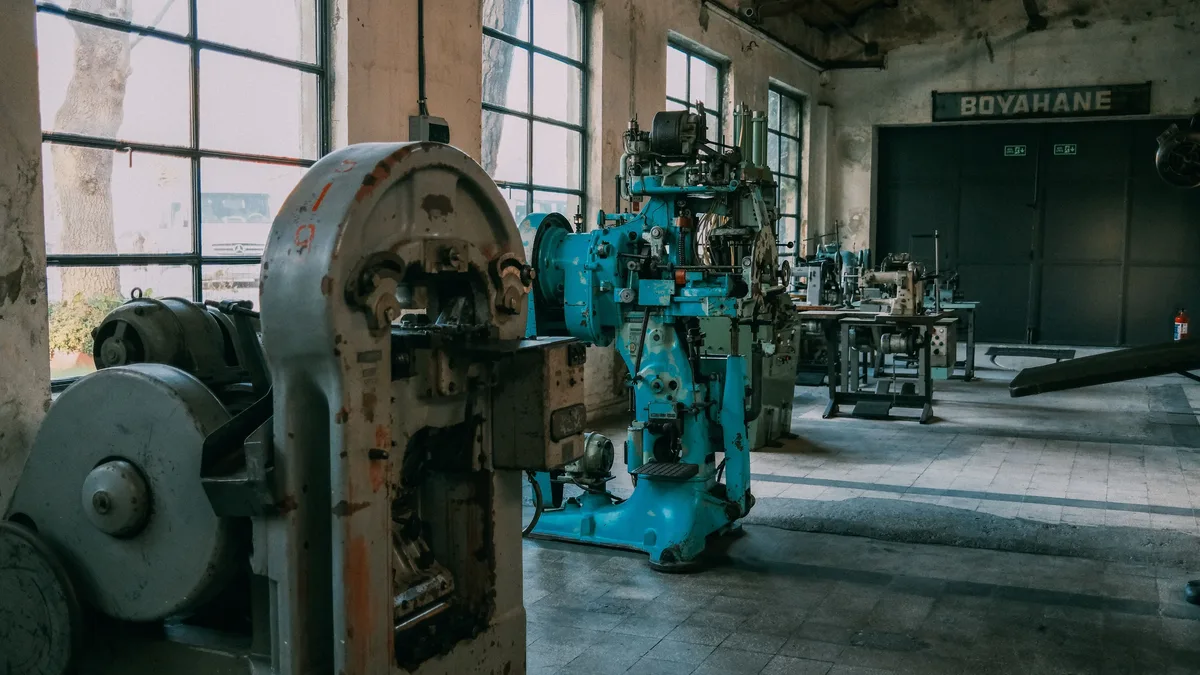
University and Industry Center Tackles Digital Twin
A new research center led by the University of Michigan and Arizona State University, with industry partners including GM and Honeywell, aims to solve

Honeywell Aerospace Targets Supplier Bottlenecks to Boost Output
Honeywell Aerospace is working to address supply chain issues that have hindered its ability to meet customer demand. The company has identified a...