Plastics & Packaging
| Process type | Industrial manufacturing |
|---|---|
| Original use | Containing and protecting goods for transport and retail |
| Typical inputs | Polymer resins (e.g., polyethylene, polypropylene) |
| Typical outputs | Bags, films, bottles, containers, clamshells |
| Key machinery | Extruders, injection molders, thermoformers |
| Scale of operation | Medium to large industrial facility |
| Energy intensity | High |
Origin and history
The industrial processing of plastics for packaging originated in the early 20th century, primarily in the United States and Western Europe. The development of Bakelite, a fully synthetic plastic, in the first decade of the 1900s marked a key starting point for plastic materials. The expansion of petrochemical industries in the mid-20th century provided the raw materials necessary for mass production. The invention of polyethylene in the 1930s in the UK, followed by polyethylene terephthalate (PET) in the 1940s, created the foundational materials for modern packaging. The post-World War II economic boom saw these materials rapidly adopted for consumer goods packaging due to their low cost and versatility. This period established the global supply chains and manufacturing processes that define the industry today.
What it is for
This process is for creating containers, films, and protective materials that contain, preserve, and transport goods. Its primary function is to prevent product damage, contamination, and spoilage during distribution and storage. It serves the food and beverage industry by extending shelf life through barriers against moisture, gases, and microbes. In the pharmaceutical sector, it provides sterile, tamper-evident containment for medicines and medical devices. The process also produces packaging for consumer goods, from electronics to household chemicals, where durability and safety are required. Furthermore, it enables the lightweighting of shipments, which can reduce transportation fuel consumption compared to some heavier materials.
Overview
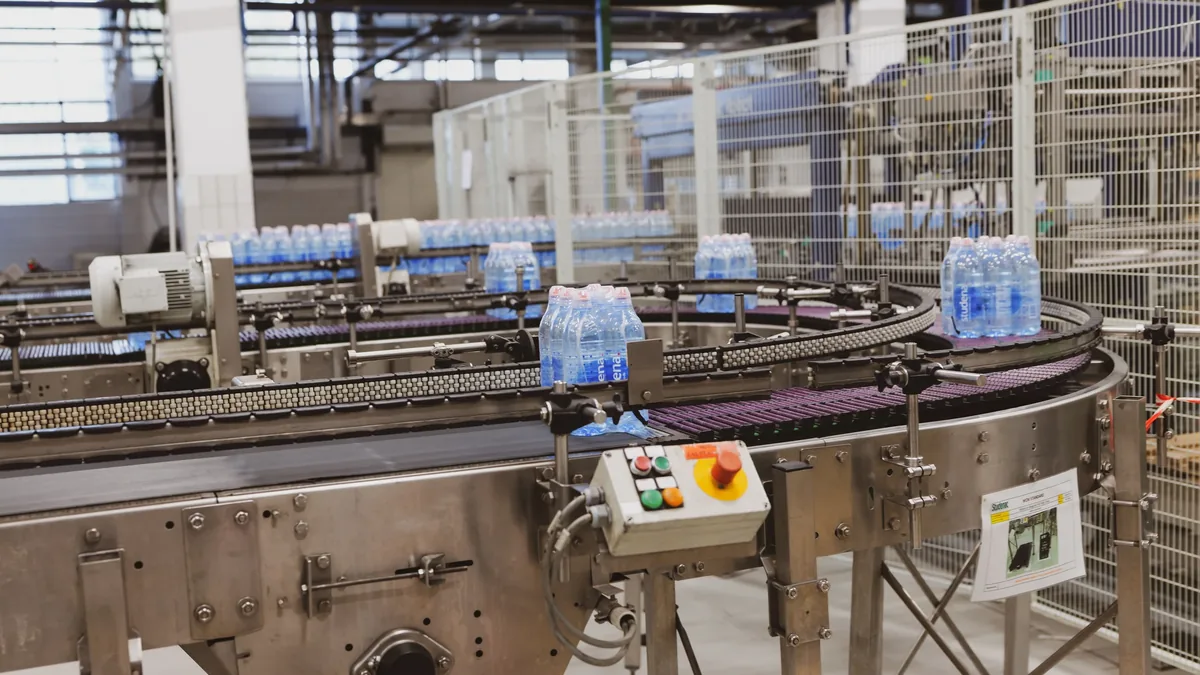
The Plastics & Packaging process on the factory floor typically involves the conversion of polymer resins into a finished form through methods like extrusion, injection molding, or thermoforming. Raw plastic materials, often in pellet or granule form, are fed into machines where they are heated to a molten state. This molten plastic is then shaped using molds, dies, or rollers to create specific packaging items like bottles, trays, or flexible films. Secondary operations include printing, labeling, sealing, and assembly to produce a market-ready product. Factory investment announcements often center on new, high-speed machinery, advanced molding systems, or the integration of automated quality control. These investments aim to increase production capacity, improve material efficiency, or allow for the use of recycled content in the manufacturing stream.
What to know
The specific type of plastic resin used, such as PET, HDPE, or PP, dictates the packaging's properties and recyclability. Processing parameters like temperature, pressure, and cooling time are critical to achieving consistent product quality and structural integrity. Contamination control is paramount, especially for food-contact packaging, requiring clean manufacturing environments and material handling protocols. The industry faces significant pressure regarding environmental impact, leading to developments in bio-based plastics, chemical recycling, and designs for easier recyclability. Factory investments are increasingly directed towards energy-efficient machinery and systems to reduce the carbon footprint of production. Understanding the complex global supply chain for resin feedstocks, which are tied to oil and gas markets, is essential for anticipating cost and availability fluctuations.
Common questions
What is the difference between rigid and flexible plastic packaging? Rigid packaging, like bottles, maintains its shape, while flexible packaging, like pouches, can deform. How are different plastic types identified? They are typically marked with a Resin Identification Code (RIC), a number inside a chasing arrows symbol, though this does not guarantee local recyclability. Can plastic packaging be made from recycled material? Yes, but the process often requires high-quality, food-grade recycled resin, which is limited in supply and more expensive than virgin material. Why do some plastic packages have multiple layers? Multi-layer films combine different plastics to achieve specific barrier properties, but this complicates recycling. What does "lightweighting" mean? It is the process of using less plastic to make a package, reducing material use but sometimes compromising strength. What is the role of additives? Additives like colorants, UV stabilizers, and plasticizers are incorporated to achieve desired appearance, durability, and flexibility.
Pros and cons
A primary advantage is low cost relative to performance, offering strong barriers and durability for minimal material weight. The manufacturing process is highly scalable and fast, allowing for the production of billions of uniform items. Plastic packaging can significantly reduce food waste by extending product shelf life. A major con is its environmental persistence; mismanaged packaging waste contributes to pollution and harms ecosystems. The dependence on fossil fuel feedstocks creates carbon emissions and ties the industry to volatile commodity markets. Consumers and regulators frequently express frustration with confusing recycling labels and systems, leading to low actual recycling rates for many types. Companies often regret choosing complex, multi-material designs that are functionally superior but ultimately unrecyclable, facing backlash and potential regulatory bans.
Who it suits
This process suits high-volume, fast-moving consumer goods (FMCG) companies that require millions of identical, low-cost containers. It is essential for industries where product sterility and containment are non-negotiable, such as pharmaceuticals and certain medical supplies. Food producers who need to transport goods over long distances and prevent spoilage rely heavily on specific plastic packaging solutions. Manufacturers with tightly integrated supply chains can effectively manage the take-back or recycling of their packaging, aligning with circular economy goals. It suits regions with established waste management infrastructure capable of collecting, sorting, and processing specific plastic streams. The process does not suit producers of niche, low-volume goods where the high cost of mold tooling is prohibitive, or those targeting zero-waste consumers who actively avoid single-use plastics.
Latest Plastics & Packaging news
Latest reporting

US-Canada Trade War Tests Packaging Industry
New US and Canadian tariffs up to 50% on materials like pulp, paper, and aluminum are set to disrupt deeply integrated North American packaging supply
Packaging firms invest in renewables to offset rising energy costs
Manufacturers are prioritizing energy procurement and efficiency measures amid sustained price increases driven by geopolitical instability and...