Moulding & Casting
| Process type | Additive or subtractive |
|---|---|
| Typical scale | Prototype to low-volume production |
| Common materials | Plastics, resins, metals, ceramics |
| Primary tooling | Mould or die |
| Cycle time | Minutes to hours per part |
| Original use | Replication of objects and forms |
| First created | Antiquity (millennia BCE) |
Origin and history
The fundamental principles of moulding and casting trace their origins to ancient Mesopotamia and the Indus Valley, with early documented use occurring around 3000 BCE. These civilizations developed rudimentary techniques for casting metals like copper and bronze into shaped moulds made from stone or clay. The process was independently advanced in ancient China during the Shang dynasty, notably for the production of intricate bronze ritual vessels using piece-moulding techniques. Significant refinement occurred during the European Renaissance, where cast metal was used extensively for sculpture and cannon manufacturing. The Industrial Revolution of the 18th and 19th centuries mechanized and scaled these concepts, leading to the development of high-pressure die casting for mass production. The 20th century introduced synthetic rubbers and resins, which revolutionized the making of flexible moulds and precise, durable cast prototypes and components.
What it is for
Moulding and casting is used to create accurate, identical replicas of an original model or pattern in a variety of materials. Its primary industrial function is the medium-to-high volume production of components where forging or machining would be prohibitively expensive or geometrically impossible. The process is fundamental to manufacturing sectors such as automotive, for producing engine blocks and interior panels, and aerospace, for creating lightweight, complex turbine blades. In consumer goods, it is used for producing plastic housings for electronics, toys, and household items. Beyond mass production, it is indispensable in the arts for sculpture reproduction and in dentistry and medicine for creating precise anatomical models and prosthetics. It also serves a critical role in research and development, allowing for the creation of functional prototypes from conceptual models for testing and validation.
Overview
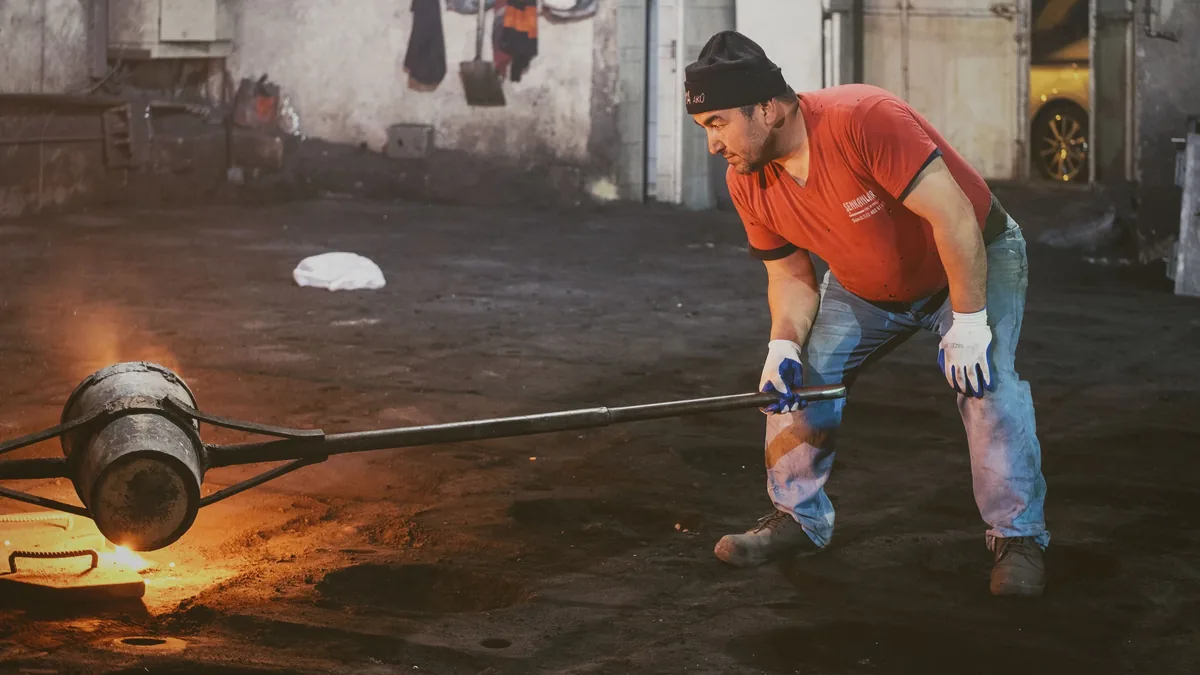
The process involves two distinct, sequential stages: creating a mould from an original pattern, and then using that mould to form cast copies. First, a master model, which can be made from clay, wood, plastic, or a previously cast part, is prepared and often treated with a release agent. This model is then used to form a mould, which is a negative impression of the model's shape, and can be made from materials like silicone rubber, plaster, or metal. Once the mould material has cured or set, it is separated from the master model, leaving a cavity. For casting, a liquid or pliable material, such as molten metal, polyurethane resin, plaster, or concrete, is poured or injected into this mould cavity. This material is then allowed to solidify or cure before the mould is opened or broken away to reveal the new cast part, which is a positive replica of the original master.
What to know
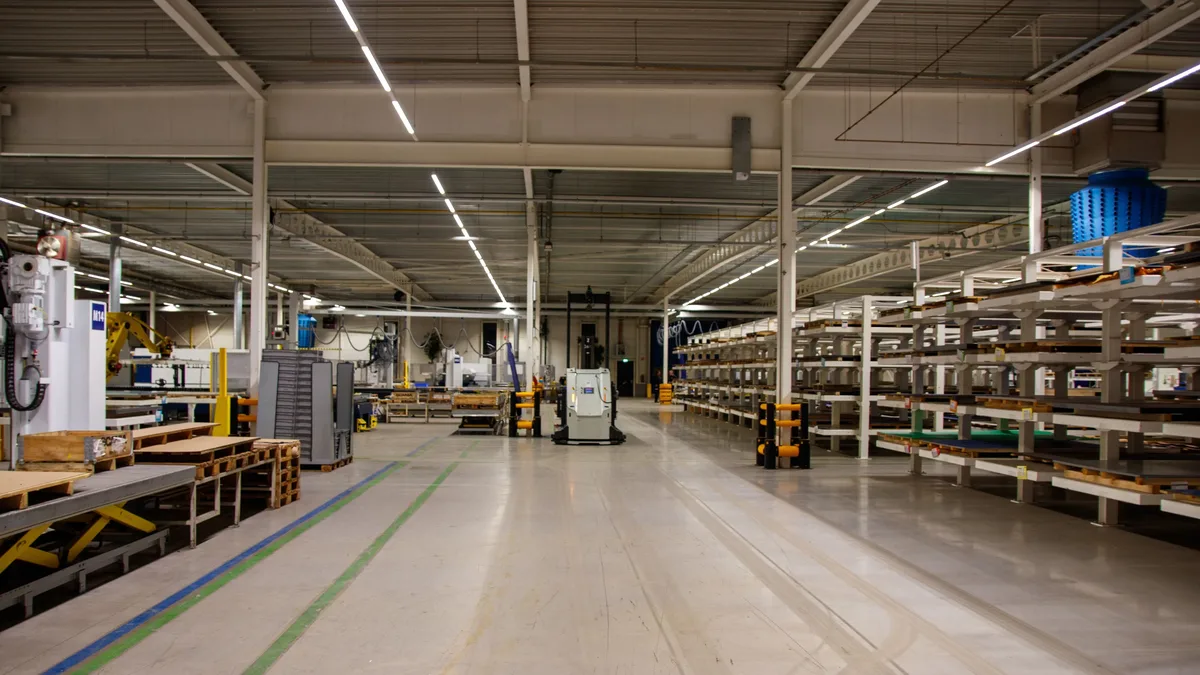
A factory floor investment in moulding and casting typically involves significant capital expenditure on machinery like injection moulding presses, die casting machines, or vacuum casting systems, alongside climate-controlled material storage. The choice between mould types, such as single-use waste moulds or reusable multi-part moulds, directly impacts production speed, part quality, and long-term cost per unit. Material selection is critical, as each casting resin, metal alloy, or plaster has specific shrinkage rates, cure times, and mechanical properties that affect the final product's tolerances and strength. Effective venting and gating design within the mould is essential to allow air to escape and material to flow completely, preventing defects like air bubbles or short shots. Post-casting operations, including trimming of flash, drilling, tapping, and surface finishing, often constitute a substantial portion of the labour and time cost for each part. The entire process requires rigorous quality control at each stage, from master model verification to final part inspection, to ensure dimensional accuracy and consistency across production runs.
Common questions
What is the difference between a mould and a cast? The mould is the hollow container that holds the negative shape, while the cast is the solid object produced by filling the mould with material. How many copies can one mould produce? This depends entirely on the mould material; a silicone rubber mould may yield 20-50 resin casts, while a hardened steel injection mould can produce millions of plastic parts. What causes bubbles or voids in a cast part? Bubbles are typically caused by trapped air during the pouring/injection phase or by gaseous by-products released during the material's curing reaction. Can undercuts be cast? Yes, but they require specially designed moulds with multiple parts or flexible mould materials that can be peeled away from the undercut geometry. Is it possible to cast a solid metal part? While possible, solid metal casts are uncommon for large objects due to material cost and potential internal defects; most are designed with internal cavities or cores to save weight and material. What is the typical lead time for a production run? Lead time includes master model creation, mould design and fabrication, which can take weeks, followed by the actual casting cycle time which may be seconds per part for plastics or minutes for metals.
Pros and cons
The primary advantage is the ability to produce highly complex, near-net-shape geometries with excellent surface detail that would be impossible or too costly to machine from solid stock. It allows for efficient medium-to-high volume replication once the initial mould is made, driving down the per-unit cost significantly compared to one-off fabrication methods. A wide range of materials can be cast, from engineering-grade metals and composites to transparent resins and pliable rubbers, offering vast functional and aesthetic flexibility. However, the initial costs are very high, encompassing master model fabrication, precise mould tooling design and machining, and the purchase of dedicated casting equipment. The process is prone to specific defects like shrinkage porosity, cold shuts, and internal stresses, which can lead to part weakness and scrap rates, especially during process startup and material changes. Manufacturers often regret the investment when part volumes are overestimated, leaving expensive tooling underutilized, or when design changes are required, necessitating costly and time-consuming mould modifications or complete replacements.
Who it suits
This process suits established manufacturers needing consistent production of complex parts in volumes ranging from hundreds to millions, such as automotive component suppliers or consumer electronics makers. It is ideal for industries where part consolidation is valuable, allowing several machined or fabricated pieces to be replaced by a single, stronger cast component. Research institutions and product development firms benefit from lower-volume casting for creating functional prototypes that closely mimic the properties of intended production materials. Artists and specialty fabricators utilize it for producing limited series of sculptures, decorative elements, or bespoke architectural details where uniqueness and fine detail are paramount. It is less suitable for hobbyists or startups without significant capital, due to the high upfront tooling costs and required technical expertise in mould design and material science. Companies with highly volatile product lines or those that require frequent design iterations may find the relative inflexibility of hard tooling a significant drawback compared to additive manufacturing for prototyping.