Machining
| Process type | Subtractive manufacturing |
|---|---|
| Material compatibility | Metals, plastics, composites, wood |
| Tolerance capability | Microns to tenths of a millimeter |
| Surface finish capability | Rough to mirror finish |
| Common machine tools | Lathes, milling machines, drill presses, grinders |
| Skill level required | Skilled operator to CNC programmer |
| Original use | Shaping metal parts for machinery and tools |
Origin and history
Machining as a subtractive manufacturing process has its origins in the industrial workshops of Europe in the late 18th and early 19th centuries. Its development is inextricably linked to the creation of foundational machine tools, such as the lathe, milling machine, and planer. The concept of removing material to shape a part evolved from earlier manual crafts like turning and filing. The Industrial Revolution provided the impetus for mechanizing these processes to achieve greater precision and repeatability. The development of standardized screw threads and interchangeable parts in the early 1800s was a major driver for advancing machining technology. While ancient civilizations used basic rotary tools, modern machining as a systematic engineering discipline emerged during this period of industrialization.
What it is for
Machining is used to manufacture high-precision components with tight tolerances and specific surface finishes that are often unattainable through other manufacturing methods. It is the primary process for creating custom, one-off parts, prototypes, and tooling for other manufacturing processes like injection molding or stamping. The process is essential for producing complex geometries, such as internal threads, precise bores, and intricate contours, from a solid block of material. It is employed across every heavy industry, including aerospace, automotive, medical device manufacturing, and energy, to create critical engine components, surgical implants, and drive systems. Machining is also fundamental for repair and maintenance operations, where worn or damaged parts must be restored to their original dimensions. Its versatility allows it to work with a vast range of materials, from metals and alloys to plastics and composites.
Overview
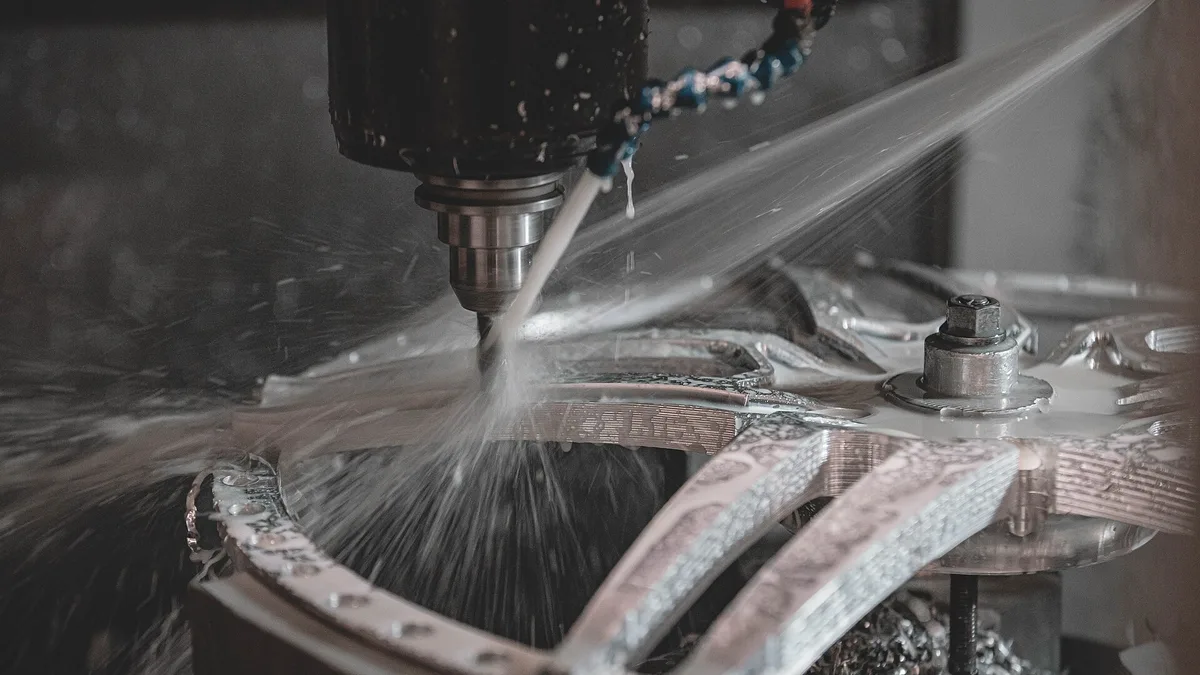
Machining is a controlled material-removal process where a cutting tool physically shears away layers of stock to shape a workpiece. The process occurs on machine tools, which provide the powered mechanical motion and rigidity necessary for precise cutting. Common types include lathes, which rotate the workpiece against a stationary tool, and milling machines, which rotate a multi-toothed cutter against a stationary workpiece. Other fundamental operations include drilling, boring, grinding, and tapping. The cutting action is defined by three primary parameters: speed (the relative velocity between tool and workpiece), feed (the rate at the tool advances), and depth of cut. Successful machining requires securing the workpiece firmly in a fixture or chuck, selecting the correct tool geometry and material, and applying a suitable lubricant or coolant to manage heat and improve finish.
What to know
The choice of cutting tool material is critical, with common options including high-speed steel (HSS), carbide, ceramics, and cubic boron nitride (CBN), each suited for different materials and cutting conditions. Machinability, a material's relative ease of being cut, varies greatly; for example, aluminum alloys are generally far easier to machine than hardened tool steels or titanium. Achieving desired tolerances, often measured in thousandths of an inch or microns, requires a stable machine, sharp tools, and careful control of thermal expansion from cutting heat. Secondary finishing operations, such as grinding or polishing, are frequently required after initial machining to achieve the final dimensional accuracy and surface texture. Computer Numerical Control (CNC) has revolutionized the field by automating the movement of machine tools via programmed instructions, enabling the production of highly complex parts with minimal operator intervention. Understanding chip formation and evacuation is vital, as improper chip control can lead to tool damage, poor surface finish, and operator safety hazards.
Common questions
What is the difference between CNC and conventional machining? Conventional machining requires manual operation of levers and wheels by a skilled machinist for each action, while CNC machining uses computer-programmed commands to automatically control the machine's movements, enabling complex automation and repeatability. How do I choose between milling and turning? Turning (on a lathe) is typically for cylindrical or conical parts where the workpiece rotates, while milling is for parts with flat surfaces, slots, pockets, or complex 3D contours where the cutting tool rotates. What does "tolerance" mean in machining? Tolerance is the permissible limit of variation in a physical dimension, defining how much a finished part's measurement can deviate from the specified value and still be acceptable. Why is coolant used? Coolant, or cutting fluid, reduces heat from friction at the cutting interface, lubricates to reduce tool wear, and helps flush away metal chips from the work area. Can machining create any shape? While highly versatile, machining is limited by the physical access of the cutting tool to the workpiece material; internal geometries with narrow openings or extremely deep, small-diameter holes can be challenging or impossible. Is machining only for metal? No, machining is used on a wide array of materials including plastics, wood, composites, and ceramics, though the tooling and cutting parameters must be adjusted accordingly.
Pros and cons
It offers exceptional material flexibility and is ideal for low-volume production and prototyping where creating dedicated molds or dies would be prohibitively expensive. However, the process is inherently wasteful, as material is removed as chips, often resulting in significant scrap, especially when starting with a large block. It can also be relatively slow and labor-intensive for high-volume production compared to formative processes like casting or stamping. A common mistake is underestimating the impact of cutting forces and heat, leading to distorted parts, premature tool failure, or work hardening of the material. Operations often regret choosing machining for very high-volume, simple parts because the per-unit cost and production time remain high, whereas investing in a dedicated molding process would be more economical at scale.
Who it suits
Machining suits industries and applications where precision, material integrity, and low-to-medium volume flexibility are paramount over raw production speed. It is essential for aerospace and defense contractors manufacturing flight-critical components that must meet exacting specifications from high-strength alloys. Medical device manufacturers rely on it for producing custom implants and surgical instruments with complex bi-compatible surfaces. Job shops and tool-and-die makers use machining to create one-off parts, prototypes, and the molds and fixtures used in other manufacturing processes. Research and development departments across all engineering fields utilize machining for functional prototypes and experimental apparatus. It is less suited for consumer goods companies producing millions of identical plastic or metal items, where injection molding or stamping would be far more cost-effective per unit.
Latest Machining news
Latest reporting
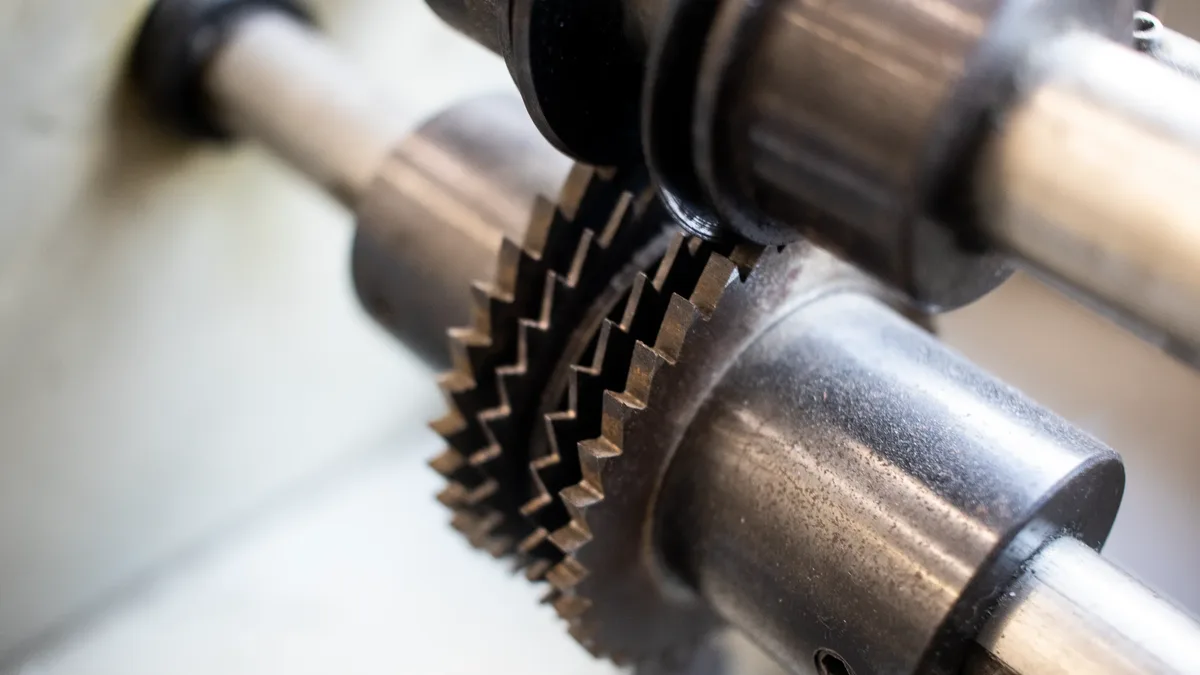
Tool Geometry Determines Success in Automated Production
The article explains how tool geometry impacts chip control, tool life predictability, and maximum unattended runtime in automated machining, arguing...
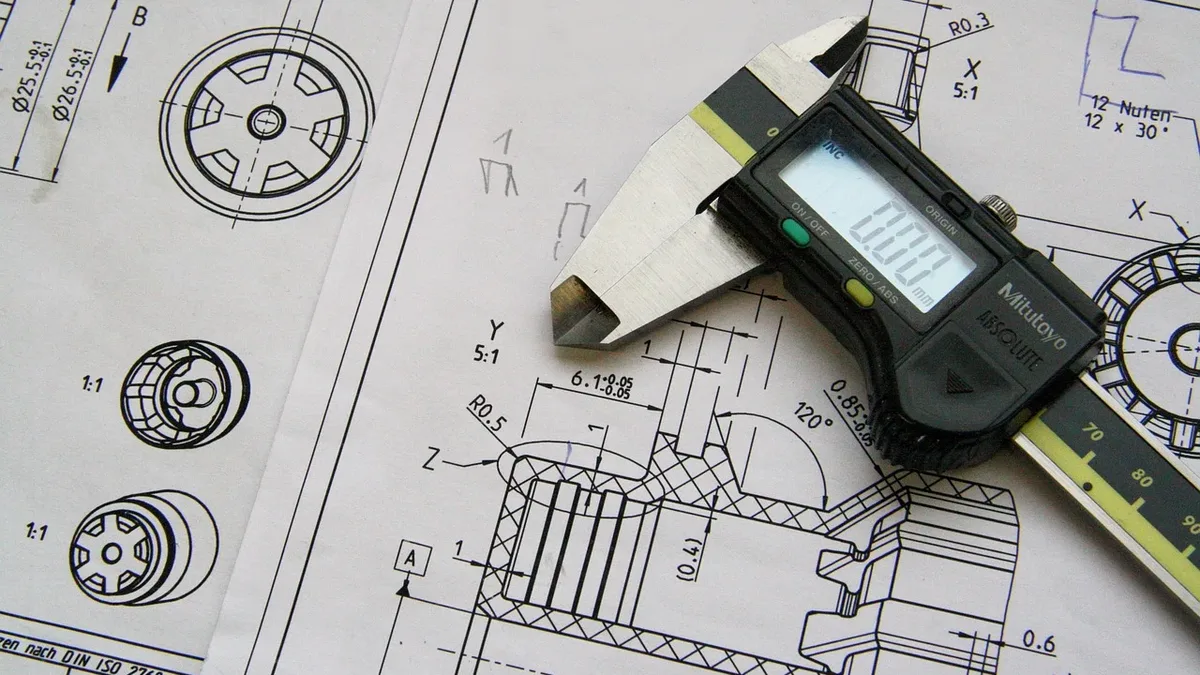
Precision Machining Index Hits 58.0 in July
The Precision Machining Index rose to 58.0 in July, its highest since May 2022, on strong production and orders for a seventh month of expansion.
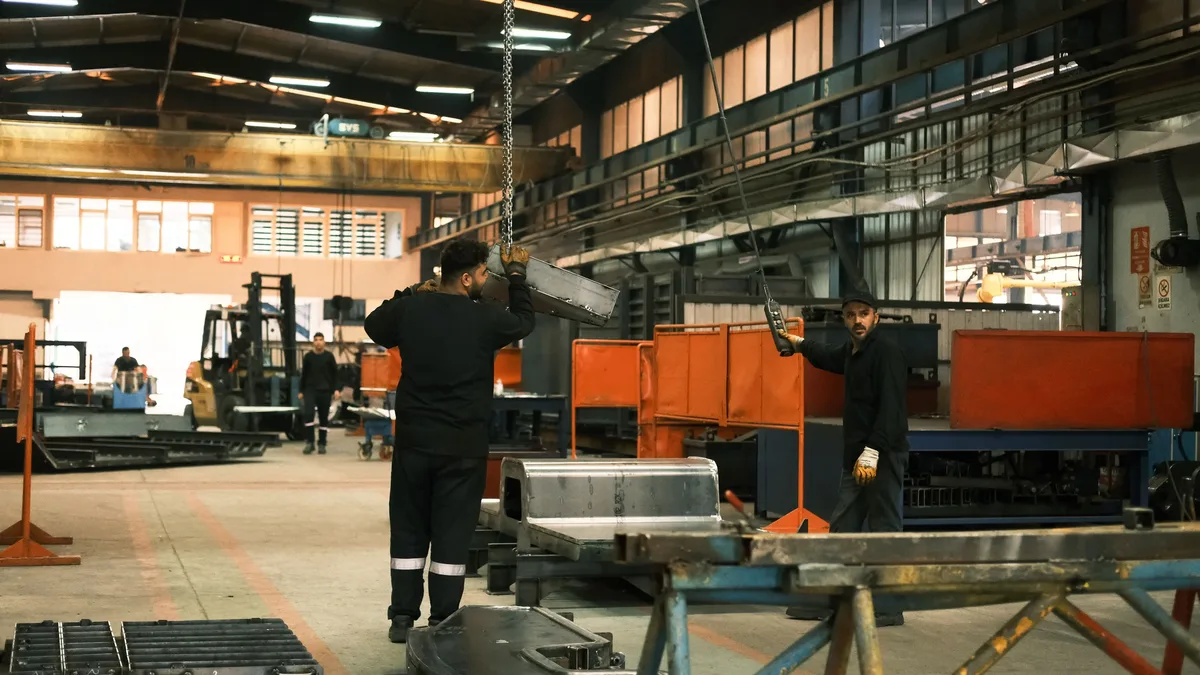
IMTS 2026 Exhibitors Unveil Factory Floor
New automation, tooling, and machining technologies will be showcased by multiple manufacturers at the IMTS 2026 trade show, per event previews.