Hvac And Appliances
| Process type | Industrial manufacturing and assembly |
|---|---|
| Original use | Production of residential and commercial climate control and domestic machinery |
| Typical facility size | Large-scale factory building |
| Key inputs | Sheet metal, plastics, electrical components, refrigerants |
| Output unit | Finished appliance (e.g., furnace, refrigerator, air handler) |
| Automation level | High, with robotic assembly common |
| Typical process stages | Stamping, forming, welding, painting, assembly, testing |
Origin and history
The integrated factory-floor process known as "Hvac And Appliances" originates from large-scale manufacturing regions in North America and East Asia. Its development accelerated in the late 20th century alongside the rise of consumer appliance mass production. This process evolved from earlier, more segregated assembly lines where environmental control and final product assembly were managed separately. The conceptual integration of Heating, Ventilation, and Air Conditioning (HVAC) system installation with appliance manufacturing lines became a documented industrial practice by the 1990s. It was driven by the need for efficiency in producing climate-sensitive electronic and mechanical goods. The methodology has since been adopted and refined in various industrial economies worldwide, becoming a standard consideration for new factory design.
What it is for
This process is for the simultaneous installation and integration of a building's mechanical systems with its primary manufacturing operations during factory construction. Its core purpose is to ensure the production environment meets precise atmospheric conditions required for assembling reliable appliances. It directly addresses the need for controlled temperature, humidity, and air purity to prevent defects in sensitive components like circuit boards and painted finishes. The process also aims to position and connect large, fixed industrial appliances that are part of the factory's own infrastructure, such as wash stations or test chambers. It serves to interlink the building's core utilities with the production machinery in a coordinated sequence. Ultimately, it is for creating a functional manufacturing ecosystem from the ground up, where the facility itself is a calibrated tool for production.
Overview
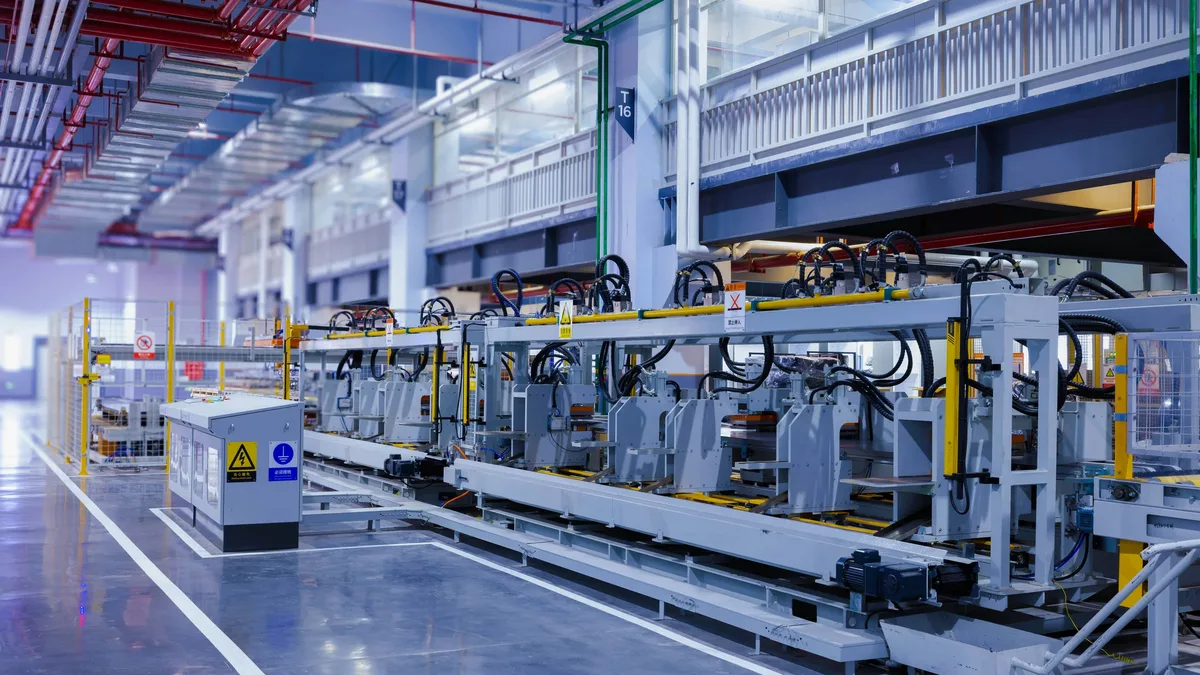
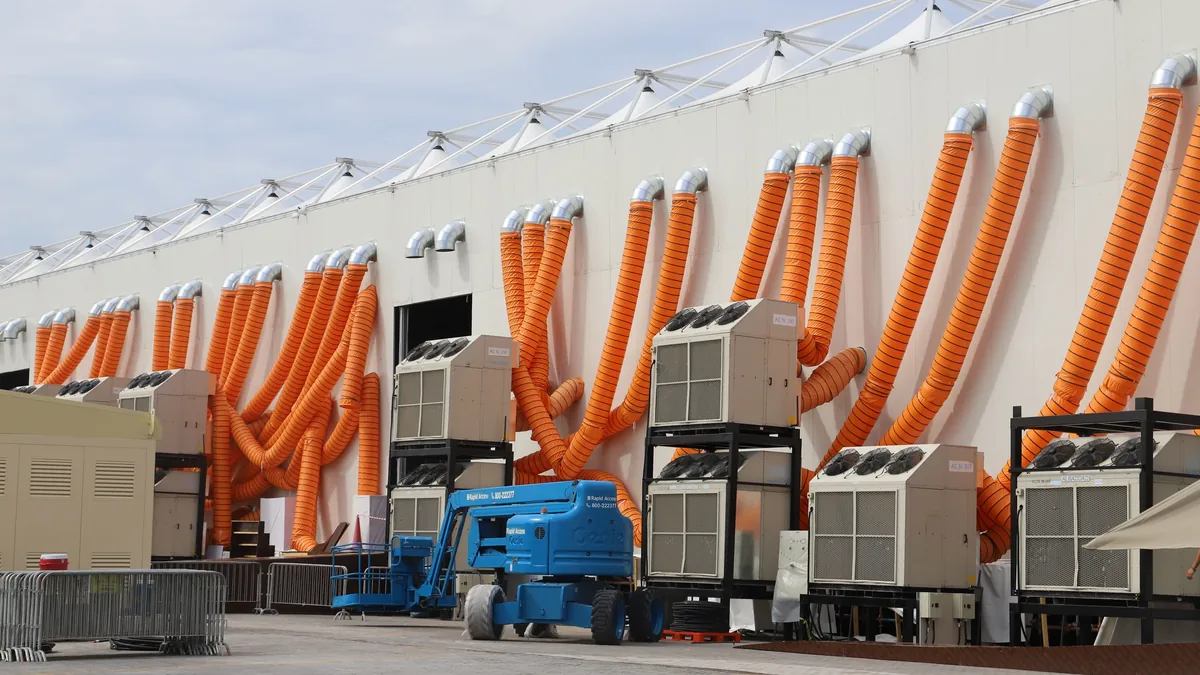
"Hvac And Appliances" refers to a critical phase in factory fit-out where the permanent environmental control systems and built-in production assets are installed. This occurs after the building shell and primary utilities are complete but before the main assembly line machinery is put in place. The process involves a coordinated workflow between mechanical contractors, electrical teams, and manufacturing engineers. HVAC ductwork, piping, and large air handlers are installed overhead and within walls, often following precise architectural plans. Concurrently, heavy, permanently-plumbed or wired appliances integral to the production process are positioned and anchored. This phase establishes the foundational services that enable subsequent precision assembly work to proceed in a controlled, stable environment.
What to know
A key point is that this process is highly sequential and its timing is inflexible; delaying HVAC rough-in will stall all subsequent trades and equipment installation. The specifications for the HVAC system are directly derived from the thermal and particulate output of the planned appliance assembly machinery. Significant spatial conflicts can arise between duct runs, electrical conduits, and structural elements, requiring detailed 3D coordination drawings known as Building Information Modeling (BIM). The process demands that appliance delivery, especially for large, built-in items like industrial ovens or degreasers, is perfectly synchronized with the construction schedule. Factory investment announcements often highlight this phase as it represents a major capital expenditure and a point of no return in the build-out. Understanding that this is a logistical challenge as much as a technical one is crucial for project management.
Common questions
A common question is why these two seemingly different systems are grouped into a single process phase. The answer is that both are "fixed" building services that require similar trades, heavy equipment, and completion before sensitive assembly work begins. Many ask what happens if the HVAC system is not powerful enough, which typically results in costly retrofits, production downtime, and potential quality control issues due to environmental fluctuations. People often inquire about the most frequent cause of delays, which is usually the late delivery of custom-fabricated ductwork or specialized appliances with long lead times. Another question concerns the testing regimen, which involves balancing airflows, verifying temperature control zones, and commissioning all installed appliances before production validation. Finally, stakeholders commonly ask how to verify progress, which is typically tracked through mechanical completion milestones and equipment sign-off protocols.
Pros and cons
A major pro is that a perfectly executed integration creates a highly stable production environment, leading to consistent product quality and reduced defect rates. It also allows for optimal energy efficiency, as the HVAC system can be precisely sized and zoned for the actual manufacturing process. A significant con is the exceptionally high upfront capital cost, which can strain the budget for a new factory project. The process is also notoriously vulnerable to delays; a holdup in one area, like duct fabrication, can idle multiple expensive trade teams on site. A common mistake is underestimating the spatial requirements for equipment access and future maintenance, leading to cramped service areas that increase long-term operational costs. Companies often regret choosing the lowest-bid contractor without proven experience in manufacturing environments, resulting in systems that fail under continuous industrial load.
Who it suits
This integrated process suits large-scale appliance manufacturers building new, dedicated production facilities where environmental control is paramount to product function. It is also suited to corporations making a long-term investment in a flagship factory, where the announcement of such a detailed and costly phase signals serious commitment to shareholders and the market. The approach is ideal for products with sensitive assembly stages, such as refrigeration units, precision medical devices, or electronics, where air quality and temperature are critical. It is less suited to small-batch or artisan manufacturing, where the cost and complexity cannot be justified, or to generic warehouse spaces intended for flexible leasing. This process best suits organizations with strong project management teams capable of coordinating the multitude of contractors and suppliers involved in this foundational phase.