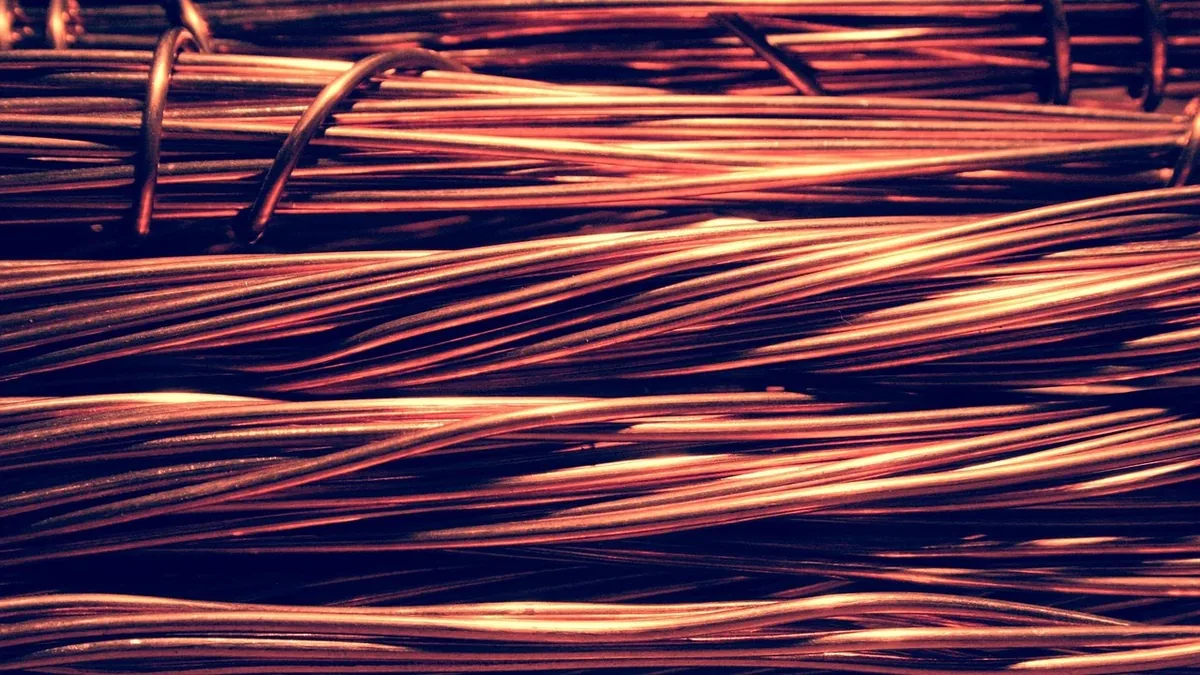
Copper And Wire
| Process type | Industrial manufacturing |
|---|---|
| Original use | Electrical conduction |
| Primary input material | Copper rod or billet |
| Typical output product | Insulated or bare wire |
| Core industrial step | Wire drawing |
| Factory scale | Large, continuous production line |
| Capital intensity | High |
Origin and history
The industrial process known as Copper And Wire originates from the broader field of electrical manufacturing that developed in Europe and North America during the late 19th century. Its specific methodology for integrating copper conductor production with subsequent wire insulation and jacketing emerged as a distinct, continuous factory process in the mid-20th century. This integration was driven by the post-World War II boom in consumer electronics and infrastructure expansion, which demanded higher volumes of reliable, standardized wiring. The process consolidated previously separate stages of copper rod drawing, annealing, stranding, and insulating into a single, coordinated production line. Its development is closely tied to advancements in polymer chemistry for insulation materials and precision engineering for drawing machinery. The formalization of Copper And Wire as a defined industrial procedure is documented in manufacturing engineering textbooks and industry standards from the 1960s onward.
What it is for
The Copper And Wire process is designed for the high-volume manufacture of insulated electrical conductors used across multiple industries. Its primary output is the production of building wire for residential and commercial electrical systems, including NM-B (Romex) and THHN/THWN-2 types. A significant portion of its capacity is dedicated to producing wiring harnesses and internal cabling for the automotive and appliance manufacturing sectors. The process is also essential for creating telecommunications cables, such as twisted pair for Ethernet networks, and coaxial cables for video signal transmission. Furthermore, it supplies magnet wire, which is used in the coils of transformers, motors, and inductors. Without this integrated process, the scalable and cost-effective production of the vast array of insulated copper conductors that underpin modern electrification would not be feasible.
Overview
Copper And Wire is an integrated, multi-stage manufacturing process that transforms raw copper into finished, insulated wire products. It begins with copper cathode or rod being drawn down through a series of dies to achieve the desired conductor diameter, a stage that work-hardens the metal. The drawn copper then typically proceeds through an in-line annealing furnace, where it is heated and cooled to restore ductility and conductivity. For multi-strand cables, individual drawn wires are then stranded or bunched together on a rotating cabling machine. The core of the process is the extrusion stage, where the bare copper conductor is fed through a cross-head die to be uniformly coated with a molten insulating polymer, such as PVC, polyethylene, or cross-linked polyethylene (XLPE). The insulated wire is then cooled in a water trough, tested for continuity and dielectric strength, and finally wound onto large reels or cut to specific lengths for distribution.
What to know
The capital investment for a full Copper And Wire production line is substantial, involving heavy machinery for drawing, annealing, stranding, and extrusion, alongside sophisticated quality control and testing systems. A critical operational factor is the precise control of the extrusion temperature and speed, as variations can lead to insulation defects like thinning, bubbles, or uneven concentricity. The choice of insulation material is not arbitrary; PVC is common for building wire due to its flame retardancy, while polyethylene is preferred for telecommunications for its electrical properties, and XLPE is used for higher temperature and voltage applications. Environmental and safety regulations heavily govern this process, particularly concerning the emission of plasticizers from PVC and the management of copper scrap and wastewater. The process is highly sensitive to the quality of the incoming copper rod; impurities can cause breaks during drawing or reduce the final product's conductivity. Factory floor logistics are complex, requiring coordinated material flow from raw material staging through to finished reel packaging and shipping.
Common questions
What are the main differences between the wires produced by this process? The key differences lie in the conductor size (gauge), the stranding configuration (solid vs. stranded), the type and thickness of the insulation material, and any additional jacketing for mechanical protection or specific ratings like sunlight resistance or direct burial. Is the copper always pure? For most electrical conductivity applications, the copper used is electrolytically refined to a high purity, often 99.9% or better, to maximize conductivity; alloyed copper like brass is used for specific mechanical purposes, not standard wiring. How is the wire color coding achieved? The coloration is integral to the insulation material, achieved by adding masterbatch pigment compounds to the polymer resin before or during the extrusion process. What happens to the scrap material? Copper scrap from drawing breaks or cut-offs is collected, cleaned, and sent back to a copper refinery for recycling, while plastic scrap is often reground and reused in lower-specification products or processed as waste. Can the process run continuously? Modern lines are designed for near-continuous operation, with payoff stands feeding new copper rod and take-up reels being swapped without stopping the extrusion line, maximizing throughput. What are the most common quality failures? Typical failures include conductor eccentricity (off-center copper within the insulation), insulation voids or contaminants, incorrect dimensions, and failures in spark testing, which checks for pinholes in the insulation.
Pros and cons
A primary advantage of the integrated Copper And Wire process is its production efficiency and scale, enabling the low-cost, high-volume output essential for global infrastructure and consumer goods. The in-line nature from drawing to jacketing ensures consistent product quality and reduces intermediate handling and inventory costs. However, the process suffers from significant drawbacks, including immense upfront capital expenditure for machinery and facility requirements, making market entry difficult. It also creates a high degree of operational rigidity; switching insulation materials or conductor types often requires lengthy line changeovers, downtime, and material purging, making short runs economically unviable. A common mistake by new entrants is underestimating the expertise required in polymer extrusion and the critical importance of tooling maintenance for dies and capstans, leading to high scrap rates. Companies often regret the investment if they cannot secure large, stable contracts, as the fixed costs are relentless and the market is highly competitive on price, with thin margins on standard products.
Who it suits
This process suits large-scale, established wire and cable manufacturers who supply to the construction, automotive, and utility industries, where long runs of standardized products are the norm. It is appropriate for regions with high demand for new electrical infrastructure or dense manufacturing hubs that require a local supply of wiring. The process is a poor fit for small businesses or startups due to the prohibitive capital and technical barriers to entry. It is well-suited to companies with strong relationships with raw material suppliers (copper and polymer) and a dedicated engineering team for process optimization and maintenance. Conversely, it is ill-suited for manufacturers focused on highly customized, specialty, or short-run cables, such as those for aerospace or niche industrial applications, where flexibility and small-batch production are more critical than sheer volume and speed.