Casting Alloys
| Process type | Metal casting |
|---|---|
| Common alloys used | Aluminum, zinc, iron, copper-based |
| Typical melting equipment | Induction furnace, crucible furnace |
| Typical mold types | Sand, permanent metal, investment |
| Key process steps | Melting, pouring, solidification, shakeout, finishing |
| Primary industrial sectors | Automotive, aerospace, machinery, construction |
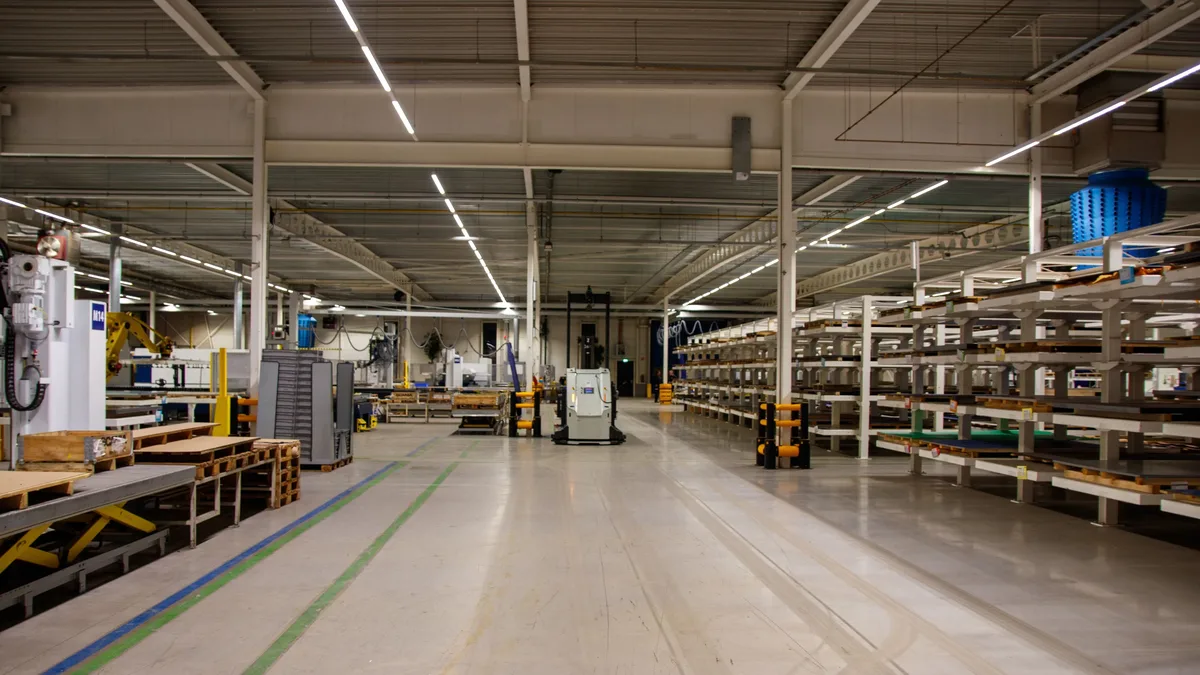
| Typical factory footprint | Large industrial building with high ceilings |
Origin and history
The industrial practice of casting metals using specifically formulated alloys originates from the ancient Bronze Age, with early documented use in Mesopotamia and China around 3000 BCE. These early alloys, primarily copper-tin bronzes, were developed for casting tools, weapons, and ritual artifacts. The systematic development of casting alloys for modern industrial purposes accelerated during the Industrial Revolution of the 18th and 19th centuries. This period saw the refinement of iron and steel casting, alongside the creation of more complex alloys to meet new engineering demands. The 20th century introduced a vast expansion of alloy systems, including aluminum-silicon and nickel-based superalloys, driven by the automotive and aerospace industries. Today, casting alloys represent a mature, foundational technology in metallurgy, continuously refined but based on principles established millennia ago.
What it is for
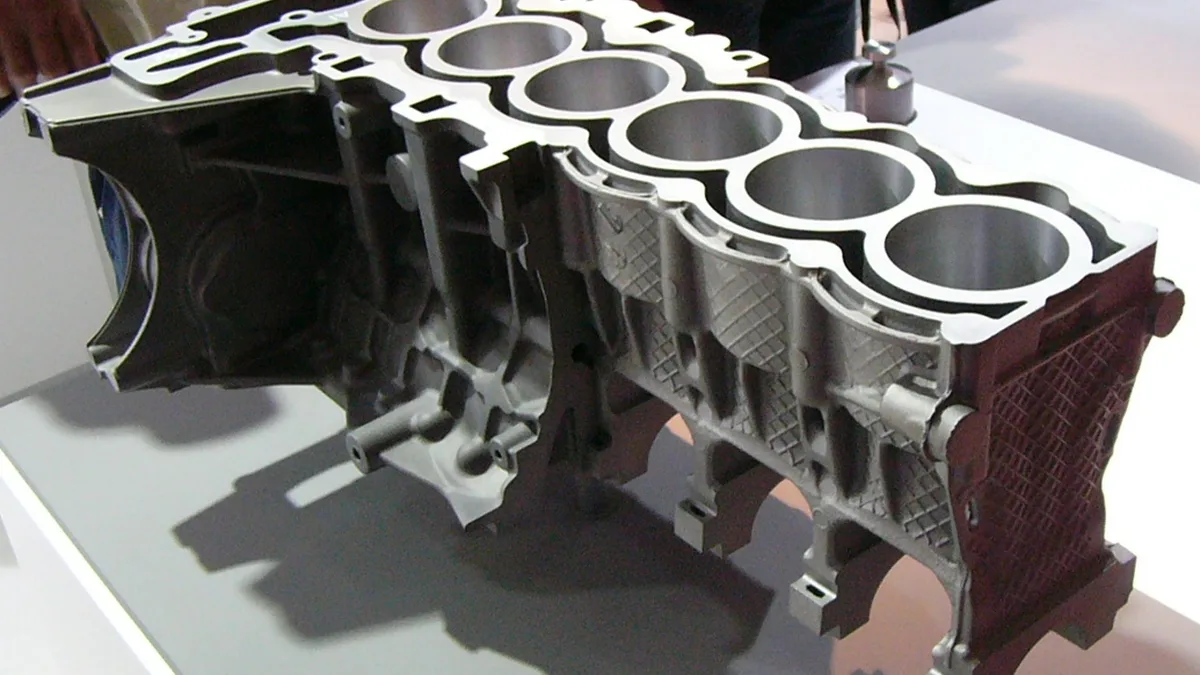
Casting alloys are engineered to be poured into a mold in a liquid state and then solidify into a near-net-shape component, minimizing the need for subsequent machining. They are fundamental for producing large, complex, or internally detailed metal parts that would be inefficient or impossible to create through forging or machining from solid billet. Common applications include engine blocks and cylinder heads in the automotive sector, structural frames and turbine blades in aerospace, and pump housings and valve bodies in industrial machinery. They are also extensively used for manufacturing decorative elements, cookware, and plumbing fixtures. The specific alloy formulation balances properties like fluidity for filling thin mold sections, shrinkage characteristics to avoid defects, and final mechanical properties such as strength or corrosion resistance. The primary purpose is to economically produce dimensionally accurate metal components with the required performance characteristics directly from molten metal.
Overview
The casting process using alloys involves melting the prepared metal composition in a furnace at a controlled temperature to achieve proper fluidity and homogeneity. The molten alloy is then transferred, often via a ladle, to a pre-prepared mold cavity which defines the shape of the final part. Molds can be made from various materials, including bonded sand for one-off pieces, permanent metal dies for high-volume production, or investment (lost-wax) molds for high-precision components. After pouring, the alloy is allowed to solidify and cool within the mold, a phase critical to determining the internal microstructure and soundness of the casting. Once cooled, the casting is removed from the mold in a process called shakeout, after which it undergoes finishing operations like grinding, shot blasting, and heat treatment. The entire cycle is governed by precise control of parameters including melt chemistry, pouring temperature, mold design, and cooling rate to ensure part quality and consistency.
What to know
Casting is distinct from metal fabrication processes that join pieces or deform solid metal; it creates a part directly from a liquid phase. The choice of alloy system, whether aluminum, zinc, iron, or copper-based, is dictated by the part's function, required strength, weight, corrosion resistance, and cost targets. Foundry floor operations require stringent safety protocols due to the hazards of handling molten metal, including risks of burns, fumes, and explosions from contact with moisture. A significant portion of factory investment goes into melting furnaces (induction, crucible, cupola), mold-making lines, and environmental controls for dust and emissions. Tooling costs, especially for metal permanent molds or die-casting dies, are high upfront but amortized over large production runs, making high-volume casting economically efficient. Quality control is pervasive, involving spectrographic analysis of melt chemistry, non-destructive testing for internal defects, and dimensional inspection to ensure the castings meet specification.
Common questions
What is the difference between a casting alloy and a wrought alloy? Casting alloys are formulated for high fluidity and controlled solidification, while wrought alloys are designed for plasticity during mechanical shaping processes like rolling or forging. How are internal voids or porosity prevented in a casting? Proper mold design includes risers that feed molten metal to compensate for shrinkage, and process control ensures degassing of the melt and optimal pouring to minimize trapped air. Can any metal be cast? Most metals can be cast, but commercial viability depends on the metal's melting point, reactivity, and the cost of controlling the casting environment. What does "near-net-shape" mean? It signifies the cast part is very close to its final dimensions, requiring only minimal finishing machining, which reduces material waste and labor. Why are some cast parts heat-treated? Heat treatment, such as solutionizing and aging or annealing, is used to alter the alloy's microstructure to enhance mechanical properties like strength, hardness, or ductility. Is casting suitable for very high-strength applications? Yes, through advanced alloys and processes like investment casting, high-integrity components for jet engines and medical implants are routinely produced.
Pros and cons
The primary advantage of casting is the ability to produce complex, three-dimensional geometries with internal passages and varied wall thicknesses in a single processing step. It is highly material-efficient, as excess metal from gates and risers can often be recycled directly back into the melt. For high-volume production, per-part costs can be very low after the initial investment in tooling and mold equipment. However, the process has significant drawbacks; porosity, shrinkage cavities, and inclusions are common defects that can compromise part integrity and are sometimes not detectable without expensive inspection. The process often requires extensive secondary machining and finishing to achieve final tolerances and surface quality, adding cost. A common mistake is underestimating the importance of mold design and process engineering, leading to high scrap rates and project delays. Companies sometimes regret choosing casting for a component when subsequent design changes are required, as modifying hard tooling like metal dies is extremely costly and time-consuming compared to altering a digital file for machining.
Who it suits
Casting alloys suit manufacturers who need to produce medium to high volumes of complex metal parts where the cost of tooling can be justified over the production run. It is particularly suited to industries like automotive and appliance manufacturing, where components like engine blocks or housings have intricate shapes and are produced in the hundreds of thousands. Jobbing foundries using sand molds suit low-volume or one-off production for heavy machinery, art, or prototyping, where flexibility is more important than speed. The process is less suited to applications requiring the absolute highest mechanical properties in all directions, as cast structures can have directional weaknesses; for such critical loaded components, forging is often preferred. It is also a poor fit for simple geometric shapes that can be more economically produced from standard stock via machining or fabrication. Ultimately, it suits operations with the capital for upfront investment in melting, molding, and environmental systems, and the technical expertise to manage the complex metallurgical and process variables inherent to the practice.