Vention opens Montreal lab to train AI with factory data
Vention has opened a Physical AI Lab in Montreal to develop robotic manipulation models using data from hundreds of robot cells it deploys annually.
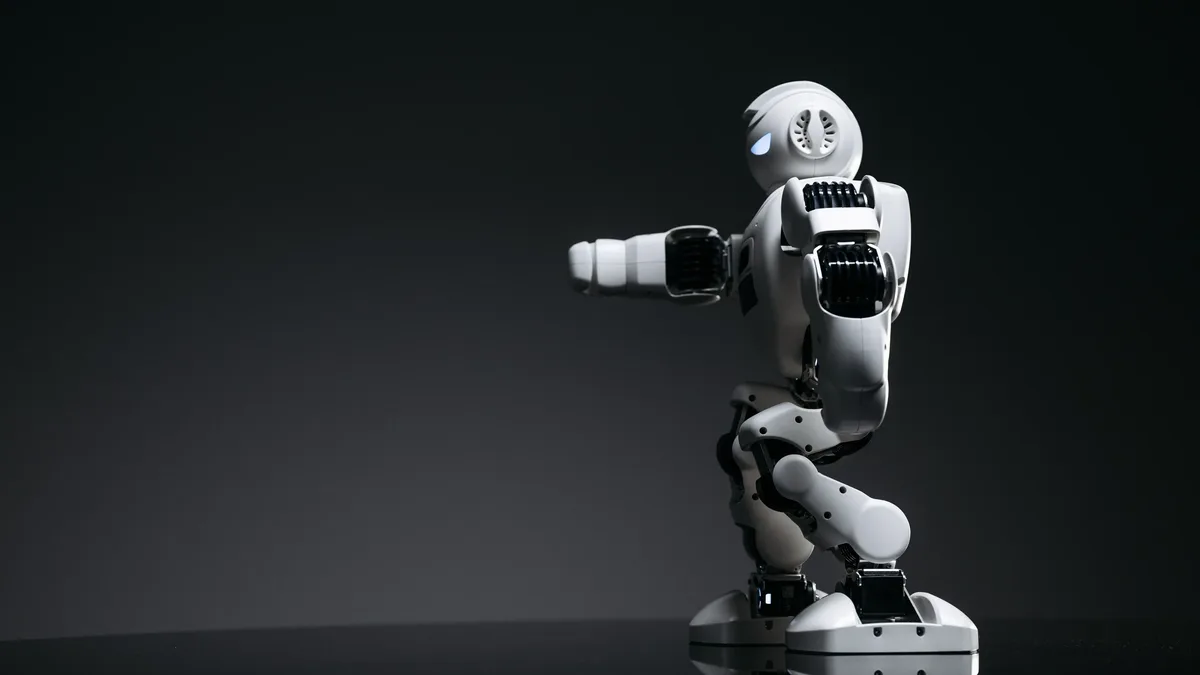
Vention Inc. Has opened a Physical AI Lab in Montreal. The facility aims to generate high-quality data for training the AI models that operate next-generation industrial robots.
Founder and CEO Etienne Lacroix told The Robot Report that physical AI foundation models are "data-hungry." He said Vention moves several hundred robot cells each year, all of which collect industrial manipulation data that was a previously underutilized asset. The Montreal-based company's full technology stack includes hardware, software, and physical AI. Vention claims it enables businesses to design, program, and deploy automation in days. It has deployed more than 28,000 machines globally within a community of over 6,000 factories.
Use scale for industrial AI
Vention's technology is used by manufacturers worldwide, including 90 Fortune 500 companies. The company states this scale gives its researchers direct access to real factory environments and a continuous stream of data. This data is used for post-training physical AI models.
Lacroix stated that the core challenge has shifted. It is no longer just proving a robot can perform a task in a lab. The real opportunity lies in making these capabilities reliable, economical, and deployable across thousands of factories. He said combining Canada's AI ecosystem with Vention's robotics expertise, data, and platform creates a unique foundation to close that gap.
The company reported that revenue related to physical AI has grown by 400% over the past year. Its mandate is to enable scalable deployment by validating new AI capabilities against the real-world requirements of production lines for reliability, cost, and variability.
A direct link from research to production
The new lab's work encompasses industrial data collection, robotics control, motion planning, computer vision, vision foundation models, learning from demonstration, and reinforcement learning. It focuses on complex, unstructured manufacturing tasks.
Dr. Jimmy Li, director of physical AI at Vention, explained what sets the lab apart. "What makes this lab different is the loop we've built: academic research feeding directly into live production problems, and production feedback feeding back into the research," he said. Li noted that clients are involved during the build phase, which is unique and accelerates the path from research to a functioning factory-floor application.
Li heads the lab and is a robotics researcher from McGill University. He has over a decade of experience in peer-reviewed research. For the past two years, he has led Vention's physical AI strategy and its collaboration with NVIDIA.
Developing commercial pipelines and IP
Vention said the lab has already generated new intellectual property. In February 2026, it launched GRIIP, or the Generalized Robotic Industrial Intelligence Pipeline. This modular AI pipeline covers several stages of robotic operation.
GRIIP uses foundation models from partners like NVIDIA as well as Vention's own proprietary models. The company plans to release a public GRIIP Software Development Kit. Lacroix said they will put GRIIP in open source and demonstrate it at the IMTS trade show. Vention aims to unify physical AI and agentic AI capabilities on a single platform.
The company is working with global manufacturers on complex tasks. A large automotive OEM is collaborating on high-complexity, unstructured robotic tasks for final assembly. Kitting is a top applied research use case. This involves assembling components from various vendors and packaging into a specific kit for an assembly line station. Lacroix explained this is horizontal, appearing in automotive, aerospace, and consumer goods sectors.
Advising and future impact
Vention has appointed Dr. Joelle Pineau, chief AI officer at Cohere, as an external technical advisor for the lab. She will contribute to model architecture decisions, research prioritization, and connections to the broader AI community. Lacroix noted her background includes a former VP of research role at Meta and work on the SAM 2 model for segmentation.
As foundation models mature, Vention expects the complexity and cost of deploying robots to decrease. This would allow a wider range of manufacturers to implement robotic automation.