NAM Forum at Port Houston Urges Long-Term Transport Funding
The National Association of Manufacturers convened policymakers and industry leaders at Port Houston to push for a full, long-term surface transportation
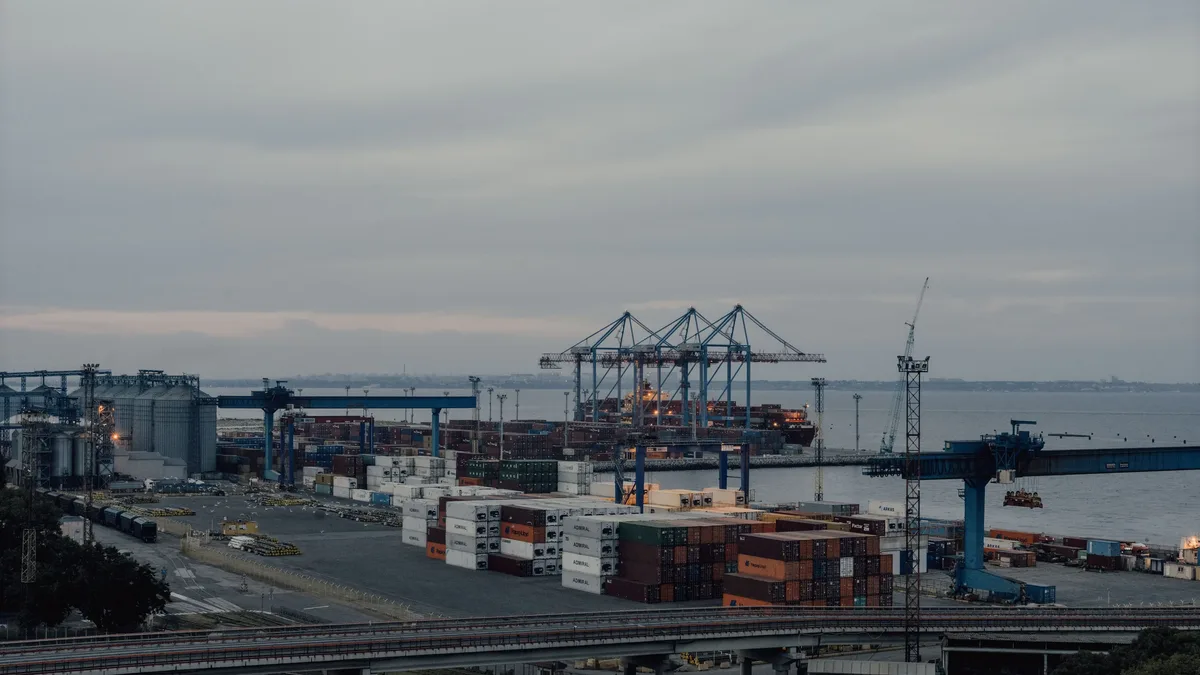
The National Association of Manufacturers recently hosted a forum at Port Houston, bringing together federal officials and industry representatives with a pressing message for Congress. With a stopgap funding measure set to expire on Dec. 11, the group urged lawmakers to pass a full, long-term reauthorization of surface transportation programs to provide certainty for infrastructure planning and investment.
Forum Focus and Attendees
The event, titled the "Port Houston: Ports, Permitting and Manufacturing Forum," was held at the nation's busiest waterway by total tonnage. Attendees included Representative Randy Weber, a Republican from Texas, staff from the office of Senator Ted Cruz, also a Texas Republican, and officials from the Small Business Administration's Office of Rural Affairs. Manufacturing companies present included CRH, Vulcan, Burns & McDonnell, and Great Lakes Dredge & Dock. Port Houston's Director of Government Relations, Cam Rahmn-Spencer, and the NAM's Managing Vice President of Government Relations, Stef Webb, also participated.
The discussions centered on the BUILD America 250 Act, permitting reform, the Water Resources Development Act, and broader manufacturing competitiveness. A key piece of legislation discussed was the NAM-backed highway bill approved by the House Transportation and Infrastructure Committee in May. That bill authorizes approximately $580 billion for federal surface transportation programs through fiscal year 2031.
Key Infrastructure Priorities
Participants stressed the critical need to connect investments across different infrastructure sectors. They argued that funding for ports and waterways through the Water Resources Development Act must be paired with investments in roads, bridges, and freight infrastructure from surface transportation programs. This integrated approach is seen as vital for efficiently moving goods and connecting U.S. Manufacturers to global markets.
The forum highlighted three major priorities for the manufacturing sector. First, the group called for long-term funding certainty, warning that short-term extensions cause state transportation departments to delay projects, creating backlogs. Second, they emphasized the necessity of connected freight infrastructure that links seaports to distribution networks. Third, participants discussed the importance of permitting reform to speed up project reviews and reduce construction delays.
Economic Stakes and Industry Calls to Action
The forum's timing showed the high economic stakes. It occurred just one day after Port Houston released a study finding that activity along the Houston Ship Channel supports nearly $1 trillion in annual U.S. Economic value and 3.53 million jobs nationwide. The NAM also cites data showing that maritime and port delays cost manufacturers more than $13 billion each year.
Industry leaders were direct in their calls for congressional action. "The clock is ticking toward Dec. 11, and manufacturers need Congress to finish the job," said the NAM's Stef Webb. She added that a full reauthorization would give states and businesses the certainty needed to plan and build infrastructure that keeps pace with American manufacturing.
Cam Rahmn-Spencer of Port Houston echoed the urgency, focusing on connectivity. "Our nation’s ports need roadway and rail infrastructure to keep cargo flowing," he said. He warned that without consistent investment and faster construction, bottlenecks and delays will increase, ultimately raising project costs over decades. Rahmn-Spencer concluded by urging Congress to pass a full reauthorization to secure funding for the vital link between waterside and landside infrastructure.